Cheapest Way To Remove Manganese From Well Water

The Rust-Colored Truth About Your Morning Brew You know that sinking feeling when you pour a glass of water and it looks like weak iced tea? Or when your pristine white si...
The Rust-Colored Truth About Your Morning Brew
You know that sinking feeling when you pour a glass of water and it looks like weak iced tea? Or when your pristine white sink suddenly sports a Jackson Pollock of brownish stains? That’s manganese—a mineral that’s not harmful to your health but is a major buzzkill for your laundry, plumbing, and general sense of domestic zen.
The good news? You don’t need a NASA-grade filtration system or a second mortgage to kick it to the curb. Removing manganese on a budget is totally doable, and we’re about to make it feel less like chemistry class and more like a fun weekend project.
First, Know Your Enemy
Manganese loves to play hide-and-seek. In shallow wells, it often appears as clear dissolved ions that only turn dark when exposed to air or bleach. Deep wells might surprise you with black sand-like particles already formed.
Must Read
Before you buy anything, test your water. A simple $15 at-home test kit (or a free county extension lab test) will tell you the concentration. This isn’t just science—it’s budgeting 101. You don’t want to spend money solving a problem that isn’t actually yours.
Fun fact: Manganese is what gives certain gemstones their purple hue. In your water, though, it’s less amethyst, more angry grape soda.
Budget Hero #1: The Green Sand Filter
If you’ve got moderate levels (say, 0.5 to 2.0 mg/L), a greensand filter is your wallet’s best friend. It uses a natural mineral that oxidizes manganese and traps it like a bouncer at a trendy club.
You can snag a basic unit for around $200 to $400, and installation is a do-it-yourself-friendly affair if you’re handy with PVC pipes. The maintenance is just a potassium permanganate recharge every few weeks—think of it as feeding a pet that never needs walks.
Cultural reference moment: It’s the water-treatment equivalent of buying a reliable used Honda Civic instead of a flashy European sedan. Gets the job done, no drama.
Budget Hero #2: The DIY Oxidation Trick
For really low levels (under 0.5 mg/L), you can often outsmart manganese with aeration. Fill a large food-grade bucket, install a cheap aquarium air stone, and let it bubble for 15 minutes. The oxygen forces the manganese to turn into particles that you can strain through a simple sediment filter.
The total cost? Under $50. Is it glamorous? Absolutely not. But it’s perfect for a weekend cabin or an RV, and you’ll feel like a mad scientist every time you see the brown sludge settle at the bottom.
Practical tip: Use a white bucket so you can actually see the magic happen. It’s strangely satisfying, like watching a lava lamp, but for adults with well water problems.
The Polyphosphate Pitfall
You might hear about polyphosphate feeders that “sequester” manganese—meaning they hold it in solution so it doesn’t stain. This is the cheapest upfront cost (under $100), but it’s a trap. The manganese is still in your water, just invisible.
Eventually, heat or other chemicals can break the bond, and boom—your water heater turns into a brown sludge factory. Use this only as a temporary fix if you’re saving up for a real solution. Think of it as putting a band-aid on a leaky pipe: better than nothing, but don’t call it a renovation.
The Sneaky Savings of Soft Water
If you already have a water softener, congratulations—you’re halfway there. Standard ion-exchange softeners can remove low levels of dissolved manganese, but only if they’re specifically rated for it.
Check your softener’s manual. Many basic models can handle manganese up to 2 mg/L, but they’ll use more salt. The trick is to set the regeneration cycle to run more often, which costs about an extra $5 a month in salt. That’s cheaper than therapy for your stained clothes.
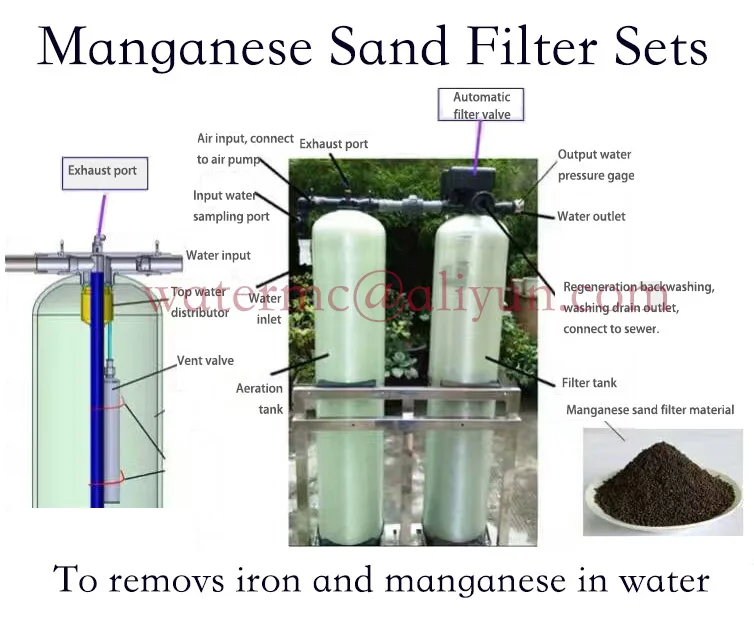 How To Filter Manganese Out Of Well Water at Meagan Burlingame blog
Fun fact: Manganese in your water can actually turn your blonde highlights brassy. So in a way, softening it is a form of self-care.
Don’t Forget the Bleach Trap
A shocking number of well owners try to nuke manganese with liquid chlorine bleach. Don’t do this. It works chemically, but it creates manganese dioxide—a thick, dark sludge that can clog your entire plumbing system.
If you absolutely must use chlorine (say, for emergency disinfection), follow it with a high-quality sediment filter immediately. You’ll be swapping filter cartridges like a medicated dream, but it’s cheaper than a plumber’s visit to clear a blocked pipe.
Practical tip: A bag of 10-micron sediment filter cartridges costs about $20 for a six-pack. Stock up. You’ll be changing them weekly for a while.
The Ultimate Low-Cost Hack: Prevention
The cheapest way to remove manganese is to stop it from entering your house. That means inspecting your well cap and casing. A cracked seal can let organic debris seep in, feeding bacteria that release manganese from the soil.
A tube of silicone caulk costs $8. Check for any gaps around the wellhead, especially after heavy rain. This isn’t glamorous, but it’s the kind of homeowner karma that pays dividends in clean water.
Cultural reference: It’s the water version of “measure twice, cut once.” Or in this case, “patch once, drink clean for years.”
When to Call a Pro (and Not Feel Bad)
If your manganese level is above 6 mg/L, the cheap diy methods start to struggle. At that point, a whole-house reverse osmosis system or catalytic carbon filter becomes necessary—and yes, that’s a bigger spend ($1,000+).
But here’s the twist: many counties offer low-interest loans for well water remediation. Check your local health department. You might qualify for a program that turns a $2,000 system into a $30 monthly payment. Suddenly, “cheap” has a new definition.
Remember, spending a little more to get the right fix is still cheaper than replacing all your socks because they turned brown.
Final Sip
There’s a quiet dignity in knowing exactly what’s in your water and choosing a solution that respects both your health and your budget. Manganese is stubborn, but it’s not invincible—and neither are you as a problem-solving human.
The next time you pour a crystal-clear glass of water, let it be a small victory. It’s not just hydration. It’s the taste of a well-thought-out plan, a few smart purchases, and the satisfaction of outsmarting a mineral that thought it could crash your morning coffee.
