Difference Between Deionized And Distilled Water

Okay, let’s be real for a second. If you’ve ever stared at a shelf of bottled water, your brain probably short-circuited. Like, isn’t water just… water? Oh, honey. No. Today w...
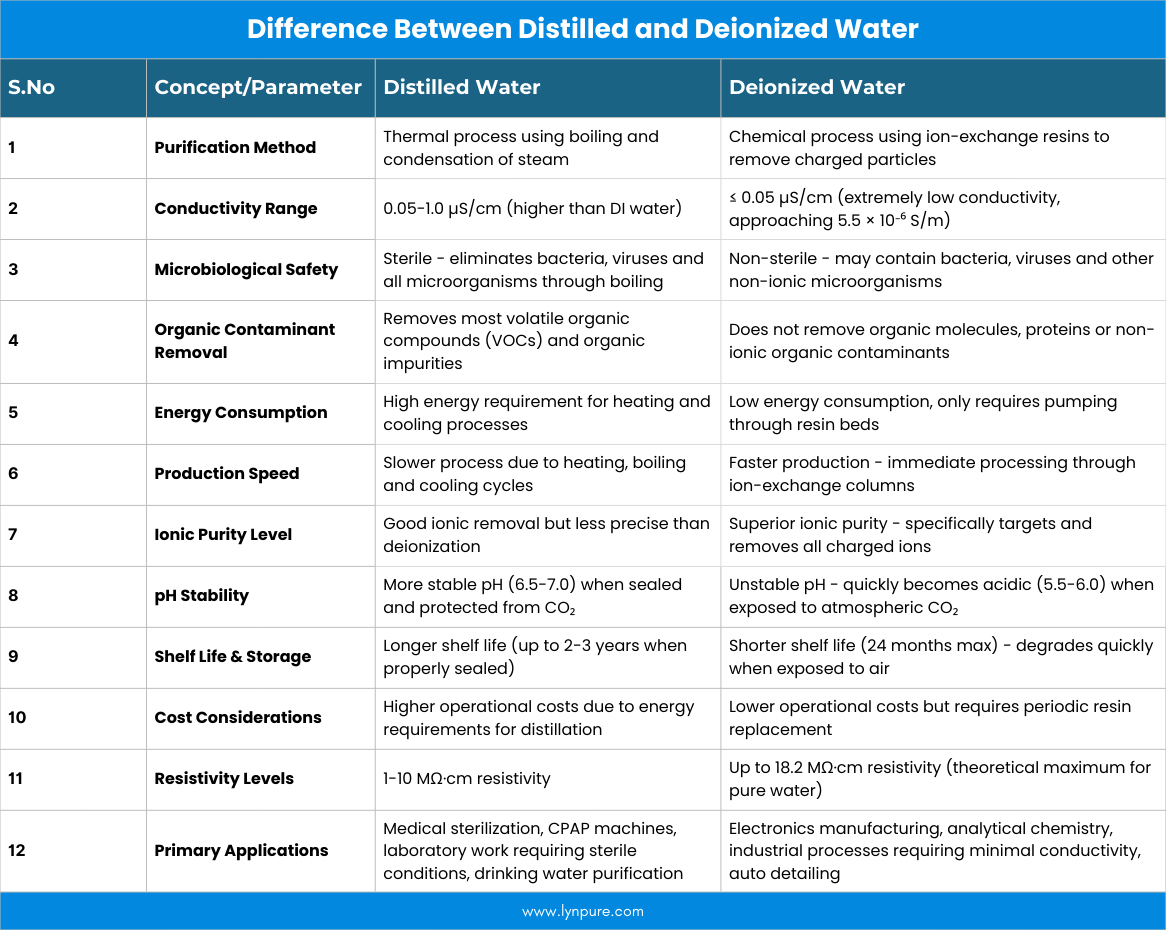
Okay, let’s be real for a second. If you’ve ever stared at a shelf of bottled water, your brain probably short-circuited. Like, isn’t water just… water? Oh, honey. No.
Today we’re tackling two of the biggest “fancy waters” out there: deionized and distilled. They sound like they belong in a lab coat, and honestly, they kind of do. But don’t worry—I’m going to make this so easy, you’ll be explaining it to your friends at dinner parties.
Let’s start with the basics. Both of these waters are purified, meaning they’ve had their nasty stuff removed. But how they get clean is like comparing a spa day to a superhero movie.
Must Read
Distilled Water: The Old-School Boil-’n-Bae
Distilled water is the grandparent of purified waters. It’s been around forever, and it gets the job done with a little heat. Here’s the short version: you boil water into steam, catch that steam, and let it cool back into liquid.
Why does that work? Because minerals, bacteria, and most chemicals have a higher boiling point than water. So when the water turns to steam, all the junk stays behind in the pot. It’s like a heavenly escape for H2O molecules.
The result? Water that’s about 99.9% pure. That’s great for steam irons, car batteries, and making your morning coffee taste like a melted cloud. But drinking it? It works, but it can taste a little flat—because, you know, all the minerals that give water personality are gone.
Fun fact: You can make distilled water at home with a pot, a lid, and some ice. It’s basically science for lazy people. You’re welcome.
Deionized Water: The Fancy Ion Bouncer
Deionized water sounds like a robot’s favorite beverage. In reality, it’s water that’s been passed through special resin beads that act like angry bouncers at a club. These beads grab onto charged particles (ions) like calcium, sodium, and chloride, and yank them out.
Think of it this way: distilled water says, “Bye-bye, bacteria! I’m boiling!” Deionized water says, “Sorry, charged particles. You’re not on the list.” It’s a chemical extraction, not a physical one.
Here’s the kicker: deionization doesn’t remove uncharged particles like viruses or organic molecules. So if you have muddy pond water, deionization is like putting a $5 filter on it—it helps, but you’re still drinking pond. Distilled water would handle that better because boiling kills everything.
Important note: Deionized water is often super reactive. It wants to absorb carbon dioxide from the air, turning it slightly acidic. That’s why it’s incredible for labs and factories, but not great for leaving in an open glass. It gets grumpy.
So… Which One Wins?
It depends on what you’re doing. If you’re drinking water, honestly? Neither is your best daily choice. Both are too pure—they can leach minerals from your body if you guzzle them nonstop. That’s why we have spring water now, you know, the stuff that tastes like rocks and feels alive.
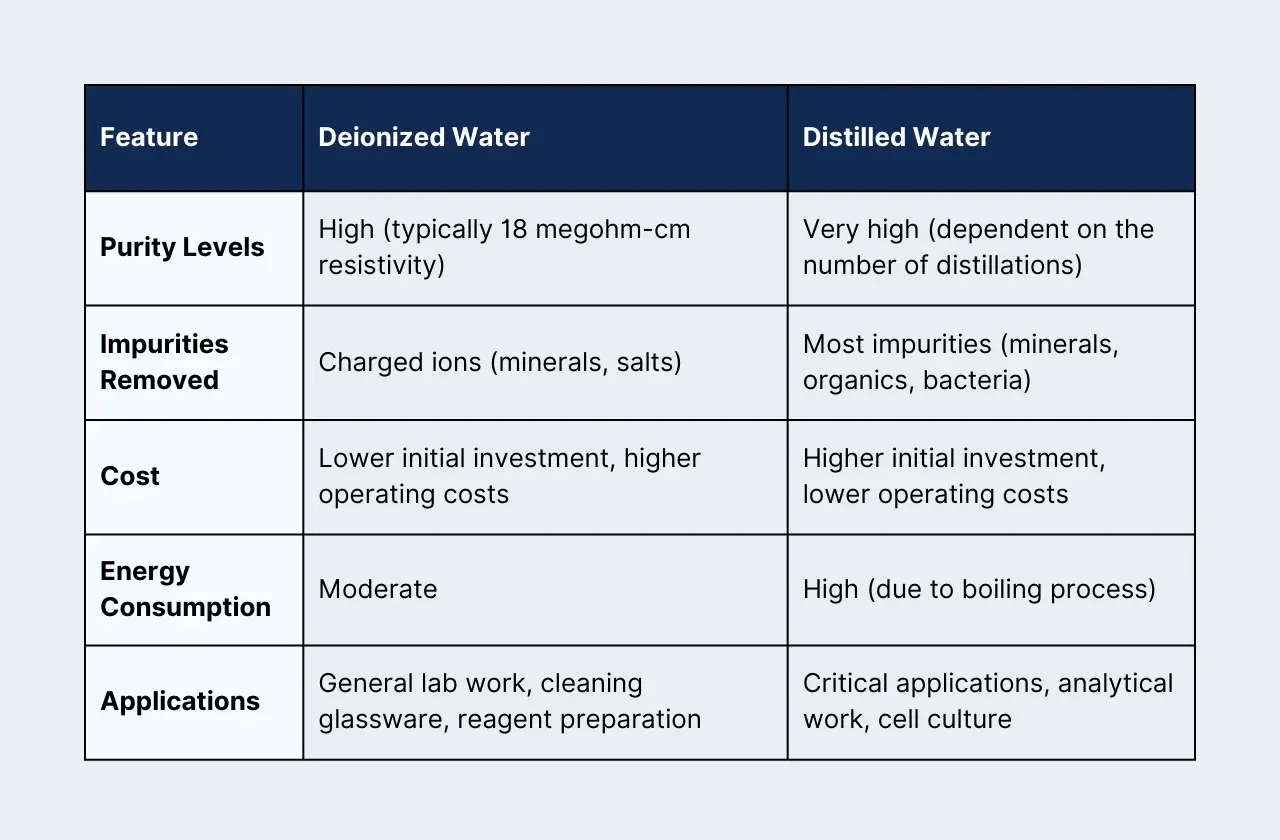 Is Deionized Water The Same As Distilled Water?
But for science, medical equipment, or fancy aquarium fish, these two are superstars. Distilled water wins for safety (it kills germs). Deionized water wins for purity (it removes salts and metals better).
Quick cheat sheet:
• Distilled: Boil, collect, done. Great for irons, baby bottles, and lab experiments.
• Deionized: Ion bouncer. Best for labs, car radiators, and making super-sensitive chemicals.
• Both: Terrible for tasting like a mountain stream. Sorry.
The Part Where I Make You Laugh
Let me tell you about the time I accidentally drank a glass of deionized water. It tasted like regret and silence. I expected it to be crisp and cool, but it was just… nothing. Like drinking a blank white canvas. Distilled water, on the other hand, tastes like a hug from a boring person. Perfectly fine, but no spark.
So why do we even care? Because sometimes you don’t want minerals. Sometimes you want water that won’t wreck your fancy espresso machine or leave white spots on your car’s paint. And for those jobs, distilled and deionized are the unsung heroes.
Word of warning: Don’t try to make deionized water at home unless you’re a chemistry wizard. The resin beads are expensive and messy. Meanwhile, if you try to distill water in your microwave, you’ll probably blow it up. Stick to buying the store stuff, okay?
The Uplifting Conclusion (You Knew It Was Coming)
Here’s the beautiful truth: whether it’s deionized, distilled, or good ol’ tap water, every drop of H2O is a miracle. Water is the reason you’re alive, the reason your plants grow, and the reason your cat drinks from the faucet at 3 AM. It’s flexible, it’s forgiving, and it never throws a tantrum.
So next time you see a bottle labeled “deionized” or “distilled,” don’t roll your eyes. Give it a little nod of respect. It worked hard to be that pure. And whether you’re brewing tea, cleaning a wound, or just splashing your face after a long day, you’ve got a perfect partner in water—no matter how it was made.
Drink up, smile, and remember: Life is too short for angry water. Go find the one that makes you happy. Even if it’s from the garden hose. (Just don’t tell the scientists I said that.)
—
Stay hydrated, you magnificent human.
