True Brew Beverage Services Consumables Footprint

So, you love a good cup of coffee. You probably think you’re just a humble bean enthusiast, right? Wrong. You, my friend, are a planetary-scale logistical overlord, and your b...
So, you love a good cup of coffee. You probably think you’re just a humble bean enthusiast, right? Wrong. You, my friend, are a planetary-scale logistical overlord, and your breakfast beverage is leaving a consumables footprint the size of Godzilla’s bunny slipper. Let’s talk about True Brew Beverage Services—the folks who keep the office pot alive—and the hilarious, horrifying trail of stuff they leave behind.
The Great Pod Apocalypse
Picture this: a single, shiny aluminum coffee pod. It looks innocent enough, like a tiny hat for a mouse. But in the afterlife, that pod lives forever, haunting a landfill like a caffeinated ghost. True Brew ships millions of these little screamers every year, and they don’t biodegrade; they just sulk.
Here’s the kicker: if you lined up all the pods True Brew sells in a year, you could probably walk to the Moon. Okay, maybe not the Moon, but definitely to that awkward neighbor’s house and back. The plastic and aluminum mix is a recycling Ninja Warrior course—tricky, dangerous, and most machines wave a white flag.
Must Read
But wait! True Brew has a secret weapon: they’re now offering compostable pods. These babies break down into soil faster than I break a New Year’s resolution. Just don’t ask what happens if you forget to toss them in the green bin. They’ll sit there, looking judgmental, for a few centuries.
The Syrup Situation
Ever squirt vanilla syrup into your latte and feel like a mad scientist? That tiny plastic bottle has its own epic saga. True Brew’s syrup fleet travels more miles than a migrating goose, wrapped in bubble wrap that could cushion a falling anvil. The carbon footprint of that single pump? Roughly the same as a penguin doing a backflip in a coal mine.
Surprising fact: one gallon of syrup concentrate requires about 1,200 gallons of water to produce. That’s enough water to fill your bathtub and then drown your guilt about adding extra pumps. And the bottles? Most are #7 plastic, the “Voldemort of plastics”—so hard to recycle, it’s basically forbidden magic.
True Brew is trying to be clever. They’ve started using bag-in-box syrup systems, like a wine bladder for your mocha. Less plastic, more fun—until the bag explodes in your mailroom. Then it’s just a sticky crime scene.
The Milk Maze
Dairy or oat? Whole or skim? Your choice sends shockwaves through the True Brew supply chain. A carton of cow milk has a carbon hoofprint roughly equivalent to driving a small car for a mile. Oat milk? It’s like driving a tiny electric scooter—but only if the oats were grown in a field that didn’t steal water from a river.
Here’s a laugh: True Brew once shipped a pallet of oat milk that froze solid in a Midwest warehouse. It thawed into a chunky, curdled nightmare. The staff called it “The Lactose Lament.” The moral? Consumables don’t care about your feelings—or the weather.
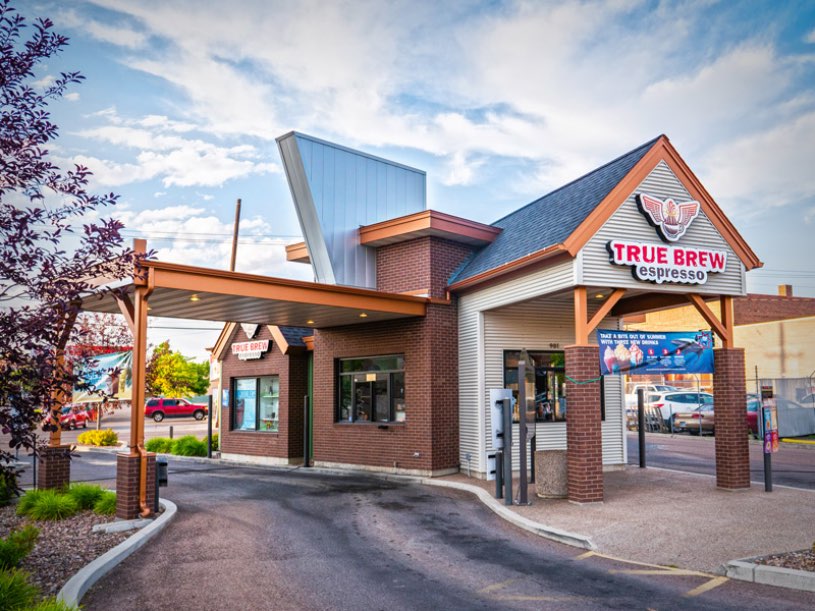 True Brew - Central Ave - Great Falls Montana Tourism
They’re now pushing for ultra-high temperature (UHT) milk, which lasts forever and tastes like a whisper of regret. But hey, it reduces spoilage waste by 30%. So you can sip your “eternal milk” and feel both smug and slightly nauseated.
The Stir Stick Secret
Let’s get tiny. Those plastic stir sticks? They’re the ninjas of waste. You use one for three seconds, then it goes on a 500-year vacation to a landfill. True Brew gives away millions of them. If you collected all those sticks from a single office, you could build a raft and sail to Hawaii. You’d probably get sunburned, but still!
Wooden stir sticks aren’t much better. They splinter, taste like a pine tree, and take a decade to rot. True Brew’s solution? Compostable stirrers made from pasta. Yes, you heard me. They turn into mush in hot coffee, but it’s deliciously weird. It’s like stirring your drink with a noodle that has a death wish.
The Hidden Cost of Coffee Grounds
Here’s the dirt: used coffee grounds are a superhero in disguise. They can fertilize gardens, scrub your face, and even absorb smells from your fridge. But what does True Brew do with their 50 tons of wet grounds per year? Mostly, they get buried in landfills, where they belch methane—a gas 25 times worse for the climate than your Uncle Bob’s jokes.
Surprising fact: coffee grounds can be turned into biofuel. A single True Brew service van could theoretically run on the grounds from one office’s Monday morning rush. They just haven’t figured out how to harvest the “Monday morning anguish” yet. That’s next-gen tech.
So next time you sip your skinny latte, remember: you’re part of a glorious, wasteful, hilarious circus. True Brew is juggling plastic, water, and whimsy to shrink that footprint. They’re trying, bless their caffeinated hearts. But until then, maybe reuse that stir stick for knitting a tiny sweater. For the planet.
