Can You Use A Water Softener With A Septic System

My neighbor, let’s call him Dave, recently installed a top-of-the-line water softener. He was so proud of that slick, salt-filled tank and the silky feel of his shower water....

My neighbor, let’s call him Dave, recently installed a top-of-the-line water softener. He was so proud of that slick, salt-filled tank and the silky feel of his shower water. Then, about three months later, his septic system started making noises that sounded like a dying whale. Suddenly, his silky showers were followed by a backyard crisis that smelled like a crime scene.
The Great Salt Debate: Is Your Septic System in Danger?
So, Dave came to me panicking, asking the same question you probably have: can you actually use a water softener with a septic system? The short, slightly cheeky answer is: yes, but don’t be an idiot about it. Ironic, right? The thing that makes your water lovely can also wreck your underground bacteria party if you ignore the rules.
Why the Drama? (The Science Bit, Made Simple)
Your septic tank relies on a delicate ecosystem of bacteria that eat solid waste. A water softener flushes out brine (salty water) during regeneration, and that salt can kill those helpful bacteria. Think of it like pouring a margarita mix into a fish tank—nobody wins.
Must Read
But here’s the twist: modern softeners are smarter than your average appliance. If you use a demand-initiated regeneration (DIR) system—one that only regenerates when it actually needs to—the salt exposure is minimal. The old timers that flush on a timer every night? Those are the septic-slayers.
The Real Worry: Water Volume, Not Just Salt
Honestly, salt gets all the blame, but the real culprit is often wastewater volume. Every time your softener regenerates, it dumps 40 to 60 gallons of water into your drain within minutes. That sudden flood can overwhelm your septic tank’s settling zone, pushing solids out into the drain field.
Picture this: your septic tank is like a nightclub—if too many people (water) arrive all at once, the bouncer (the solids) get pushed out the back door. Not pretty. A slow, steady flow is your septic system’s best friend.
When It Actually Works (The Good News)
Don’t throw your new softener out the window yet. Plenty of households run both systems successfully for decades. The trick is to pump your septic tank more often—every 2 to 3 years instead of the usual 3 to 5. Also, install a separate drain line for the softener’s brine discharge, directing it to a dry well or separate absorption area.
And please, for the love of clean laundry, use potassium chloride instead of sodium chloride for the salt. It’s pricier, but potassium is actually a fertilizer beloved by soil bacteria. Your garden will thank you.
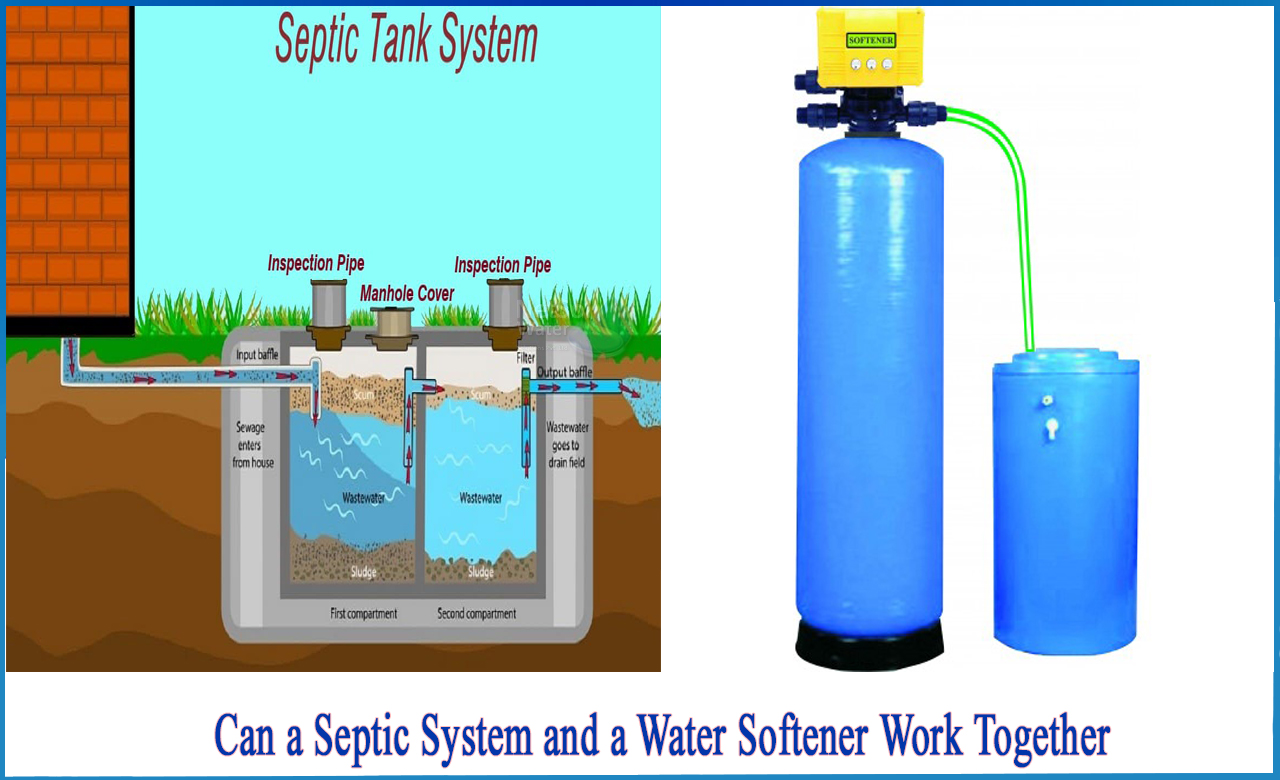 Can a septic system and a water softener work together
The Irony of “Better” Water
Isn’t it ironic that we add salt to remove “hardness,” but that same salt can harden your septic life? You buy a softener for softer skin, and end up with a softer… well, muddy yard. If you have a small septic tank (under 1,000 gallons), you’re playing with fire. A larger tank has more buffer capacity.
Here’s a side note just for you: check your local health department rules. Some areas ban softeners entirely if you’re on septic. Dave didn’t check, and his “dying whale” noise earned him a $1,500 repair bill. Ouch.
What to Do Right Now (Action Steps)
First, test your soil drainage by doing a simple percolation test. If your soil is clay-heavy, the salty discharge will just sit there. Second, buy a resin bead filter; it catches the tiny beads that can escape the softener and clog your septic pipes.
Third—and this is the big one—never run the softener regeneration cycle when you’re doing laundry or running the dishwasher. Stagger the big water events. Your septic system is like a slow eater; don’t shove a buffet down its throat.
The Verdict (Spoiler: It’s Complicated)
So, can you use a water softener with a septic system? Yes, but with grown-up supervision. You need a smart softener, regular pumping, and a pinch of preventative maintenance. Without that, you’ll end up like Dave—standing in his backyard with a shovel and a grimace.
Honestly, if you read this far, you’re already ahead of the curve. Your water will feel like silk, your toilets will flush happily, and your lawn won’t smell like a swamp. Just remember: your septic tank is a living thing—treat it with respect, not salty chaos.
