How Often Do You Change Filters On Reverse Osmosis

So, you’ve got a reverse osmosis (RO) system under your sink. You’re basically a water warlock, conjuring up pure, delicious H2O from the sad swamp juice that comes out of you...
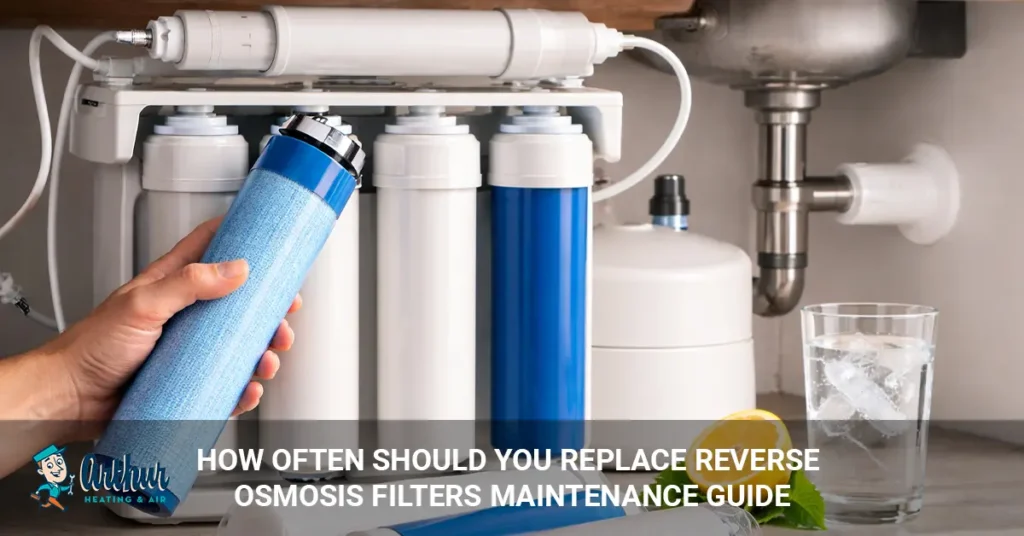
So, you’ve got a reverse osmosis (RO) system under your sink. You’re basically a water warlock, conjuring up pure, delicious H2O from the sad swamp juice that comes out of your tap. But let me guess: you’ve forgotten about the filters. It’s okay, we all do. That little system is like a Tamagotchi you bought at 2 AM—great in theory, but you’re starting to wonder if it’s secretly plotting against you.
Here’s the cold, hard truth: ignoring those filters is like wearing the same underwear for a year. It’s not just gross; it’s counterproductive. Your RO system works hard, forcing water through a semi-permeable membrane and a bunch of pre-filters. If you skip the swap, you’re basically telling your system, "Hey, please recycle your own filth." And it will listen. A neglected RO can actually become less effective than tap water, which is like buying a sports car and then filling the tank with sadness.
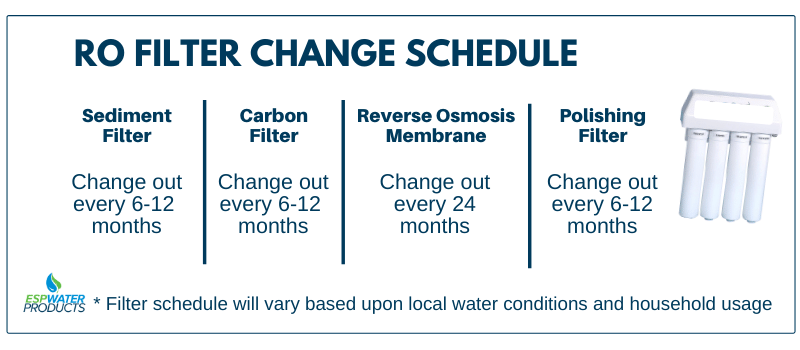
But how often do you really need to change them? Grab your coffee—or, you know, the purest water on Earth—and let’s break it down without the techno-jargon. Pre-filters (sediment and carbon) are the bouncers at the club. They catch the big, ugly stuff—rust, dirt, and that mysterious black gunk that looks like a failed science experiment. You should swap these every 6 to 12 months. Yes, that’s a wide window. It’s the "some assembly required" of water care. Ignore it for too long, and your water will taste like you’re licking a wet basement floor.
Must Read
The Membrane: The VIP You Keep Ignoring
Now, the RO membrane is the real diva. This is the expensive, finicky piece that actually removes dissolved solids—like lead, fluoride, and the lingering ghost of your morning orange juice. This thing can last 2 to 3 years, but only if you’ve been nice to it (i.e., changed your pre-filters on time). Think of it as a royal jellyfish; it works wonders, but it’s fragile. If your water starts tasting like a swimming pool, or the flow slows to a pathetic drizzle, it’s probably time to evict the old membrane.
Here’s where it gets spicy: a study by the Water Quality Association found that a clogged membrane can actually increase your water bill. How? Because the system runs longer to make the same amount of water, dumping more down the drain. It’s like your water is playing a cruel joke on you, flushing your money while you sip what feels like a lukewarm apology.
The "Polishing" Filter: The Cherry on Top
Don’t forget the final carbon block (or post-filter). This little guy is the "polishing" filter—it adds that crisp, "I’m better than you" taste. It’s the reason your water doesn’t taste like a plastic bottle left in a hot car. This one needs replacing every 12 months, without fail. Skip it, and your water will develop a strange, "why did I just drink that?" aftertaste. It’s the equivalent of putting a designer dress on a greasy mannequin.
But wait—what about the storage tank (if you have one)? That big blue bladder holds all your precious water. It doesn’t need a filter change, but it can get funky. If you notice a weird smell or "off" flavor even after changing filters, the tank might be growing a tiny ecosystem. That’s not good. You can sanitize it with a bit of bleach solution every two years. Do this wrong, and you’ll be drinking the ghost of a swimming pool. Fun!
 How To Change Reverse Osmosis Filters
Let’s pause for a surprising fact: your RO system is one of the most inefficient water filters ever invented. For every gallon of pure water it makes, it dumps 3 to 4 gallons down the drain. That’s a 25% efficiency rate. You’re basically using a firehose to water a single petunia. But it’s the best at what it does—removing everything from arsenic to the taste of your neighbor’s burnt toast.
Here’s the "lazy man’s guide" to reminders: if your system came with a digital TDS meter, check it monthly. A TDS reading above 50 ppm (parts per million) is a sign that your membrane is getting tired. If it hits 100 ppm, you’re drinking fancy tap water. If you don’t have a meter, just trust your taste buds. If your ice cubes smell like swamp gas, it’s time to act. Or, you know, set a recurring calendar alert on your phone. It’s less dramatic, but it works.
Now, a cautionary tale from real life. A friend of mine—let’s call him "Dave"—ignored his RO filters for 18 months. When he finally changed them, the sediment filter looked like a used coffee filter from a zombie apocalypse. The water that came out after the change was so clean, he swore it tasted like "mountain tears." Dave now changes his filters every six months like a man possessed. Don’t be Dave. Be the person who owns a calendar and knows where their Allen wrench is.
One last killer tip: most filter companies ship you new ones every 6 months automatically. It’s like a subscription for your dignity. Just do it. Your future self, sipping gloriously neutral water, will thank you. Your current self, reading this while staring at a dusty filter housing, has no excuses.
So, to sum it up: pre-filters every 6 months, post-filter every year, membrane every 2-3 years, and the tank gets a spa day every couple of years. It’s not rocket science—it’s water science, which is way more important and involves less math. And if you still forget? Well, you can always buy bottled water. But then the plastic bottle will haunt you. Pick your poison—or, you know, change your damn filters.
