How Often Should You Regenerate Your Water Softener

Let’s be honest: your water softener is probably the most ignored piece of equipment in your house, right behind that weird button on your garage door opener. It sits there in...

Let’s be honest: your water softener is probably the most ignored piece of equipment in your house, right behind that weird button on your garage door opener. It sits there in the basement, humming away, and you only remember it exists when your shower feels like a chalk festival. Figuring out how often to regenerate it feels like guessing how many jellybeans are in a jar—except the prize is soft skin and no scummy rings in your toilet.
First, a quick reality check: regeneration is basically your softener taking a deep breath, flushing out all the calcium and magnesium it has collected, and reloading with fresh salt. If you never let it regenerate, you’ll end up with hard water again, and your dishes will look like they’ve been dusted with powdered milk. It’s a simple cycle, but the timing is where most of us get it gloriously wrong.
The One-Size-Fits-All Lie
You’d think there’s a universal schedule, like changing your smoke detector batteries every time you change the clocks. Nope. Every household is a different beast, and your softener’s regeneration frequency depends on water hardness, how many people live with you, and how much you love long, scalding showers.
Must Read
If you’re a single person who lives alone and uses water like a desert lizard, you can probably regenerate once every seven to ten days. But if you’ve got a house full of teenagers who take 45-minute showers and do laundry like they’re running a hotel, you might need to regenerate every two or three days. It’s not about being right or wrong; it’s about admitting your water usage is out of control.
The "Set It and Forget It" Trap
Most modern softeners have a little timer that says, “Hey, I’ll regenerate at 2:00 AM every Wednesday.” That’s fine, unless your family suddenly has a water-using event like a bathtub party for your dog or you start watering your prize-winning petunias with the hose from the softener. Then your softener runs out of oomph mid-week, and you’re left with hard water until the next scheduled midnight rave.
I learned this the hard way when I came home from vacation and my wife said the water was “angry.” The softener hadn’t regenerated in two weeks because we were gone, so it just sat there, full of hardened minerals, mocking us. Now I manually run a regeneration cycle every time I see salt levels drop below half, which is about once a week for our medium-sized family.
Signs You’re Regenerating Too Often
If you’re regenerating every single day, you’re basically water-softening like a nervous parent who checks the baby every five minutes. This is wasteful—you’ll burn through salt and water like crazy, and your wallet will look at you with disappointment. Also, your softener might start spitting out brine that smells like a swimming pool, which is not the vibe you want in your laundry.
A good rule of thumb: if your salt usage is more than a bag every two weeks for a typical 3-4 person home, you’re probably overdoing it. Ease up, tough guy. Your softener isn’t a race car; it’s a gentle workhorse.
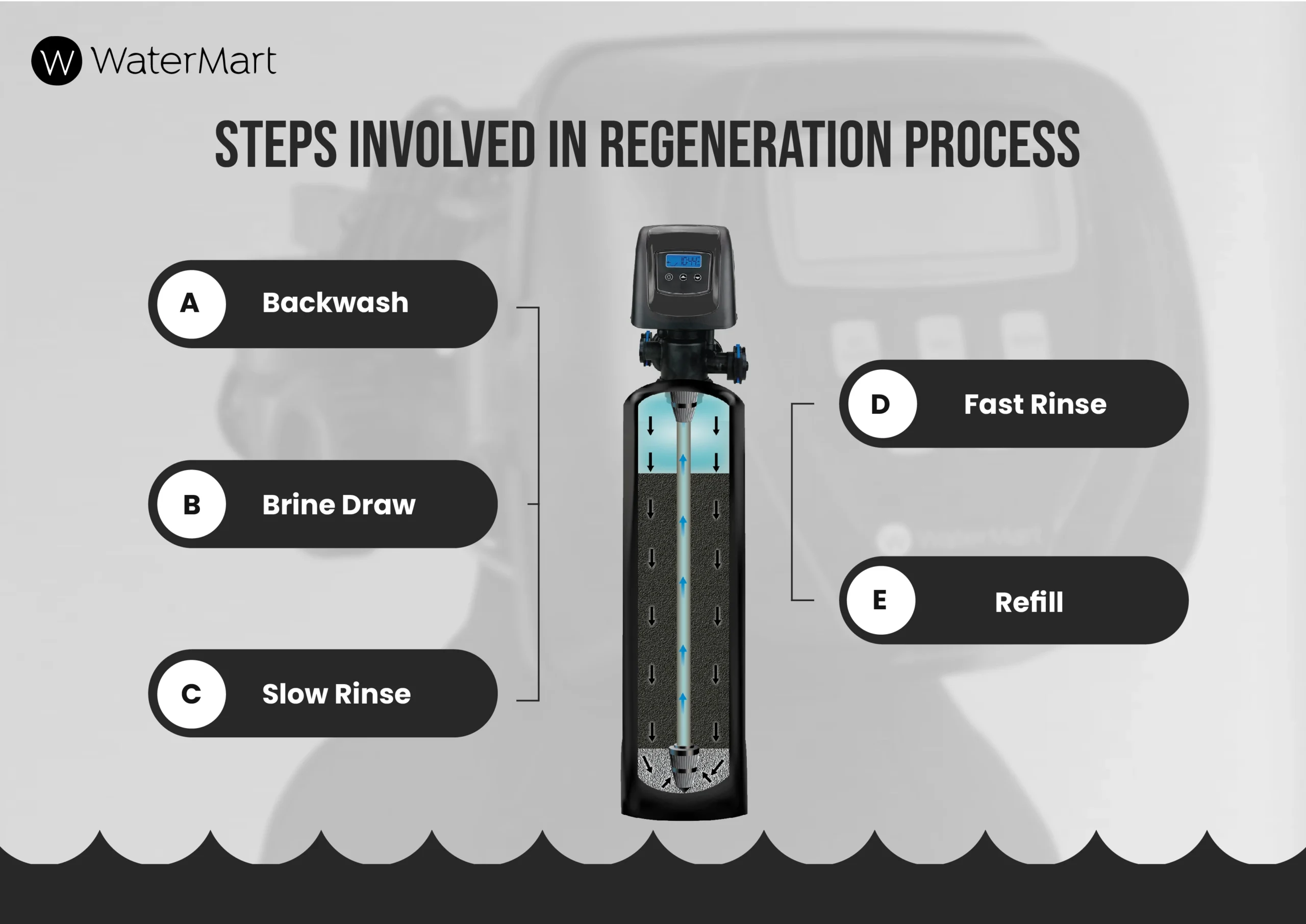 What Is Water Softener Regeneration - Process And Its Types
The "I Never Regenerate" Danger
On the flip side, if you’re the type who says, “I’ll do it next month,” your softener will eventually throw a tantrum and stop working entirely. You’ll know because your shower head will clog up, your hair will feel like straw, and your dishwasher will leave spots that look like tiny polka dots. You’ll blame the detergent, but deep down, you know it’s your own procrastination.
I once had a neighbor who hadn’t regenerated in six months because he “forgot.” His softener literally grew a beard of salt crust that had to be chiseled off with a screwdriver. He now regenerates every Sunday morning, rain or shine, and texts me a photo of the clean brine tank like it’s a religious offering.
The Sweet Spot: How to Find Your Rhythm
The easiest way is to check your softener’s manual—yes, the one you shoved in a drawer—and look for the “hardness setting.” Set it to your actual water hardness (you can get a test kit for under $10 at the hardware store). Then, let the unit run on demand-initiated regeneration, if it has that feature. This means it only flushes when it’s actually full of mineral gunk, not on a fixed day.
No fancy features? No problem. Start with a 7-day cycle and adjust based on your water’s behavior. If you start seeing soap scum before the week is up, drop it to 5 days. If you’ve got silky water with days to spare, stretch it to 10. It’s like training a puppy—you’ll find the right schedule through gentle trial and error.
The Grand Finale
Here’s the blunt truth: you don’t need to obsess over this. Your softener is tougher than you think, and missing a regeneration by a day or two won’t cause a nuclear meltdown. Just peek at the salt level once a week, maybe while you’re waiting for your coffee to brew, and hit the “regen” button if the salt looks low. That’s it.
And if you still feel lost, just remember the golden rule: regenerate more often if your house smells like a gym after a shower, and less often if you’re still finding pebbles in your tea kettle. Your water will thank you, your skin will glow, and you’ll never have to chisel salt off a tank again. Now go drink some of that gloriously soft water—you’ve earned it.
