Ultraviolet Water Treatment For Waterborne Diseases

Let’s talk about water. Not just any water—the stuff that hides tiny monsters. You can’t see them, but they’re there: bacteria, viruses, and microscopic party-crashers looking...
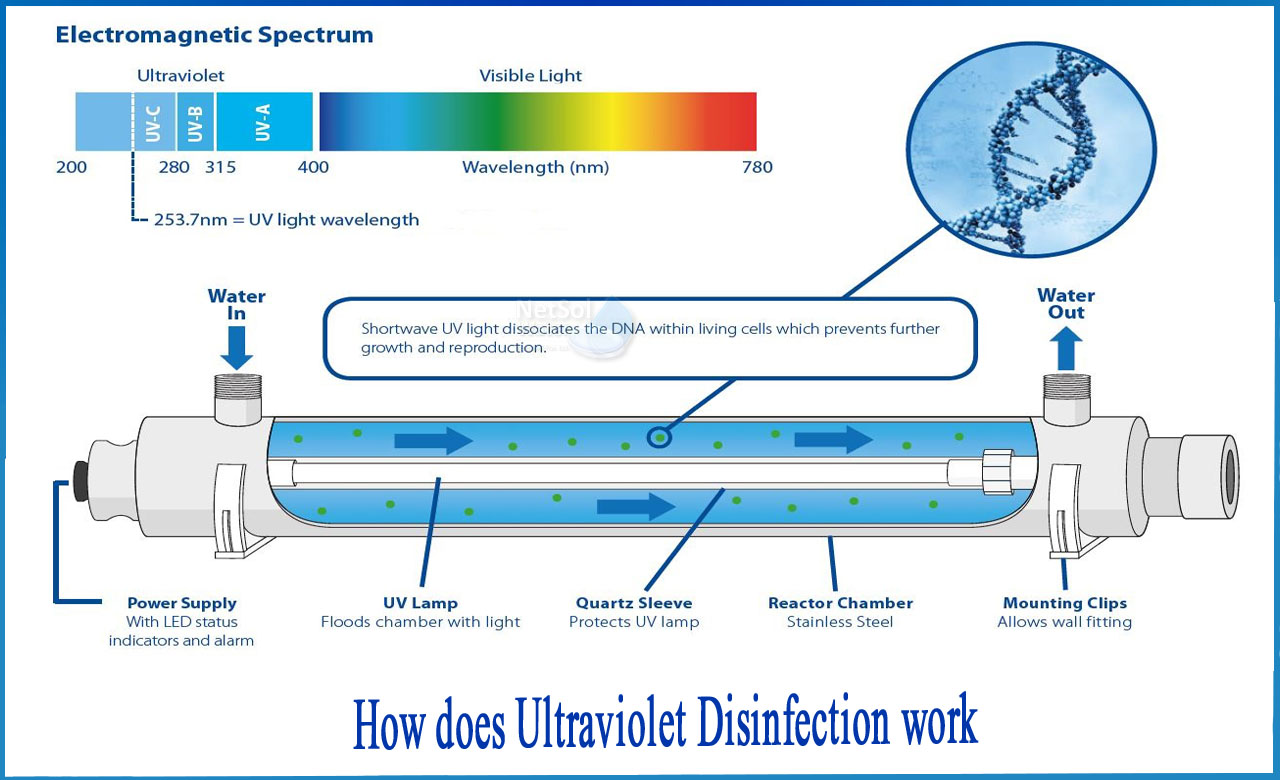
Let’s talk about water. Not just any water—the stuff that hides tiny monsters. You can’t see them, but they’re there: bacteria, viruses, and microscopic party-crashers looking to ruin your day. Enter ultraviolet (UV) water treatment, the invisible bouncer for your drinking glass.
Why UV? Because Sunlight is Basically Superpowered
UV light is like a sunburn for germs. It zaps their DNA, making them unable to reproduce. Dead germs can’t make you sick. It’s that simple.
Chemicals like chlorine work, but they’re so last century. UV doesn’t add any taste, smell, or weird aftertaste. Your water stays crisp and clean—like a mountain spring, but without the bear risk.
Must Read
The Science is Actually Hilarious (When You Think About It)
Picture a rave. The bacteria are dancing. Suddenly, UV light hits like a giant disco ball of doom. Their genetic code gets tangled. They can’t party anymore. Game over.
This isn’t magic—it’s physics. UV light is a specific wavelength (around 254 nanometers). That’s shorter than your pinky nail. But for tiny organisms, it’s like standing in front of a death ray.
Fun fact: UV treatment doesn’t kill the germs; it sterilizes them. They’re still there, floating around—but they’re zombies. Harmless zombies. Zombie germs. You’re welcome for that mental image.
Why You Should Care (Even If You Live in a City)
Think waterborne diseases are just for backpackers in the jungle? Nope. Cryptosporidium and Giardia can sneak into municipal water supplies. They’re tough little blobs that laugh at chlorine.
UV treatment doesn’t care if they’re tough. One zap and they’re done. It’s the karate chop of water purification.
Even fancy bottled water sometimes has issues. UV ensures you’re not drinking a mystery stew. Your gut will thank you—loudly and quietly.
The Quirky Tech Inside Those Shiny Tubes
UV water treatment units look like something from a sci-fi movie. A dark metal tube, a glowing blue light, and water rushing through. It’s basically a lightsaber for your faucet.
These devices use mercury vapor lamps or LEDs to produce UV light. The LED versions are so small they fit in a water bottle. Imagine hiking with a pocket-sized sun.
Some systems use a dose of UV measured in millijoules per square centimeter. That sounds like coffee measurements. It’s not. It’s the sweet spot where 99.99% of pathogens wave goodbye.
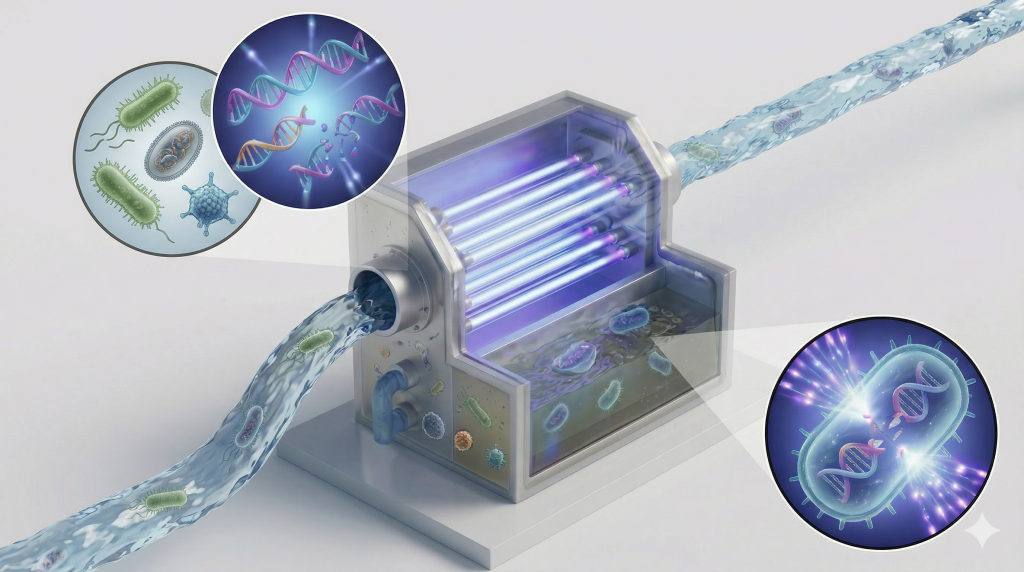 UV Water Treatment - GL Environment
Funny Details That Make You Go “Huh?”
UV treatment doesn’t work if the water is cloudy. Germs can hide in murky shadows. So, you need to filter it first. It’s like cleaning your glasses before looking through a telescope—obvious but hilarious when you forget.
Some UV systems have a wiper inside that cleans the quartz sleeve. A tiny robot squeegee for your water. I am not making this up.
If the light flickers, it’s broken. No flicker means it’s working. But you can’t see UV light anyway—it’s invisible. So you stare at a blue glow, trusting that invisible death beams are doing their job. Trust the beam.
Why This Topic is Actually Fun to Talk About
Because it’s secretly cool. You can tell your friends, “I just disinfected my entire Brita with photons.” They’ll think you’re a wizard.
Waterborne diseases are scary, but UV treatment is satisfyingly simple. No chemicals, no boiling, no waiting. Just light doing its thing. It’s like the microwave of water safety—fast and almost too easy.
Plus, you can geek out about germs dying by sunlight at parties. Sure, people might edge away. But you’ll know the truth: you’re a warrior against invisible invaders.
The Takeaway: Don’t Be Gross, Be UV-Smart
UV treatment is not a cure-all. It doesn’t remove dirt, heavy metals, or bad tastes. But for microbes? It’s a knockout punch.
Pair it with a simple carbon filter, and you’ve got the Batman and Robin of water purification. One traps the villains, the other zaps their plans.
So next time you sip from a UV-treated bottle, smile. You’re drinking water that has been scorched by light,purified by science, and saved from a zombie germ apocalypse. Cheers to that—no weird taste required.
