Is Reverse Osmosis Water The Same As Distilled Water

Let’s be honest: water is pretty boring stuff. We turn on the tap, fill a glass, and gulp it down without a second thought. But once you start reading labels on bottled water...
Let’s be honest: water is pretty boring stuff. We turn on the tap, fill a glass, and gulp it down without a second thought. But once you start reading labels on bottled water or tinkering with home filters, things get weirdly interesting. Suddenly, you’re staring at terms like “reverse osmosis” and “distilled,” wondering if they’re just fancy words for the same thing.
Spoiler: they are not the same. But the good news is, understanding the difference is way easier than you think. It’s like the difference between a gentle rain shower and a steam bath—both get you wet, but they go about it in totally different ways.
The Short Answer (for the impatient)
No, reverse osmosis water is not the same as distilled water. They are two different processes that both aim to remove impurities, but they leave you with slightly different results. Think of it like baking a cake: one recipe uses a mixer, another uses a whisk—the cake is still a cake, but the texture changes.
Must Read
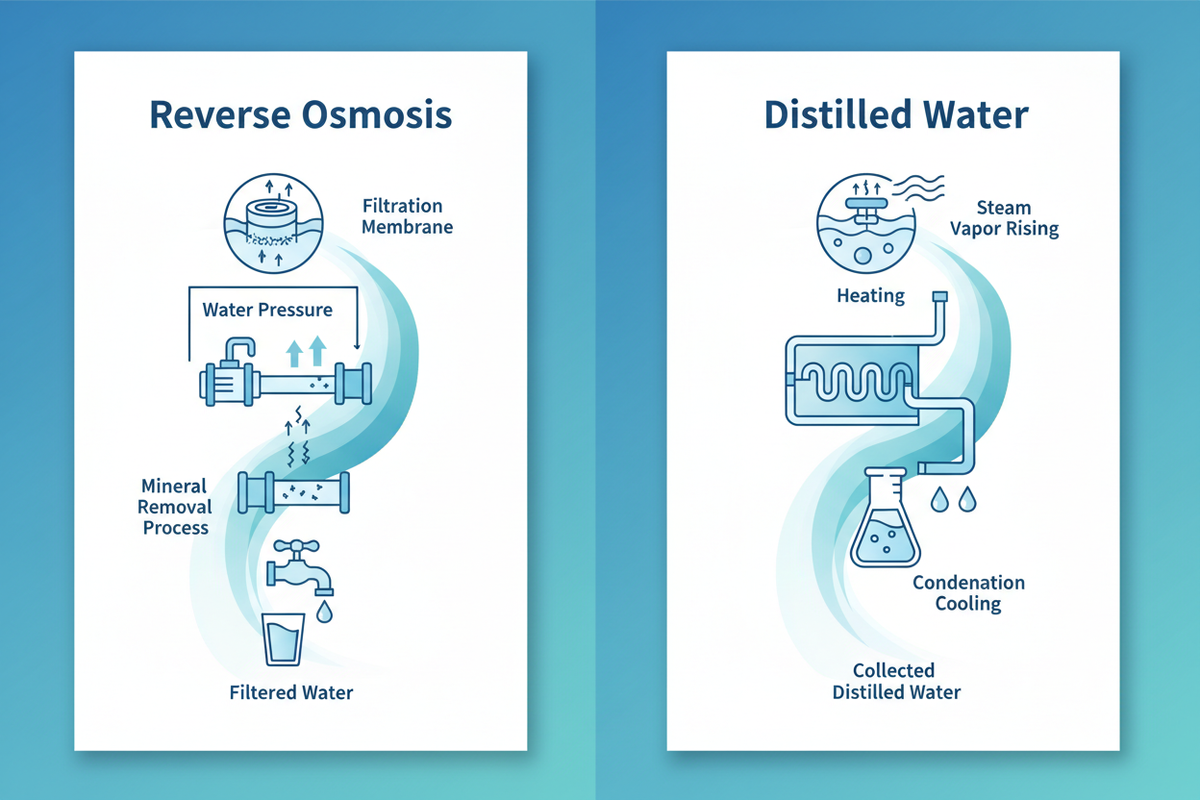
In simple terms: distilled water is boiled into steam and then cooled back into liquid. Reverse osmosis pushes water through a super-fine membrane that acts like a microscopic strainer. Both strip out minerals, bacteria, and other stuff you probably don’t want. But they don’t do it exactly the same way.
Let’s Get Visual: A Kitchen Story
Picture your kitchen sink. Now imagine you want to remove all the tea leaves from a pot of brewed tea. Distillation is like boiling that tea until the water turns to vapor, leaving the tea leaves behind in the pot, then catching the pure vapor in a cold glass. It’s a phase-change—the water goes from liquid to gas and back.
Reverse osmosis is like pouring that same tea through a super-fine coffee filter that only lets water molecules through. The tea leaves, the color, the flavor—all of it gets stuck on top. No boiling, no steam. Just clean water dripping out the other side. See? Totally different approaches!
Why Should You Care? (The Real-Life Difference)
Distilled Water: The Purist’s Choice
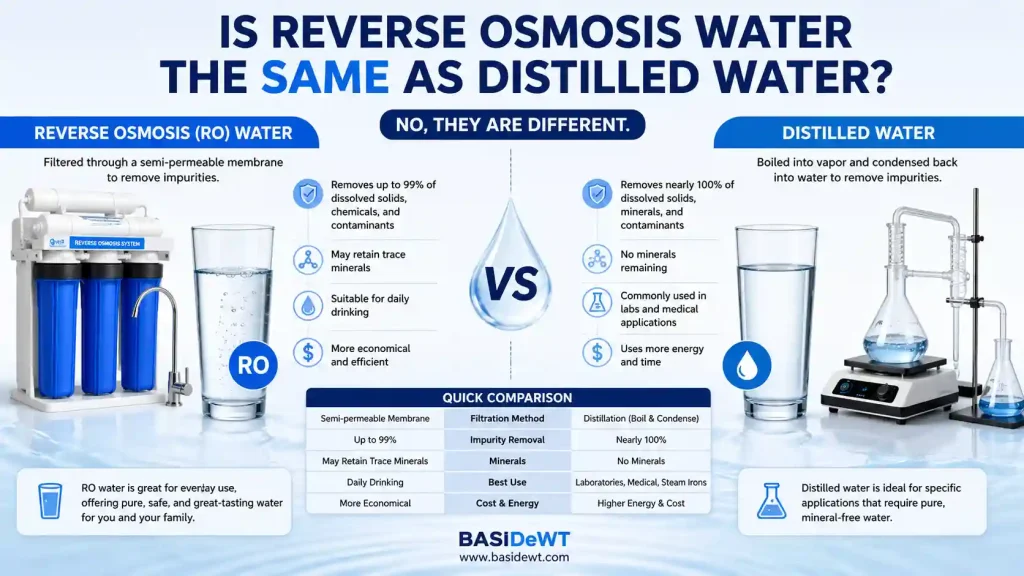
Distilled water is extremely pure. It’s so stripped down that it can taste a little flat—like drinking a blank page. Have you ever sipped water from a hotel ice machine and thought, “Huh, this tastes weirdly empty”? That’s probably distilled or very purified water.
People love distilled water for: steam irons, car batteries, and medical devices. It’s also great for making clear ice cubes that don’t cloud up your whiskey. But drinking it long-term can be controversial because it lacks minerals like calcium and magnesium. You’re basically drinking the purest, most boring water on Earth.
Reverse Osmosis Water: The Balanced Friend
Reverse osmosis (or RO) water is still very clean, but it usually keeps a tiny bit more of the natural minerals. It tastes fresher, more like “water” than “nothing.” That’s why many under-sink filters and fancy water bottles use RO.
RO is the water you’ll find in most “purified” bottled water—like Aquafina or Dasani. It’s also what you get from many home filtration systems. The trade-off? It’s less pure than distilled, but it’s way more practical for everyday drinking. You don’t need a chemistry degree to enjoy it.
 Is Reverse Osmosis Water the Same as Distilled Water? - Basidewt-Best
Which One Should You Drink?
Honestly? Unless you have a specific medical reason or a weird obsession with pure ice, reverse osmosis water is the better choice for daily drinking. It’s clean, tastes good, and doesn’t leave you feeling like you’re sipping a cloud.
Distilled water is best for: your humidifier, your CPAP machine, or when you’re experimenting with making your own electrolyte drinks. It’s a tool, not a beverage. Drinking it every day might make you feel a bit… empty. Like eating plain oatmeal with no salt.
But here’s the kicker: both are infinitely better than tap water that tastes like a swimming pool. If your tap water has chlorine, heavy metals, or just tastes like dirt, either option is a huge upgrade. It’s like comparing a Toyota and a Honda—both will get you where you need to go, but one has a slightly smoother ride.
A Little Reality Check
Now, don’t stress over this. Most people don’t need distilled water in their lives. If you’re healthy and eat a balanced diet, the minerals in RO water are negligible anyway. You get your calcium from milk and your magnesium from nuts, not from your faucet.
The real takeaway? If you want water that’s literally nothing but H2O, go distilled. If you want clean, pleasant-tasting water that’s still got a little life in it, go reverse osmosis. Both are great. Neither will make you grow a third arm.
So, To Wrap It Up (Without a Bow)
Think of distilled water as the monk of water—pure, simple, and a little out of touch with everyday life. Reverse osmosis water is your friendly neighbor who helps you out and still brings dessert to the potluck.
Neither is “better” universally. It’s about context. Use distilled for your car’s radiator. Drink RO for your morning coffee. And if someone tries to sell you “premium distilled water” for $5 a bottle, just smile and walk away. Your wallet will thank you.
At the end of the day, water is water. Drink enough of it, stay hydrated, and stop overthinking. Your body doesn’t care about the process—it just wants the wet stuff. Cheers!
