High-purity Deionized Water Filters For Laboratories

We’ve all been there. You fill your kettle with tap water, boil it, and a week later you’re scraping out what looks like a miniature limestone cave. That crusty, white nonsens...

We’ve all been there. You fill your kettle with tap water, boil it, and a week later you’re scraping out what looks like a miniature limestone cave. That crusty, white nonsense? That’s minerals—calcium, magnesium, and other hitchhikers that refuse to leave your drink alone. Now imagine those same hitchhikers crashing a laboratory experiment. One rogue calcium ion lands in your DNA sample, and suddenly your results look like a toddler’s art project gone wrong.
That’s where high-purity deionized water filters waltz in. They’re the bouncers of the water world. Their only job? To kick out every single charged particle (ions) until the water is so empty, so pure, it’s almost sad.
What Even Is Deionized Water?
Think of regular tap water as a crowded party. It’s full of sodium, chloride, nitrates, and a bunch of uninvited guests. Deionized water is that party after everyone has been politely escorted out—leaving behind just H₂O, sitting alone on the couch. Pure loneliness.
Must Read
This isn’t your bottled spring water. Spring water is the fancy guest who brings expensive minerals. Deionized water is the empty room. For labs, that emptiness is gold. It doesn’t react. It doesn’t conduct electricity. It just sits there, obediently, like a well-behaved golden retriever.
Why Labs Are Obsessed With It
If you ever do a chemistry experiment and use tap water, you’ll likely end up inventing a new compound by accident. “Look, Professor! I created bathroom scale residue!” Labs need water that won’t mess with their work. Every trace mineral can ruin a calibration, a titration, or a cell culture.
It’s like trying to bake a perfect sugar cookie, but every time you add flour, someone sneaks in a pinch of salt. Eventually, your cookie tastes like a tearful apology. Deionized water is the safety net that stops those sneaky pinches.
And the best part? These filters are usually just fancy cartridges full of resin beads. The beads act like tiny magnets, yanking out charged particles. You don’t see the magic; you just trust the machine. It’s honestly a little unsettling how quiet the water becomes.
You’ve Probably Experienced It (Without Knowing)
Remember that time you bought a shiny new car battery? If you ever topped it off with tap water, you shortened its lifespan faster than a teenager drains a phone battery. Battery makers demand deionized water so the minerals don’t create short circuits. Same goes for aquariums, humidifiers, and those fancy steam irons that promise no wrinkles.
I once refilled my iron with filtered fridge water. The iron started spitting out what looked like white confetti onto my shirt. My wife called it “mineral snow.” I called it a cry for help. A lab-grade deionized filter would have prevented that tragic fashion moment.
It’s the same water they use to clean microchips. If even a speck of dust lands on a microchip, the whole thing is toast. So yes, the computer you’re reading this on was rinsed in water more pure than most people drink.
The Filtering Process: A Quick Peek Under the Hood
These filters usually come in stages. First, a sediment filter catches the big stuff—dirt, rust, and your existential dread. Then an activated carbon block grabs chlorine and smells. Finally, the deionization resin does the heavy lifting, swapping out all the ions for hydrogen and hydroxide. Those two instantly combine to make more H₂O. It’s like a self-recycling magic trick.
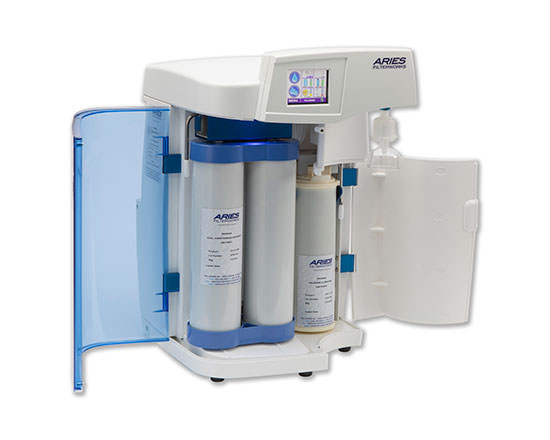 Deionized Water Systems | DI Water Exchange High Purity Water
Some systems also use reverse osmosis before deionization. That’s basically forcing water through a membrane so tiny that most contaminants get rejected. It’s the water equivalent of airport security checking your ID, patting you down, and then asking if you have any ions in your carry-on. No ions allowed.
The result is water with a resistivity of 18.2 megohm-cm. That number is the gold standard. If it drops below that, the lab technicians start sweating and checking the resin cartridges like they’re looking for their lost wedding ring.
Everyday Anecdote: The Coffee Incident
My friend, a lab manager, once bragged about making coffee with lab deionized water. He said it was the most neutral cup he ever had. I tried a sip. It tasted like a blank stare. No bitterness, no acidity, no personality. It was the coffee equivalent of beige wallpaper.
But guess what? For his DNA extraction experiment, it was perfect. The water didn’t interfere with his enzymes. The coffee, however, was a legitimate crime scene. So, note to self: don’t drink lab water unless you enjoy flavorless tea.
That’s the funny trade-off: water so pure it’s bad for drinking, but perfect for science. Your body actually needs those minerals. A lab doesn’t. It just wants the H₂O molecule to behave like a quiet intern who never asks questions.
Maintenance: The Filter Replacement Blues
Eventually, the resin beads get full of captured ions. They stop working. Then you have to swap the cartridge. It’s like changing a Brita filter, but much more expensive and accompanied by a lot of sighing. Labs usually keep a logbook—a “pure water diary” filled with dates and resistivity numbers. It’s surprisingly satisfying to watch the numbers climb back up after a fresh cartridge.
If you forget to change the filter, you get what’s called “ion bleed.” Suddenly, your ultra-pure water has a little sodium. It’s like discovering a drop of ink in your glass of crystal-clear vodka. Panic ensues.
But when everything works, the water flows, the experiments succeed, and nobody asks for an explanation. It’s just pure, obedient, boring water. And in a laboratory, boring is the most beautiful thing you can ask for.
So next time you see a lab technician casually pouring water from a sleek, black dispenser, nod knowingly. They’re not just wetting things—they’re wielding the power of absolute neutrality. And they probably haven’t had a decent cup of coffee all day.
