High-purity Deionized Water Systems For Laboratories

So, you’re running a lab, huh? Fancy. Or maybe you’re just a science nerd who loves gadgets. Either way, let’s talk about water. Not just water, though. We’re talking about hi...
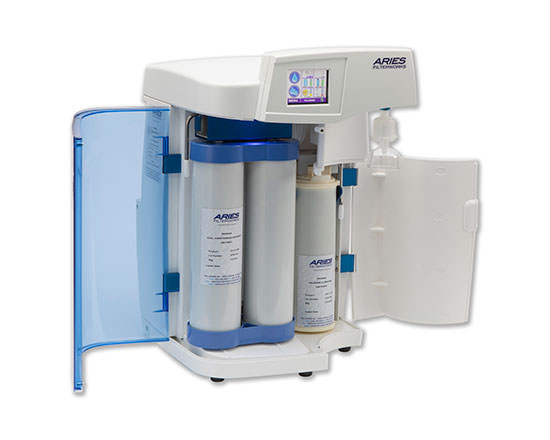
So, you’re running a lab, huh? Fancy. Or maybe you’re just a science nerd who loves gadgets. Either way, let’s talk about water. Not just water, though. We’re talking about high-purity deionized water systems.
You know that tap water you drink? It’s basically a soup of minerals, salts, and weird stuff. In a lab, that soup ruins experiments. It’s like trying to bake a perfect cake with mud instead of flour.
That’s where deionized (DI) water swoops in to save the day. These machines strip everything out. We’re talking 99.99% pure H₂O. It’s so clean it’s almost unsettling. Like, what if your water has no personality?
Must Read
Why do you even need this stuff?
Imagine you’re doing a DNA test. A single speck of calcium from tap water could mess it up. Suddenly your results say your sample is a banana. Not good.
Or think about making a solution for cell cultures. Those cells are divas. They’ll die if they taste a hint of chlorine. Deionized water gives them the spa treatment they deserve.
Even simple things like cleaning glassware matter. With DI water, no residue means no weird reactions later. It’s the difference between a clean lab and a lab where things explode. Metaphorically, mostly.
How do these systems actually work?
Here’s the fun part—or the nerdy part, depending on your caffeine level. Most systems use a combo of filters and ion exchange resins. Think of resins as tiny, angry magnets that grab charged particles. They yank out calcium, magnesium, and other free-loaders.
Some systems also use reverse osmosis first. That’s like forcing water through a super-fine sieve. It catches bacteria, organics, and even some viruses. Then the DI resins finish the job.
And yes, there are polishing loops for the truly anal-retentive labs. These recirculate water over and over until it’s basically liquid nothingness. You could probably water your plants with it—if you wanted dead plants.
Types of systems (because of course there are options)
You’ve got point-of-use systems. These sit right at your sink or workstation. They’re small, cute, and perfect for a few liters a day. Think of them as the espresso machine of water purification.
Then there are central systems. These are the big boys, often hidden in a basement or closet. They pipe DI water to multiple faucets across the lab. It’s like having a private water sommelier for every bench.
And let’s not forget portable DI cartridges. You can swap them like a cartridge in a printer. Just don’t shake them too hard—they’re expensive, and you’ll look like a fool.
What about maintenance? (spoiler: it’s not fun)
Okay, real talk: these systems are prima donnas. They need regular TLC. The resin cartridges eventually get full of junk and stop working. You have to replace them, and they’re not cheap. It’s like buying a very expensive Brita filter.
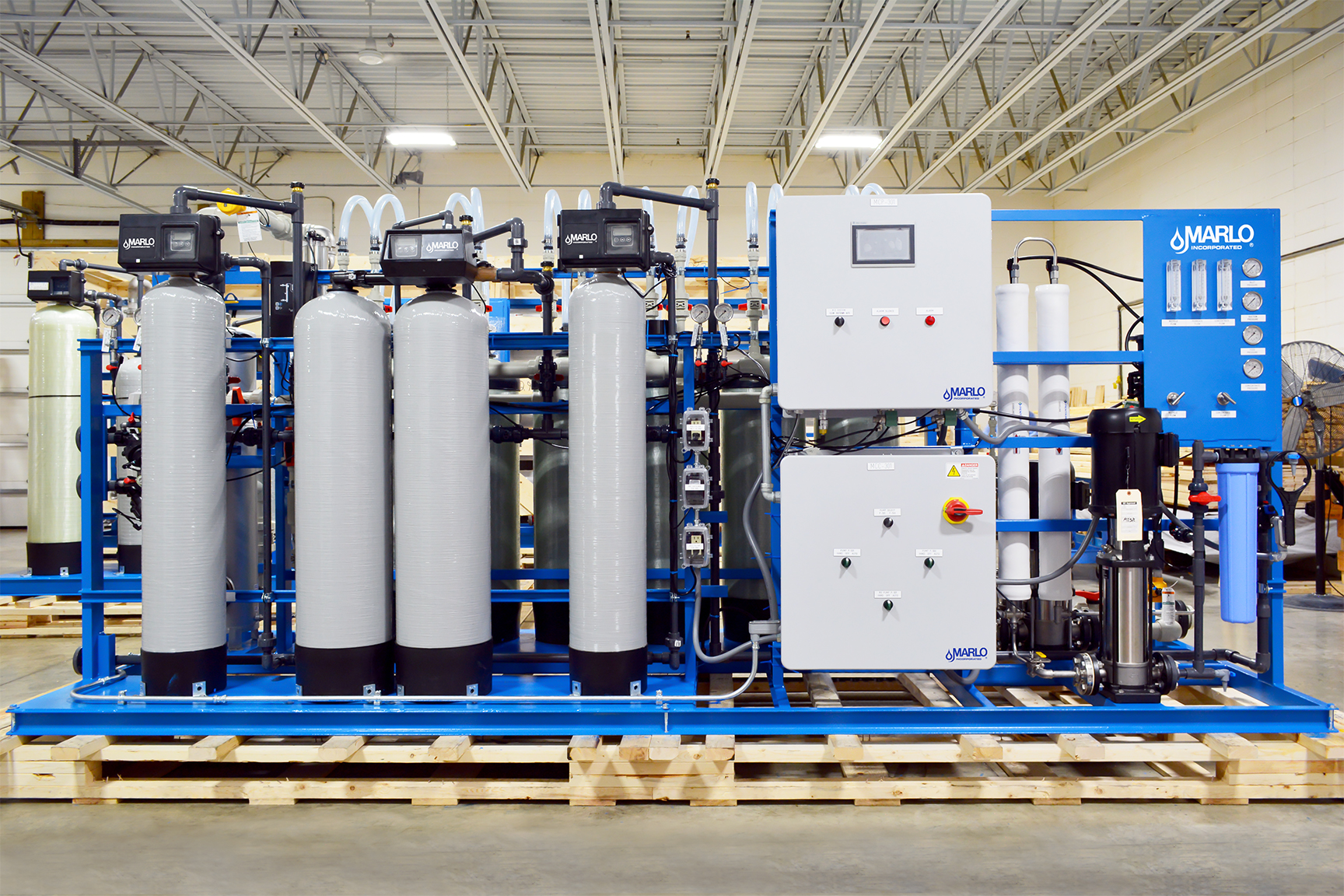 Laboratory-Grade High Purity Water System | MARLO
Also, if you don’t use the water often, it can grow bacteria. Yes, bacteria in “pure” water. Irony at its finest. That’s why some systems have UV lights to zap the bugs.
But here’s the kicker: proper maintenance saves money. A neglected system wastes water and energy. It’s like owning a sports car and never changing the oil. Tragic.
Real-life lab drama (and how DI water saves the day)
I once watched a friend use tap water for a mass spectrometry experiment. The results looked like a Jackson Pollock painting. Useless. He had to redo three days of work.
Another time, a colleague used DI water to rinse a pH meter. The reading was perfect. With tap water? The meter just laughed and gave a random number. Rude.
Honestly, if you’re doing any sensitive analysis—HPLC, ICP-MS, enzymatic assays—you look like a mad scientist without DI water. It’s not optional. It’s the bare minimum.
Should you buy one?
If you run a lab, yes. It’s like asking if you need a microscope or a pipette. It’s the foundation of good science. Don’t be that person who blames bad results on “contaminated samples” when you’re using tap water.
If you’re a hobbyist—say, making homemade kombucha or tinkering with chemistry sets—a small DI system can be fun. You’ll feel like a wizard purifying your own elixir.
Just remember: don’t drink it. Seriously. DI water is so pure it can leach minerals from your body. It tastes awful and can upset your stomach. Trust me, I’ve done it. Not my proudest moment.
Final thoughts (before your coffee gets cold)
High-purity deionized water systems are unsung heroes of the lab. They’re boring, they’re expensive, and they break down at the worst times. But without them, science would be a hot mess.
So next time you see a shiny DI water dispenser, give it a little nod. It’s working harder than most grad students. And it never complains.
Now go forth and make some pure water. Your experiments—and your sanity—will thank you. Cheers.
