What Should The Nitrite Level Be In A Freshwater Tank

So, you’ve got a shiny new freshwater tank, and you’re staring at a bottle of liquid testing goo, wondering what the heck a “nitrite level” even is. Don’t panic—you’re not alo...
So, you’ve got a shiny new freshwater tank, and you’re staring at a bottle of liquid testing goo, wondering what the heck a “nitrite level” even is. Don’t panic—you’re not alone, and I promise this is way less scary than it sounds. Think of nitrite as the awkward middle school phase of your aquarium’s life cycle: necessary, but nobody wants it to stick around too long.
What’s the Deal with Nitrite, Anyway?
First, let’s get the science-y part out of the way (with jokes, I swear). Your fish produce waste (yes, they poop—get over it), and that waste turns into ammonia, which is basically the toxic ex of the fish world. Then, good bacteria show up and convert that ammonia into nitrite, which is still kind of a villain, just a slightly less dramatic one.
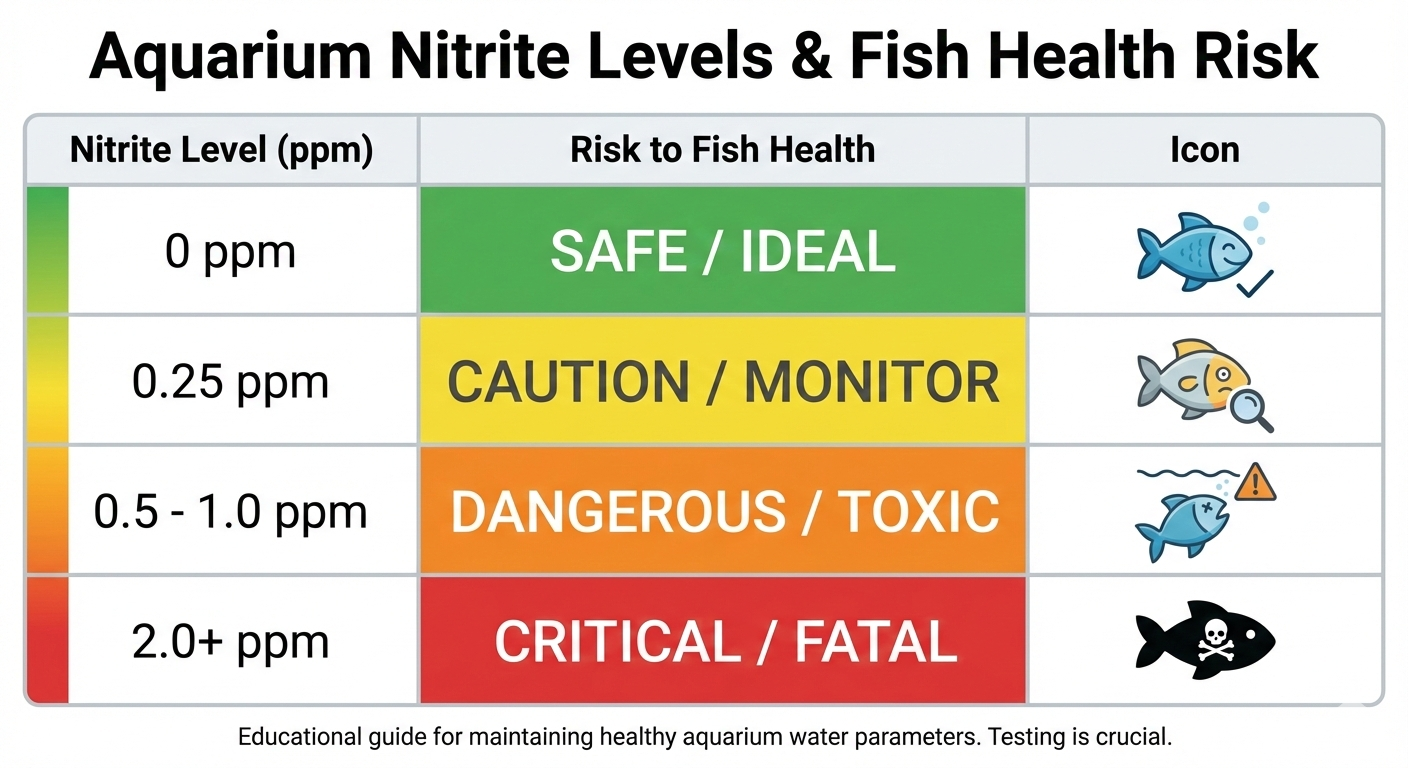
So, what should the nitrite level be in a healthy, mature freshwater tank? The short, happy answer is: 0 ppm (parts per million). Yep, zero. Nada. Zilch. If you see a number higher than that, your fish are basically living in a smoky nightclub with no ventilation—not fun.
Must Read
Think of it this way: nitrite is like that friend who shows up uninvited, eats all your snacks, and refuses to leave. You want zero nitrite because even tiny amounts (like 0.25 ppm) can stress your fish out, making them gasp for air or act like they’ve had one too many energy drinks.
The Cycle of Life (and Death, But We’ll Be Positive)
Now, here’s where it gets juicy. If you’re cycling a new tank (the process of growing good bacteria), you’ll see nitrite levels spike—sometimes up to 5 ppm or more! That’s totally normal, like a teenager going through a rebellious phase. But during a cycle, you want that spike because it means the ammonia-eating bacteria are partying hard.
Once your tank is fully cycled (usually after 4–6 weeks), the nitrite should drop to 0 ppm like magic. If it doesn’t, you might have a “cycle crash,” which is as dramatic as it sounds—think of it as your bacteria having a collective hangover. To fix it, don’t panic; just do a water change (20–30%) and add a bacterial booster.
How to Test Like a Pro (Without Crying)
Testing your water is easier than assembling IKEA furniture—no tiny Allen wrenches required. Get a liquid test kit (I love the API Master Test Kit, but don’t worry, no one’s sponsoring me). Shake the bottle, add drops to a tube, and watch the water turn colors like a mood ring.
If your test reads 0.25 ppm or higher, it’s time for a water change. Here’s a fun tip: think of water changes as giving your tank a spa day. Treat yo’ self! Do a 25% change every 24 hours until nitrite hits zero, and your fish will thank you with happy wiggles.
Pro tip: Never rinse your filter media in tap water—the chlorine will murder your bacteria. Rinse it in old tank water (saved during a water change) like a gentle giant. Your bacteria will throw you a tiny parade.
:max_bytes(150000):strip_icc()/nitrates-in-the-aquarium-1381883_sourcefile-7bb5b3a043c843f2807555f605cf31b4.jpg) How to Manage Nitrate in Your Freshwater Aquarium
How to Manage Nitrate in Your Freshwater Aquarium
Common Nitrite Nightmares (And How to Beat Them)
“But my nitrite is 1 ppm and I just added fish!” Whoa there, speed racer. If you added fish before the cycle finished, you’re in for a rough ride. Do a big water change (50%) ASAP, and add a product like Seachem Prime, which temporarily detoxifies nitrite. Your fish will survive, but you’ll learn your lesson—patience, young grasshopper.
“Why is my nitrite still 0.5 ppm after a month?” This usually means your filter is too small, or you’re overfeeding like you’re running a seafood buffet. Fish don’t need three-course meals—feed them once a day, and only what they can eat in 2 minutes. Leftover food rots and creates more ammonia, which leads to—you guessed it—more nitrite.
“Can I speed up the cycle?” Yes! Borrow some dirty filter media from a friend with a healthy tank. It’s like giving your tank a bacteria transplant—instant party. You can also use bottled bacteria (like Tetra SafeStart), but it’s less reliable than a friend’s hand-me-down goop.
The Uplifting Conclusion (I Promise You’re Doing Great)
Here’s the truth: keeping a freshwater tank isn’t about being perfect—it’s about being present. You’ll have moments where you stare at a test tube and mutter, “Is this 0.25 or 0.50?” (Spoiler: it’s probably 0.25 because our brains love drama.) But the fact that you’re reading this? That means you care, and caring is 90% of the battle.
Remember, every single aquarist—even the ones with Instagram-worthy tanks—has dealt with a nitrite spike. I once had a nitrite reading of 2 ppm and panic-dosed my tank with so much bacteria I’m pretty sure it grew legs. We all mess up. The good news? Water changes fix almost everything, and fish are surprisingly forgiving.
So, go forth, test your water, and don’t be afraid to laugh at yourself when your nitrite tube looks like a bad sci-fi movie. Your tank will thrive, your fish will do happy loops, and one day, you’ll look back at this moment and smile. You’ve got this—zero is the hero, and you’re already winning. 🐠
