Difference Between Distilled Water And Purified Water

Let’s be honest: staring at the water aisle in the grocery store can feel like a bad science quiz. You see jugs labeled “Distilled,” “Purified,” “Spring,” and “Alkaline,” and...
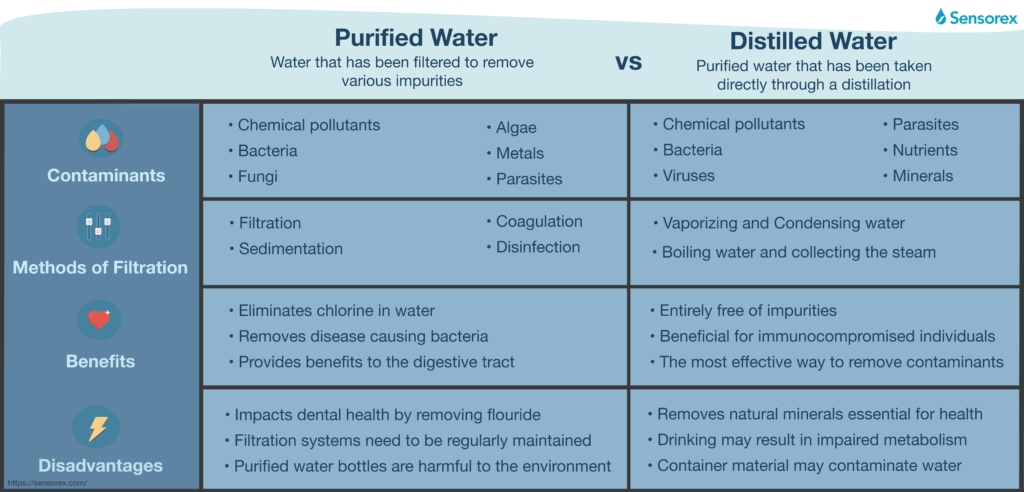
Let’s be honest: staring at the water aisle in the grocery store can feel like a bad science quiz. You see jugs labeled “Distilled,” “Purified,” “Spring,” and “Alkaline,” and your brain just goes, “Uhh, isn’t it all just wet stuff?” I’ve been there. So grab a glass of whatever you have on hand, and let’s break down the difference between distilled and purified water—without the boring textbook vibes.
The Short & Sweet Definition
Purified water is the cool, hip older sibling who says, “I’ll take out the bad stuff, but I’ll keep the good stuff if I feel like it.” Distilled water is the intense, perfectionist cousin who removes absolutely everything—including the kitchen sink. In technical terms, purified water has had all chemicals and contaminants removed to a specific legal standard. Distilled water is one method of achieving purification, but it’s the most extreme, like a spa day that turns into a military boot camp for your water molecules.
How They’re Made: A Comedy of Errors
Distilled water is made by boiling water into steam and then condensing that steam back into liquid. Imagine a teapot with a really solid career plan. The heat kills bacteria and viruses, and the steam leaves behind minerals, heavy metals, and other nasties. The result? Water so pure it’s basically a blank slate—“Hello, I am nothing. I am pure potential.”
Must Read
Purified water is a team effort. It can be made using reverse osmosis, deionization, carbon filtration, or even distillation itself. Think of it as a water purification buffet: pick your favorite method, or mix a few. The goal is the same—zap the bad guys—but purified water sometimes leaves tiny, friendly minerals in the mix, because not everyone wants to drink water that tastes like a clear ghost.
Wait, Aren’t They the Same?
Not quite, my friend. All distilled water is purified, but not all purified water is distilled. It’s like how all squares are rectangles, but not all rectangles are squares—unless you’re the Square Water Society, which doesn’t exist, but sounds very exclusive. Distillation is just one of several ways to get to purified land. So if you see a bottle labeled “purified,” it might have been filtered through carbon (like a fancy Brita), pushed through a reverse osmosis membrane (fancy pressure), or zapped with UV light (water gets a sunburn). Distillation is the steam-powered method that screams “I trust no one.”
What About Taste? (The Crucial Question)
If you’ve ever tasted distilled water, you probably made a face. Distilled water tastes flat and a little weird—like the water is trying not to exist. That’s because it’s missing the minerals (like calcium and magnesium) that give water its “mouthfeel.” Some folks say it tastes like drinking a stale echo. Purified water, depending on the method, tends to taste cleaner and more neutral—often preferred by people who just want H₂O without the dirt or the chlorine flavor of tap water.
A Fun Analogy
Distilled water is like a college freshman who changes their entire wardrobe and personality to be “pure.” Purified water is like an adult who just throws out the trash and keeps the good furniture. Both are clean, but one is a little too intense for a casual dinner party.
The Health Hype: Which One Should You Drink?
Let’s get real: both are perfectly safe. Distilled water is extremely pure, which is great for things like CPAP machines, car batteries, and ironing—but not ideal for daily drinking if you rely on water for mineral intake. Some studies whisper that drinking only distilled water might leach minerals from your body (because water wants to balance itself like a biological karmic score). But unless you drink gallons of the stuff and eat only cardboard, you’ll be fine.
Purified water is the everyday hero. It removes 90-99.9% of contaminants while often retaining a little mineral flavor. It’s the water you buy when you don’t trust your tap but also don’t want to feel like you’re sipping a science experiment. Most bottled water brands labeled “purified” have a touch of added minerals for taste—or at least they don’t strip them all out in a frenzy.
 Distilled vs. Purified Water: What’s the Difference? – Waterdrop Europe
When to Use Which: A Practical Guide
Use distilled water for: Your humidifier (or you’ll get white dust everywhere), your car’s battery (if you still have one from the 90s), your steam iron (no mineral gunk), and your cat’s fancy water fountain (yes, they can be divas). Also: making baby formula, because tiny humans are sensitive to minerals. Don’t drink it daily unless a doctor says so—unless you enjoy water that tastes like regret.
Use purified water for: Drinking, cooking, making coffee (better flavor than tap), and NOT ruining your expensive espresso machine. It’s also great for houseplants that hate chemicals but love minerals. Basically, if you need to survive and thrive, go purified. If you need to maintain a machine, go distilled.
The “Which One Is Cheaper?” Rant
Distilled water is usually a little more expensive because the distillation process uses energy to boil and condense. Purified water can be cheaper since methods like carbon filtration are less intensive. But honestly? If you buy bottled water regularly, you’re probably paying for the plastic—not the purity. Tap water in many places is perfectly fine. If you’re worried, get a $20 pitcher filter and call it a day.
The Environmental Elephant in the Room
Both distilled and purified waters come in plastic bottles. That’s not great, but I won’t wag a finger—we’ve all been thirsty. If you’re making a choice, consider a reusable bottle and a home distiller or a good filter. But if you’re at a party and someone offers you a glass of distilled water, you can politely say, “No thanks, I prefer my water with a little soul.”
The Uplifting Conclusion (You Made It!)
So here’s the real takeaway: life is too short to stress about water. Whether you choose distilled, purified, or even good old filtered tap, you are doing a fantastic thing—you’re hydrating! Your body doesn’t care about the labels; it just cares that you aren’t a raisin. Distilled water is for precision. Purified water is for pleasure. And you, my friend, are allowed to have both—just don’t mix them up when you’re making coffee, because distilled coffee tastes like a sad Monday.
Go drink something awesome. You’re already 70% water, but you’re also 100% a champ. Cheers!
