Difference Between Distilled Water And Reverse Osmosis

You’ve seen the gleaming jugs in the grocery aisle and the sleek faucet attachments on Instagram. Distilled water and reverse osmosis water are the twin titans of purity, but...
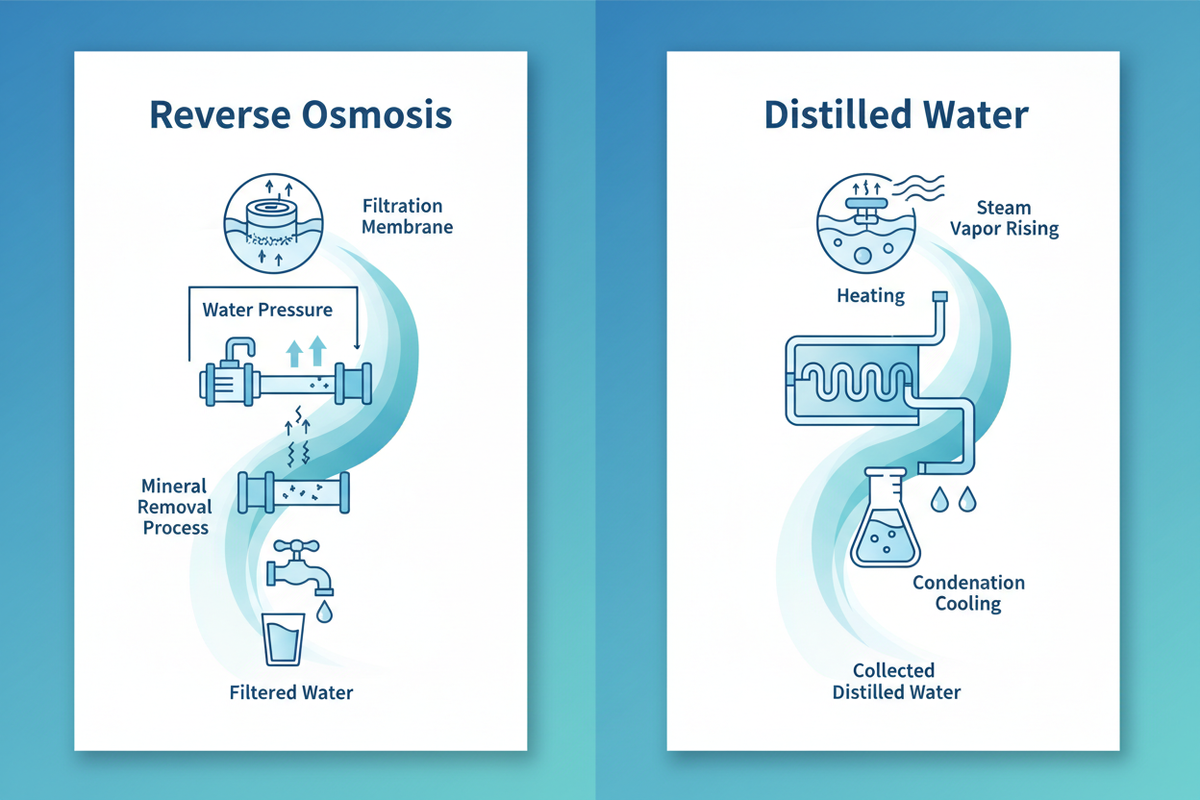
You’ve seen the gleaming jugs in the grocery aisle and the sleek faucet attachments on Instagram. Distilled water and reverse osmosis water are the twin titans of purity, but they’re not the same thing. One is a steamy ghost of chemistry class; the other is a high-pressure bouncer at a molecular nightclub. Let’s clear the air—and the water.
The Science of a Spa Day (Distilled Water)
Distilled water is what happens when you let water take a very long, very hot bath. You boil the water, catch the steam, and condense it back into liquid—leaving minerals, bacteria, and pretty much everything else behind.
Think of it as the lobster pot of purification: only the pure H₂O escapes as vapor. Fun fact: this is how nature makes rain, minus the kitchen stove. Distillation is the oldest trick in the book, used by ancient Greeks for medicine and alchemy.
Must Read
It’s incredibly effective, but it’s also a slow, energy-hungry process. You’re basically running a kettle for hours. Plus, that pure H₂O can taste a little flat—like drinking a cloud that forgot its personality.
The High-Tech Filter Party (Reverse Osmosis)
Reverse osmosis (RO) is the cool, modern cousin that uses pressure to push water through a semipermeable membrane. Imagine a very picky bouncer at a club who only lets the smallest molecules (water) slip past, while kicking out everything else: lead, chlorine, fluoride, and even some viruses.
It’s not boiling; it’s squeezing. RO systems are standard in many homes and even in desalination plants where seawater turns drinkable. A fun cultural reference: in “Breaking Bad,” Walter White used reverse osmosis to purify chemicals—talk about a high-stakes water cooler.
RO water still contains some dissolved gases (like oxygen), so it can taste crisper and fresher than distilled. But it’s not perfect—it wastes a bit of water in the process, and it strips out healthy minerals like calcium and magnesium.
Side-by-Side: Which One Wins Your Glass?
Distilled water wins for absolute purity—it’s the sterile gold standard for medical equipment, CPAP machines, and car batteries. You wouldn’t drink it for years on end, though, because it lacks electrolytes and can leach minerals from your body if you’re not careful.
Reverse osmosis is the practical champion for daily drinking. It removes most contaminants but leaves behind trace minerals (depending on the system), making it a middle-ground MVP. Many modern RO systems add a remineralization filter just to keep things balanced.
Here’s a quick cheat: if you’re making fancy coffee or baby formula, use distilled. For your everyday hydration and smoothies? Go RO. Your taste buds will thank you, and your Keurig won’t scale up like a limestone cave.
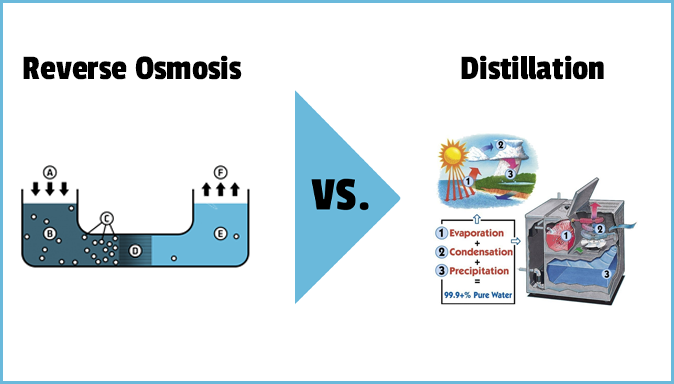 Reverse Osmosis versus Distilled Water - My Pure Water
Practical Tips for the Curious Sipper
Don’t buy plastic jugs for either. Invest in a countertop distiller or an under-sink RO system—both pay for themselves in a year and save the planet. Pro tip: add a pinch of sea salt or a slice of lemon to distilled water to resurrect its flavor.
If you’re a Home Edit fan, label your water jugs clearly. Distilled is for your iron, RO is for your glass. And if you ever feel fancy, try a water sommelier test—yes, that’s a real thing. Distilled scores low for “mouthfeel,” RO scores higher for “clean finish.”
One weird fact: distilled water can actually absorb carbon dioxide from the air, making it slightly acidic (pH ~5.8). RO water stays closer to neutral. So your stomach doesn’t really care, but your espresso machine does.
Cultural Footprints and Water Wisdom
In Japan, distilled water is used in traditional tea ceremonies for its blank canvas quality—it doesn’t interfere with the tea’s flavor. Meanwhile, in California, RO systems are practically a status symbol among wellness influencers, paired with alkaline drops and celery juice.
Remember that viral TikTok trend where people “taste test” expensive bottled waters? Distilled water always gets a “meh”—it’s too blank. RO water from a good system? That’s the “oui oui” moment. It’s all about context.
And here’s a life hack: if you’re traveling in a country with questionable tap water, boil it and collect the steam with a makeshift lid (survival style). That’s impromptu distillation. Or just bring a portable RO straw—your choice.
The Final Sip
At the end of the day, the difference between distilled water and reverse osmosis isn’t just chemistry—it’s intention. Distilled water is for precision; RO water is for living. Both are better than tap water in most places, but they serve different roles in your daily rhythm.
So next time you pour a glass, think about the journey. Distilled water is a quiet monk in a monastery; RO water is a sleek espresso barista. Choose your companion wisely. And if you’re feeling indecisive, remember: water is the only drink you’ll ever truly need—even if it’s a little bit blank.
