The Difference Between Purified Water And Distilled Water

Okay, let’s settle this once and for all: what’s the deal with purified water versus distilled water? You’ve seen both on store shelves, and maybe you’ve wondered if one is se...
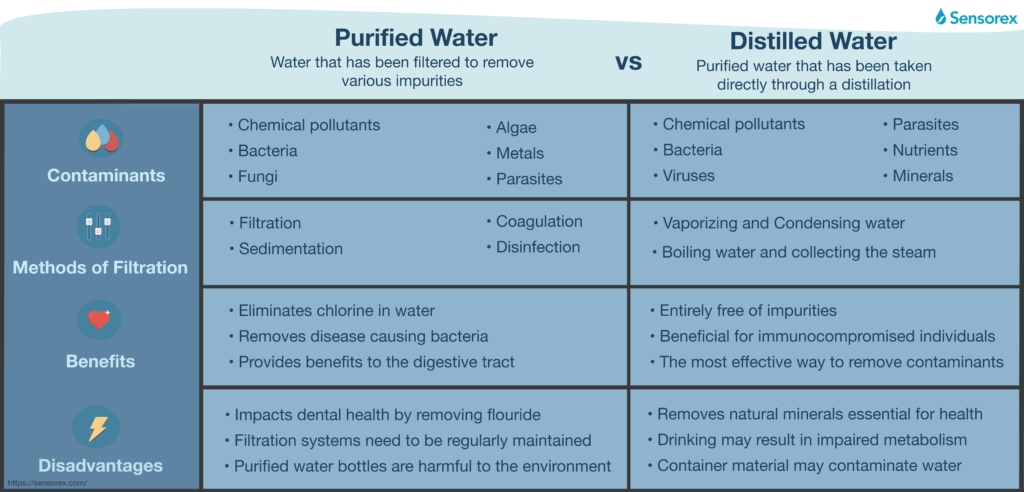
Okay, let’s settle this once and for all: what’s the deal with purified water versus distilled water? You’ve seen both on store shelves, and maybe you’ve wondered if one is secretly the Hollywood star and the other is just the understudy. I’m here to tell you, they’re not the same—but both are like the VIP section of the water world.
First, What’s the Big Idea?
Think of regular tap water as a crowded bus. It’s got minerals, chlorine, maybe a little dirt, and even tiny bacteria hitching a ride. Purified water and distilled water are both ways to kick those passengers off. The difference? How they do the evicting.
Purified water is the bouncer that uses a list of methods—filtration, reverse osmosis, or UV light—to remove impurities. Distilled water is the one that boils the bus, catches the steam, and leaves all the riffraff behind. Fancy, right?
Must Read
Distillation: The Drama Queen of Water
Distillation is like that friend who insists on making everything from scratch, even if it takes all day. You boil the water until it turns into steam, then cool that steam back into liquid. Only the purest H₂O makes the cut. Everything else—minerals, chemicals, that weird floaty thing—stays in the pot as gross sludge.
This process is so thorough it removes even dissolved solids. So, distilled water is pretty much just hydrogen and oxygen, having a quiet date. No calcium, no magnesium, no nothing else.
The downside? It’s a bit of a slowpoke. Firing up a distiller to fill your water bottle is like baking a cake when you just want a cookie. Plus, it tastes a little flat—like the water is secretly bored.
Purification: The Multi-Tool
Purified water is a team effort. It might go through a carbon filter to grab chlorine, a reverse osmosis membrane to squeeze out lead, or a UV lamp to fry bacteria. It’s less dramatic than distillation, but it gets the job done faster and in bigger batches.
The big rule? For water to be called “purified,” it has to have fewer than 10 parts per million of total dissolved solids. Distilled water also meets that standard, so technically, distilled is a type of purified. But not all purified water is distilled. It’s like squares and rectangles. Annoying, but true.
Most bottled water you buy is purified, not distilled. It still keeps a tiny bit of mineral taste, so it doesn’t feel like you’re drinking from a science lab. Good for your morning coffee, bad for your electric kettle’s pride.
When Should You Use Each One?
Let’s get practical. Purified water is your everyday hero. Drink it, cook with it, make your iced tea with it. It’s cheap, widely available, and won’t make your smoothie taste like regret.
Distilled water is a specialist. You use it in steam irons, car batteries, or medical devices because it won’t leave mineral deposits. Some folks use it for baby formula or fish tanks. It’s also great for photography chemicals—though I bet you don’t have a darkroom in your closet.
Don’t drink distilled water for months on end. Without minerals, it can actually pull calcium from your teeth and bones. Not ideal. Your dentist will give you that look. Stick to purified for daily sipping.
 Distilled vs. Purified Water: What’s the Difference? – Waterdrop Europe
But What About the Taste? (The Real Question)
Purified water tastes crisp and clean, like a mountain stream that took a shower. Distilled water tastes… empty. Some people say it’s like drinking nothing, which is weirdly accurate. It’s the water version of white noise.
If you’re a coffee snob, use purified water. The slight minerals help extract flavor. Distilled water makes coffee taste flat, and nobody needs that on a Monday morning. Life is too short for sad coffee.
And hey, if you’re really thirsty and the only choice is a puddle, well… just skip that. Go with purified.
The Plot Twist: They’re Both Safe
Here’s the good news: Neither is dangerous. If you accidentally chug a gallon of distilled water, you won’t explode. You might just feel a bit weird. Purified water is exactly what it sounds like—clean, safe, and ready to party.
Your tap water is probably fine too, by the way. But if you live in an area where it tastes like a swimming pool’s leftovers, these are your backup dancers.
Bottom line? Purified water is for living your life. Distilled water is for doing chores. Pick your fighter wisely.
Final Sip of Wisdom
Now you can strut into the grocery store like a water expert. No more staring at the aisle, wondering if you should call your mom for advice. You’ve got this.
Remember: whether it’s purified, distilled, or the stuff from your garden hose (please don’t), staying hydrated is a win. Your body is basically a giant water balloon that needs constant refilling. Treat it right.
So go ahead, pour yourself a glass of whichever you choose. Smile because you now know the science behind the sip. And if anyone asks you the difference, just say: “One is a fancy filter, the other is a steam-powered wizard.” Then wink. It works every time.
Cheers to you, you hydrated legend.
