What's The Difference In Distilled Water And Purified Water

So, you’re standing in the water aisle of your local supermarket, staring at two identical plastic jugs. One says “Distilled Water.” The other says “Purified Water.” Your brai...
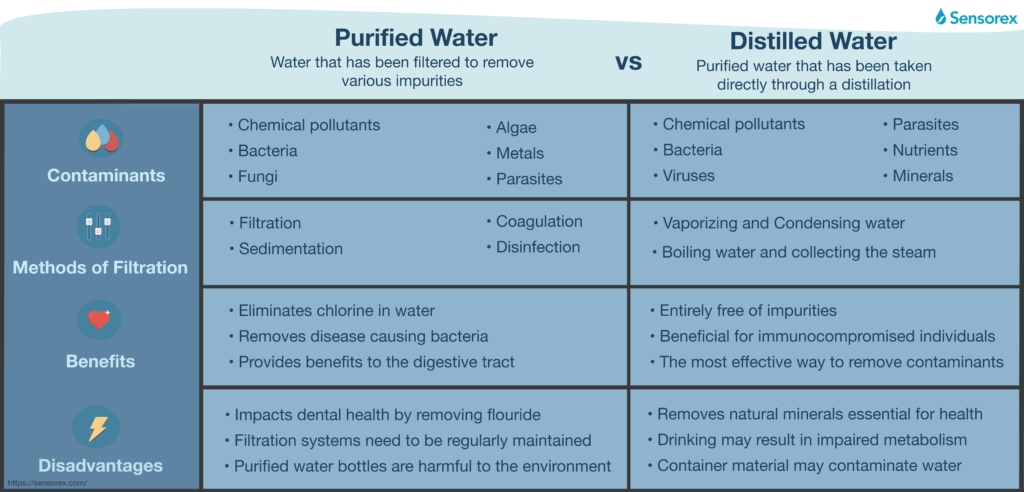
So, you’re standing in the water aisle of your local supermarket, staring at two identical plastic jugs. One says “Distilled Water.” The other says “Purified Water.” Your brain starts to melt a little, right? It’s like choosing between a unicorn and a pegasus—both are magical, but one flies and the other also flies, but maybe with a different vibe?
Relax. Grab a coffee (or a glass of mystery water) and let me break this down. I promise it won’t hurt as much as chemistry class did. Actually, it might be funnier—and definitely less dusty.
The Big, Steamy Secret of Distilled Water
Distilled water is basically water that got dramatically boiled into steam and then cold-shouldered back into liquid. Imagine water going through a hot yoga session, then immediately jumping into an ice bath. That’s distillation.
Must Read
When water boils, all the minerals, salts, and impurities—like calcium, magnesium, and that weird floaty thing—get left behind. They don’t vaporize. They stay in the pot like unwanted party guests who forgot their coats.
The result? Water so pure it’s practically aggressive. It’s the kind of water scientists use in labs to wash beakers or to fill car batteries so they don’t corrode. It’s also the water that makes your coffee taste a little flat—because there’s nothing in it to give it personality.
Fun fact: Distilled water technically doesn’t conduct electricity
That’s right. If you tried to electrocute yourself in a vat of distilled water, you’d be disappointingly safe—because there are no dissolved ions to carry the current. Don’t try it at home, but if you do, please film it and call me.
Purified Water: The Picky Eater of H2O
Purified water is a big tent term. It means water that’s been through any process to zap, trap, or filter out contaminants. Distillation is one way to purify water, but so is reverse osmosis, deionization, or fancy carbon filters.
Think of purified water as the “mystery box” of hydration. It might have passed through a membrane with holes so tiny even a virus would need a GPS. It could have been zapped with UV light like a tanning bed for germs. The goal is the same: kick out at least 99.5% of the junk.
Unlike distilled water, purified water often keeps a tiny bit of mineral sweetness—like calcium or magnesium—depending on the method. It’s not sterile, but it’s pristine. It’s the water you want for drinking, especially if you don’t want your tap water to taste like a swimming pool.
Surprising fact: Some “purified” water starts as tap water
Yep. That fancy bottle of spring-looking water might have been city tap water that got a VIP makeover. It’s not a scam—it’s just water redemption. Like a reality show where the contestant gets a haircut and suddenly becomes famous.
So, What’s the Real Difference?
Here’s the short and happy version: All distilled water is purified water, but not all purified water is distilled. It’s like how all thumbs are fingers, but not all fingers are thumbs. (Please don’t think about this too long—it gets weird.)
 What's the Difference: Purified Water Vs Distilled Water? | H2GO Water
Distilled water is the extreme sport of purity—it removes everything, including minerals you might actually want. Purified water is the sensible gym membership—it gets rid of the bad stuff but might let a few good minerals slide through.
Taste-wise, distilled water is often described as “flat” or “boring” because your taste buds are used to minerals. Purified water usually tastes crisper, like water that just got a promotion. If you’re making coffee, use purified. If you’re topping off a steam iron or watering a Venus flytrap, use distilled.
When to use which (your cheat sheet)
Distilled water: For humidifiers, car batteries, lab experiments, and plants that hate minerals (like carnivorous plants—they’re drama queens). Also for teething babies or people who need EXTREME purity for medical reasons.
Purified water: For drinking, cooking, and making your morning cup of joe taste like a hug. It’s also great for fish tanks, because fish don’t like chlorine or heavy metals, but they do like a tiny bit of calcium (like a spa day).
The Surprising Twist: Distilled Water Might Be a Thief
Here’s a weird one—distilled water is so pure it’s actually aggressively hungry. When it touches metal or plastic, it wants to dissolve them to balance its own chemistry. That’s why it’s stored in glass or special containers. It’s like a clean-freak guest who rearranges your kitchen.
Some old-timey rumors say drinking only distilled water will leach minerals from your body—but modern science says that’s mostly hogwash unless you’re drinking gallons every day. Your body is smarter than a water jug. Usually.
Final truth bomb?
If you’re just going to drink water and not start a science fair project, buy whatever’s cheaper and don’t overthink it. Distilled and purified are both cleaner than tap water (usually), and both will keep you alive. But if you want to sound smart at a party, say: “I prefer reverse-osmosis purified water. It’s like a spa treatment for my kidneys.”
Then watch everyone nod like they understand. They don’t. But now you do. Go forth and hydrate with confidence, you glorious, slightly confused human.
