1000 Gpd Whole House Reverse Osmosis Water System Di Option

Let’s be real for a second: tap water is a gamble. Sometimes it’s fine, sometimes it tastes like a swimming pool, and sometimes you’re just hoping the local treatment plant is...

Let’s be real for a second: tap water is a gamble. Sometimes it’s fine, sometimes it tastes like a swimming pool, and sometimes you’re just hoping the local treatment plant is having a good day. Enter the 1000 GPD Whole House Reverse Osmosis Water System, the overachiever of home water filtration. This isn’t a little pitcher in your fridge; this is the hydration equivalent of hiring a personal butler for every tap in your house.
Think of it as the Iron Man suit for your plumbing. Most people know RO systems for under-sink units that produce a slow trickle for drinking water. A whole-house system cranks that dial to eleven, delivering 1000 gallons per day. Suddenly, the water hitting your shower is as pure as the bottle you’d pay $3 for at a gas station.
But here’s the kicker: you can build it yourself with a DIY kit. Yes, it sounds like a project straight out of Bob Ross’s workshop—happy little pipes and pressure gauges everywhere. For the handy homeowner, it’s a weekend project that saves thousands over a professional install. Plus, you get to tell your friends, “Oh, I plumbed the house for pure H₂O,” which sounds way cooler than “I finally fixed the squeaky door.”
Must Read
Why Go Whole-House RO?
Imagine your morning shower. Hard water minerals leave your skin feeling like fine-grit sandpaper. A whole-house RO system strips out calcium, magnesium, chlorine, and even those trace pharmaceuticals no one wants to think about. Your skin and hair will thank you by not feeling like a desert lizard.
It’s not just about luxury—it’s about longevity. Appliances like your coffee maker, water heater, and dishwasher hate hard water. Scale build-up is their arch-nemesis, like kryptonite for a Keurig. Pure water means fewer repairs, less detergent, and glasses that come out of the dishwasher spotless. That’s the kind of win that feels like finding an extra fry at the bottom of the bag.
Let’s talk taste for a second. Ever notice how hotel water tastes different? That’s because decent filtration makes even boring water exciting. A 1000 GPD system means your ice cubes are clear, your tea tastes like actual tea, and your martinis are dangerously smooth. James Bond would approve.
The DIY Element: Weekend Project or Pipe Dream?
Here’s the practical bit: a DIY whole-house RO system isn’t for everyone, but it’s more accessible than you’d think. Kits from companies like iSpring or Express Water come with pre-assembled manifolds and clear instructions. You need basic plumbing skills—think “I can swap a faucet” level—and a good afternoon of work.
Key components include a sediment pre-filter, carbon filters, the RO membrane (the star of the show), and a tank or booster pump. A 1000 GPD system often requires a storage tank or a direct feed setup to keep pressure high. Pro tip: install a bypass valve so you don’t waste RO water on your garden hose—plants prefer minerals, believe it or not.
Fun fact: the average RO system wastes about 3 gallons of water for every 1 gallon it filters. Modern systems are much better, with some achieving a 1:1 ratio. For a 1000 GPD unit, look for models with a permeate pump to reduce waste. Also, watch out for your water pressure—RO systems need at least 40 PSI to work well. If your pressure is low, you’ll need a booster pump. It’s like giving your water a tiny gym membership.
Cultural Water Wisdom
The obsession with water purity isn’t new. Ancient Romans built aqueducts for clean water; they just didn’t have polymer membranes. Today, we’re living in the golden age of hydration. Look at Silicon Valley—they obsess over biohacking their water. You can do it for the cost of a mid-tier smartphone.
There’s even a psychological perk. Knowing that every glass, every bath, every ice cube is immaculate adds a weird sense of peace. It’s like Marie Kondo sparking joy, but for your pipes. Plus, you’ll stop buying bottled water, saving the planet and your wallet from that sneaky plastic tax.
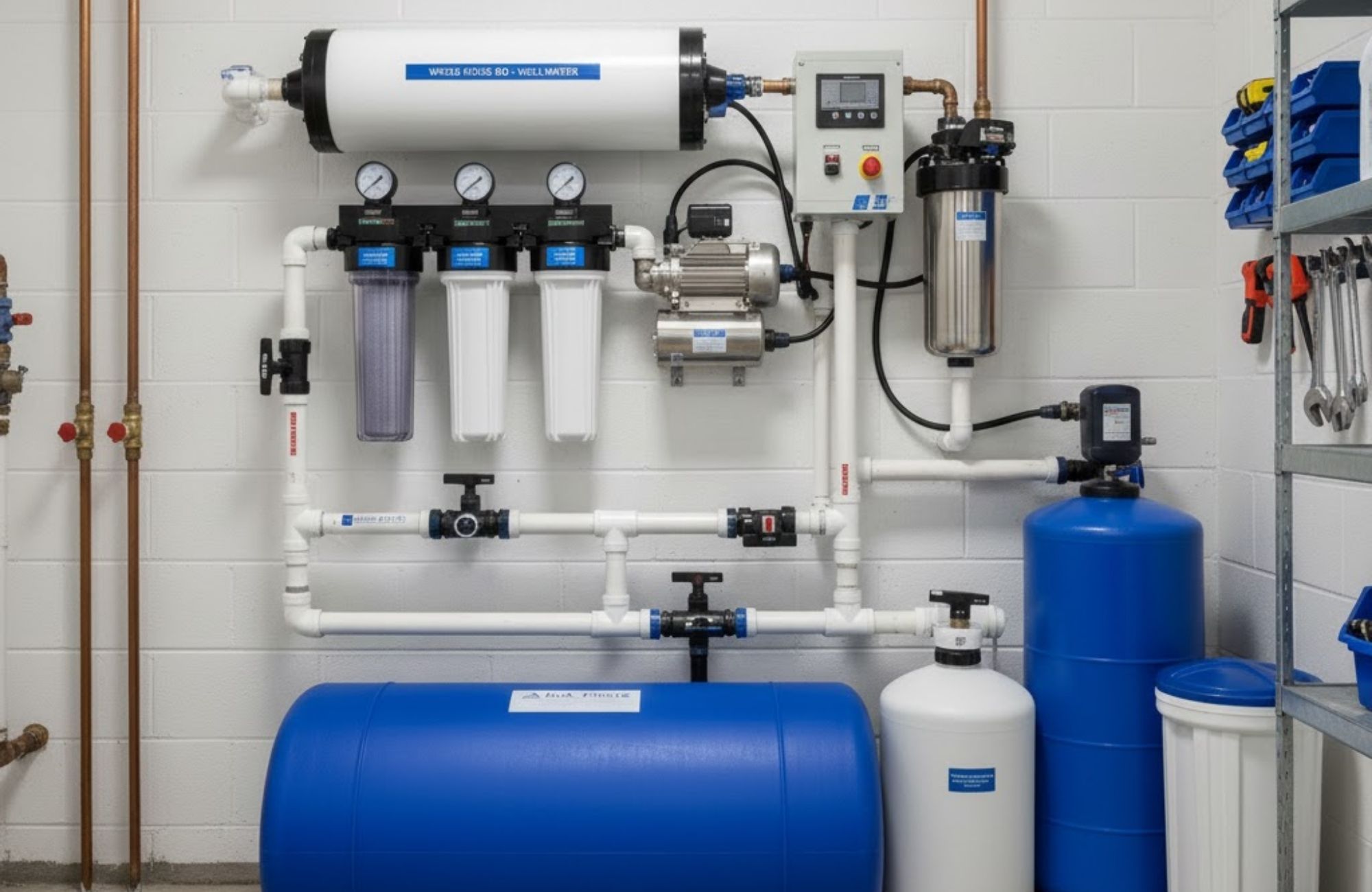 Whole House Reverse Osmosis for Well Water: Is It Worth It
Cultural reference: remember the movie The Martian where Matt Damon harvests water from rocket fuel? This is the opposite of that—you’re making water safer, not surviving a dust storm. But the DIY spirit is the same. You’re taking control of your environment, one pressure valve at a time.
Installation Tips from Someone Who’s Done It
First tip: measure your incoming water pipe size. Most homes use ¾-inch lines, but some are ½-inch. Get the correct adapters. Nothing kills a Saturday like a trip to the hardware store because you guessed wrong.
Second: mount the system on a wall near your main water line, ideally in a basement or garage. Keep it away from freezing temps—ice and RO membranes are not friends. Also, consider where the drain line goes. You’ll need to route waste water to a floor drain or utility sink.
Third: buy a TDS meter (total dissolved solids) for about $15. Test your water before and after installation. It’s deeply satisfying to see the numbers drop from 350 to 5 PPM. It’s science you can taste, and it makes for great dinner party conversation. “Oh, this water? 5 parts per million, darling.”
The Cost Reality Check
A 1000 GPD whole-house RO DIY kit runs between $600 and $1,200. Professional installation could double that. Compare that to buying bottled water for a family of four over five years—roughly $5,000. You’ll break even fast, especially if you stop buying filtered water pitchers and cases of Poland Spring.
Replacement filters cost about $150–$200 annually. The RO membrane itself lasts 2-4 years depending on usage. Factor in a little electricity if you use a booster pump, but it’s negligible—like running a 60-watt bulb for a few hours a day. The math works. It always works when you do the math, but people don’t.
One hidden bonus: your coffee will improve. Coffee is 98% water. Bad water equals bitter, sad coffee. Good water equals a cup that tastes like a hug from a barista in Portland. Your morning becomes a minor ritual of gratitude.
Final Reflection
At the end of the day, installing a 1000 GPD whole-house RO system is about more than clean water. It’s about trust—trusting that the glass you drink from is delivering pure pleasure, not a chemistry experiment. It’s a quiet upgrade to your everyday life, like wearing good socks or using a sharp knife. You don’t notice it until it’s missing.
So yes, you can DIY your way to better hydration. It takes a wrench, a little patience, and a willingness to read a manual. But when you take that first sip from your kitchen tap, knowing you built the system that made it possible, you’ll smile. That’s the good life, unfiltered—well, actually, very filtered. And that’s exactly the point.
