Water Well Drilling Cost Per Foot East Texas Angelina County

If you’ve ever stood in your East Texas backyard in Angelina County, hose in hand, staring at a patch of crispy brown grass while your neighbor’s sprinkler does a happy dance,...
If you’ve ever stood in your East Texas backyard in Angelina County, hose in hand, staring at a patch of crispy brown grass while your neighbor’s sprinkler does a happy dance, you’ve probably thought about drilling a well. It’s the grown-up version of wanting a secret swimming hole, minus the rope swing and questionable tadpoles. But before you start picking out water-themed barbecue napkins, you need to wrap your head around one number: the cost per foot.
The Price Tag That Digs Deep
In Angelina County, the average cost per foot for water well drilling usually falls between $25 and $50, depending on what’s hiding under your pine trees. Think of it like buying a custom recliner that you can’t return—you pay for the frame, the cushions, and the little lever that makes you feel like a king. Only here, the frame is a steel pipe, the cushions are layers of clay and sand, and the lever is a giant drill bit that grumbles like a hangry bear.
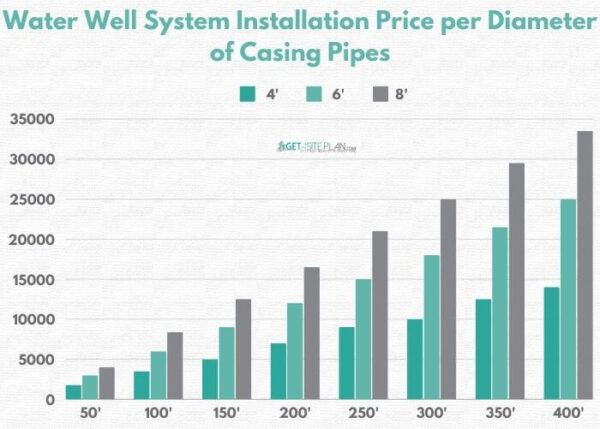
The total depth of your well is the wild card. Most residential wells in the area go down 100 to 400 feet, which is basically the distance from your front porch to the end of a really long, boring road. If you’re unlucky and hit a granite snag—which is like finding a pet rock that refuses to move—your cost can spike faster than a jackrabbit on hot pavement.
Must Read
Why Your Yard Isn’t a Lake
Some folks assume East Texas is one big water park because we get enough rain to float a kayak in a pothole. But underground, it’s a different story. The Carrizo-Wilcox aquifer runs under Angelina County, and it’s a bit like a cosmic milkshake—sometimes thick and creamy, sometimes with hidden chunks. You might hit a perfect water vein at 80 feet, or you might drill through 300 feet of gravel that sound like a cement mixer eating marbles.
Drillers charge by the foot because every time that drill goes deeper, it works harder. Think of it like paying for a taxi ride where the driver takes you through a gravel pit during a tornado—the meter runs, and your wallet sweats. A typical 150-foot well in Lufkin might cost you $4,500 to $7,500 just for the drilling, which is roughly the price of a used Honda Civic that smells like pine needles and regret.
The Hidden Fees That Sneak Up on You
Here’s where it gets real: the cost per foot isn’t the only thirsty thing draining your bank account. You’ll need a well casing—that’s the metal or PVC pipe that keeps dirt from joining your water party. Casing adds about $10 to $20 per foot, like buying a straw for your iced tea, except this straw is heavy and buried 200 feet deep. Then there’s a pump, which costs anywhere from $800 to $2,500, depending on whether you want a gentle whisper or a jet engine in your backyard.
Don’t forget the permit. Angelina County charges a small fee to make sure you’re not accidentally drilling to China and upsetting the local moles. It’s usually under $200, which is less than what you’ll spend on coffee while watching the drill truck sit idle during a rain delay.
A Quick Anecdote From a Neighbor
My buddy Randy in Huntington decided to DIY a well last summer. He watched two YouTube videos, borrowed a friend’s backhoe, and spent three days hitting what he called “rock-sicles”—frozen-looking chunks of shale. After he broke two drill bits and his wife’s patience, he hired a pro. The driller hit clean water at 120 feet, and the bill was $5,200. Randy now jokes that his “savings” paid for a steak dinner and a t-shirt that says “I Love My Well.” The moral? Paying per foot is cheaper than paying for therapy.
![How Much Does It Cost to Drill a Well? [2025 Data] - Get A Site Plan](https://getasiteplan.com/wp-content/uploads/2024/12/well-drilling-price-range-per-foot-600x432.jpg) How Much Does It Cost to Drill a Well? [2025 Data] - Get A Site Plan
How Much Does It Cost to Drill a Well? [2025 Data] - Get A Site Plan
Comparisons to Keep You Smiling
Think of the cost per foot like buying a pizza by the slice. A 100-foot well is a medium pepperoni—reasonable, satisfying, and you might share it with friends if you’re generous. A 300-foot well is that extra-large with everything on it, including anchovies you didn’t ask for. You’ll be paying for it for a while, but when the tap runs clear and cold, you forget the price.
In the world of home upgrades, drilling a well is more expensive than installing a birdbath but cheaper than a divorce. It’s the kind of project that makes you nod slowly when the driller says, “We hit good sand at 90 feet,” like you know what that means. You don’t, but you smile anyway because the water is coming.
Is It Worth the Per-Foot Panic?
Absolutely. Once that well is done, your water bill disappears faster than a squirrel on a birdfeeder. You’ll have water for your garden, your kids’ slip-n-slide, and that one friend who always asks for a glass of “tap” just to taste the victory. The lifespan of a good well is 30 to 50 years, which means your grandchildren might inherit a working hole in the ground—a strange but lovely heirloom.
Just remember: in Angelina County, the dirt is as unpredictable as a deer in headlights. Get at least three quotes, ask about the casing and pump package, and never, ever let a driller convince you that “we’ll know when we get there” is a price. It’s the most expensive surprise since you found out your water softener doesn’t run on good intentions.
So grab a sweet tea, call a local driller, and start dreaming of that cold, clean water. Your grass might not thank you, but your wallet—and your grandkids—will.
