Companies That Supply High Purity Water Systems For Hospitals

Let’s talk about something you never think about while you’re lying on a hospital gurney, praying you didn’t just eat that questionable vending machine sandwich. I’m talking a...

Let’s talk about something you never think about while you’re lying on a hospital gurney, praying you didn’t just eat that questionable vending machine sandwich. I’m talking about water. Not just any water, but high purity water. It’s the stuff that makes your IV drip not kill you, and it’s basically the unsung hero of modern medicine—like a janitor who also moonlights as a neurosurgeon.
The Secret Life of Hospital Water
You stroll into a hospital, and you see the waiting room, the vending machines, the overly cheerful nurse. But somewhere in the bowels of the building—probably near a closet full of expired snacks—there’s a room humming with machines that make water so pure it could probably cure a hangover just by thinking about it. High purity water systems are the silent, gurgling backbone of dialysis, lab work, and sterilization.
We’re talking water that’s cleaner than your conscience on a Sunday morning. Distilled water is a chump compared to this stuff. Hospital-grade purified water has to be stripped of almost everything: bacteria, viruses, minerals, and the lingering disappointment of your weekend.
Must Read
Who Builds These Watery Wonders?
Enter the companies that supply these systems. They’re not exactly household names—no one makes a t-shirt that says “I 💚 MECO.” But firms like MECO, Mar Cor Purification, and Evoqua Water Technologies are the silent wizards behind the curtain. They sell giant, humming machines that look like a mad scientist’s humidifier crossed with a NASA reactor.
One company, Pure Water Solutions, boasts systems that “achieve resistivity of 18.2 megohm-cm.” That’s a stat that sounds like a robot’s password. But let me translate: it means the water is so pure that if you put a toaster in it, the toaster would just sit there and feel inadequate. Nothing conducts electricity in that water. It’s like the introvert of H₂O.
Why Can’t You Just Use Tap Water?
Oh, you sweet summer child. Tap water is a chaotic mess of minerals, chlorine, and—let’s be honest—probably a little bit of Mr. Johnson’s lawn fertilizer that ran off last Tuesday. In a hospital, that stuff can cause infections, ruin expensive equipment, and turn a routine blood test into a science fiction thriller.
So these companies design systems that take your lowly tap water and beat it into submission with reverse osmosis, ultraviolet light, and deionization. It’s like sending your water through a boot camp where the drill sergeant yells, “You will be pure, soldier! I want you to have zero dissolved solids by 0500 hours!”
Surprising Fact: Dialysis Water Is Crazier Than You Think
Here’s a wild one: Patients on dialysis get their blood washed with about 120 gallons of water per session. That’s the volume of a decent-sized fish tank—except if you used tap water, their blood would become a bacterial soup. Dialysis water must be so pure that manufacturers test it for aluminum, copper, and even “total viable count” (that’s fancy scientist talk for “how many tiny monsters are floating in it”).
One company, Aqua Solutions, even offers systems that monitor water quality in real-time. If the purity dips even a little, a siren goes off and a technician has to come running, probably spilling their coffee. So next time you think hospital water is just “wet,” remember: it’s the most overachieving, type-A personality substance on the planet.
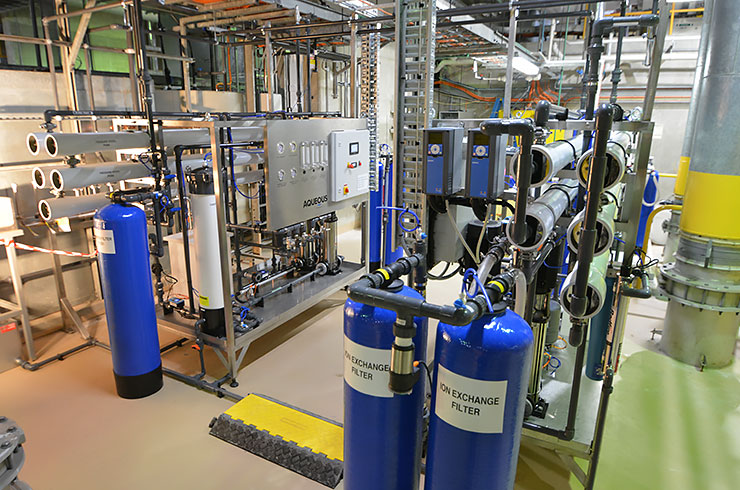 Hospital Grade Water - Pure Water Supply | Aqueous Solutions
The Comedy of Installation
Installing these systems is like fitting a luxury spa into a broom closet. Hospital engineers have to snake pipes, mount tanks, and calibrate sensors—all while dodging doctors who want to use the bathroom. One project manager told me, “It’s like trying to install a swimming pool in a dollhouse, but the dollhouse is full of terrified patients.”
And the cost? A single high purity water system can run from $50,000 to $500,000. That’s more than my college tuition, and at least I got a questionable degree out of it. These just give you really clean water and the satisfaction of knowing the water in the ICU is less polluted than your ex’s text messages.
The Real Heroes: The Water Geek Squad
Let’s not forget the technicians who service these beasts. They wear lab coats, carry multimeters, and have the patience of a monk. When a system breaks at 3 AM, they don’t just fix a pipe—they run diagnostics, consult schematics, and perform ritualistic sacrifices of coffee to the water gods. These people are the reason you can get a kidney transplant without also obtaining a side order of E. coli.
One company, Veolia Water Technologies, even offers a “water stewardship” program. That’s right: they act like a marriage counselor for your water. “We’re here to heal the relationship between your faucet and your autoclave,” they whisper.
The Takeaway: Water Is the Coolest Nerd You’ve Never Met
So next time you’re in a hospital—hopefully not for a sandwich-related incident—spare a thought for the water system humming in the basement. It’s not glamorous. It doesn’t get its own TV show. But it’s the reason your blood stays in your body, the reason the lab can tell if you have a disease, and the reason the surgical scissors are clean enough to perform a heart bypass.
And if you ever meet a salesperson from a high purity water company? Buy them a drink. Just make sure it’s tap water—because they’ve seen what happens when something is too pure. It gets boring. And that’s exactly how hospitals want it: safe, boring, and ridiculously, hilariously clean.
