Differences Between Reverse Osmosis And Activated Carbon Filters

Let’s be honest, most of us don’t think about our tap water until it tastes a little bit like a swimming pool or smells like a damp basement. Suddenly, that glass of water bec...

Let’s be honest, most of us don’t think about our tap water until it tastes a little bit like a swimming pool or smells like a damp basement. Suddenly, that glass of water becomes a tiny drama. You start eyeing those fancy filters at the store, wondering which one will save you from the “pool water” experience without breaking the bank.
The two big names you’ll see on every box are Reverse Osmosis and Activated Carbon. They sound like science lab partners, but they actually work in totally different ways. Think of them as the overachieving robot and the charming sponge of the water world.
I once bought a carbon filter pitcher because it was cheap and looked snazzy on my fridge shelf. It made my morning coffee taste amazing for about a month. But when I tackled the weird, metallic aftertaste in my city water? That’s where I needed the big guns.
Must Read
Meet the Sponge: Activated Carbon Filters
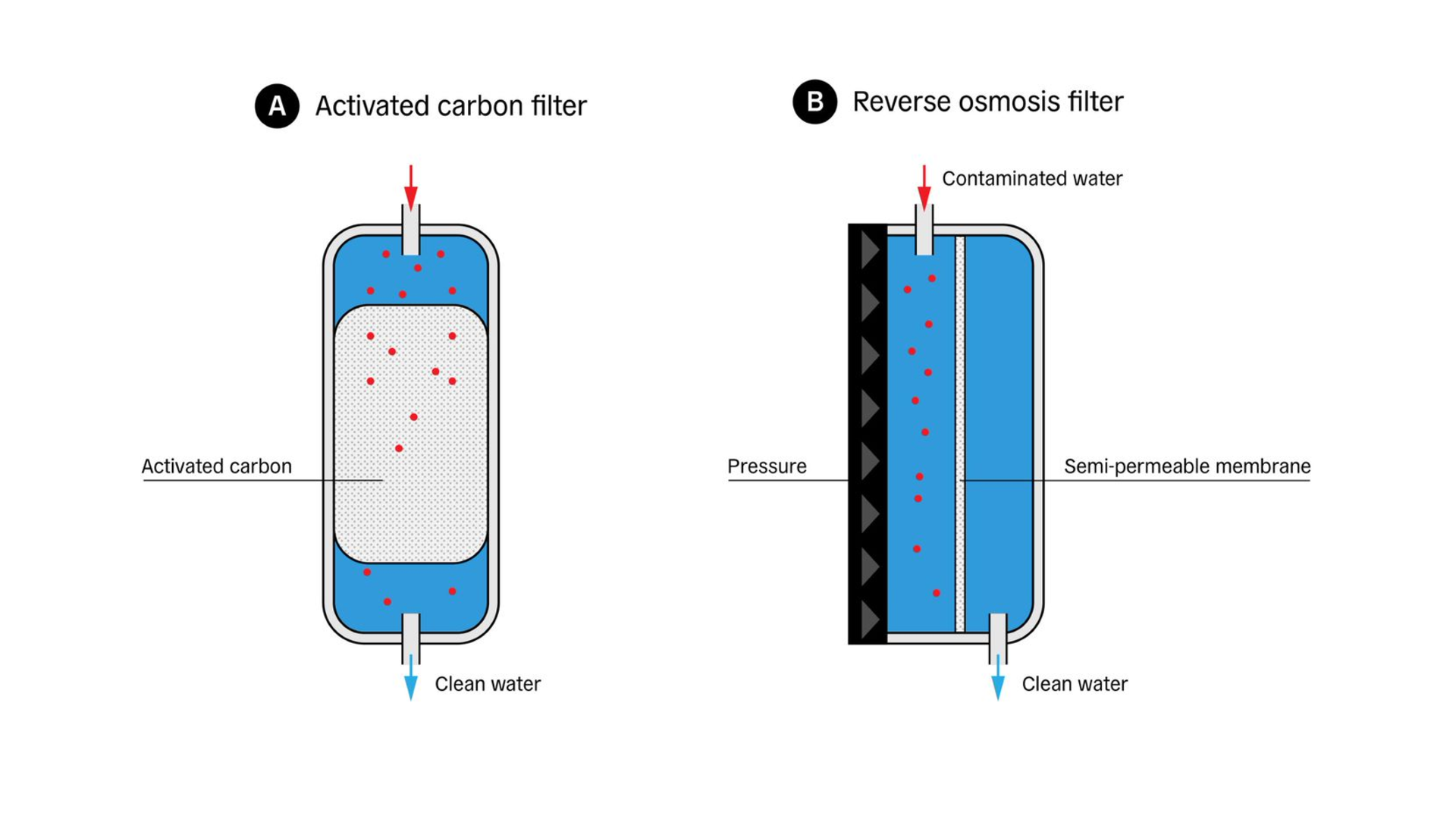
Activated carbon is like that friend who’s a superstar at soaking up gossip and bad vibes. It works by adsorption (not absorption—yes, there’s a difference, but stay with me). Its surface is full of tiny nooks and crannies that trap chlorine, sediment, and those weird smells.
If your water tastes like a public pool, carbon is your best buddy. It’s excellent at removing chlorine, which is why your tap water suddenly tastes fresh from a mountain spring. It’s also cheap, easy to install, and works great in simple pitchers or faucet attachments.
But here’s the catch: carbon is lazy when it comes to heavy lifting. It won’t remove fluoride, nitrates, or those scary heavy metals like lead. It’s great for a quick fix, but it’s not a miracle worker.
Meet the Robot: Reverse Osmosis
Reverse Osmosis (RO) is the overachiever in the kitchen. It uses a fancy membrane that acts like a bouncer at a very exclusive club. Only the smallest, purest water molecules get through, while almost everything else—salts, bacteria, lead, arsenic—gets kicked to the curb.
Imagine trying to squeeze a watermelon through a keyhole. That’s what RO does to contaminants. It’s so thorough that it even removes dissolved minerals like calcium and magnesium, which is why RO water is often labeled “pure” but tastes a little flat to some people.
I have a friend who installed an RO system under his sink for his houseplants. His orchids thrive on that ultra-pure water, but for him, it feels like drinking distilled water from a science lab. It’s safe, but it’s missing that “pop” of flavor.
When Should You Pick One Over the Other?
Let’s break it down into real-life scenarios. If you just want your coffee to stop tasting like a chemistry experiment, an activated carbon filter is your knight in shining armor. It’s affordable, easy to replace, and perfect for renters.
 Smart sensor solutions
But if you live in an old house with lead pipes, or you’re worried about pesticides and pharmaceuticals in your water, you need the robot. Reverse Osmosis is the security system that doesn’t let anything suspicious slip by.
The catch with RO is that it’s slow and wasteful. It takes a few minutes to fill a glass, and it sends a lot of water down the drain (about 3-4 gallons wasted for every gallon filtered). It also needs professional installation and regular membrane changes.
The Combo Move: Best of Both Worlds
Here’s a fun secret: many high-end water systems use both filters together. They run water through a carbon pre-filter to remove chlorine, then through the RO membrane, and sometimes through a carbon post-filter to add back a tiny bit of mineral flavor.
It’s like having a sponge clean up the big mess first, then a robot sweep the floor. That way, you get water that’s both pure and tasty.
Personally, I found a happy middle ground. I use a carbon filter pitcher for my daily drinking water. But for baby formula and my obsessive tea brewing, I rely on a small under-sink RO system. It’s overkill for tap water that’s already decent, but it’s peace of mind.
So why should you care? Because the right filter can save you money on bottled water, protect your pipes, and make you actually want to drink water instead of soda. Plus, nothing beats the feeling of pouring a crisp glass of water that smells like nothing at all.
Remember: carbon is for the everyday win, and RO is for the heavy-duty cleanup. Pick the one that matches your water’s personality and your budget.
And hey, if you’re still confused, just start with a carbon pitcher. It’s the cheapest way to give your water a spa day. You can always upgrade to the robot later.
