What's The Difference Between Distilled Water And Deionized Water

Ever stood in the grocery store aisle, staring at bottles of water like they’re some kind of lab experiment? You’ve got spring water, purified water, and then the mysterious d...
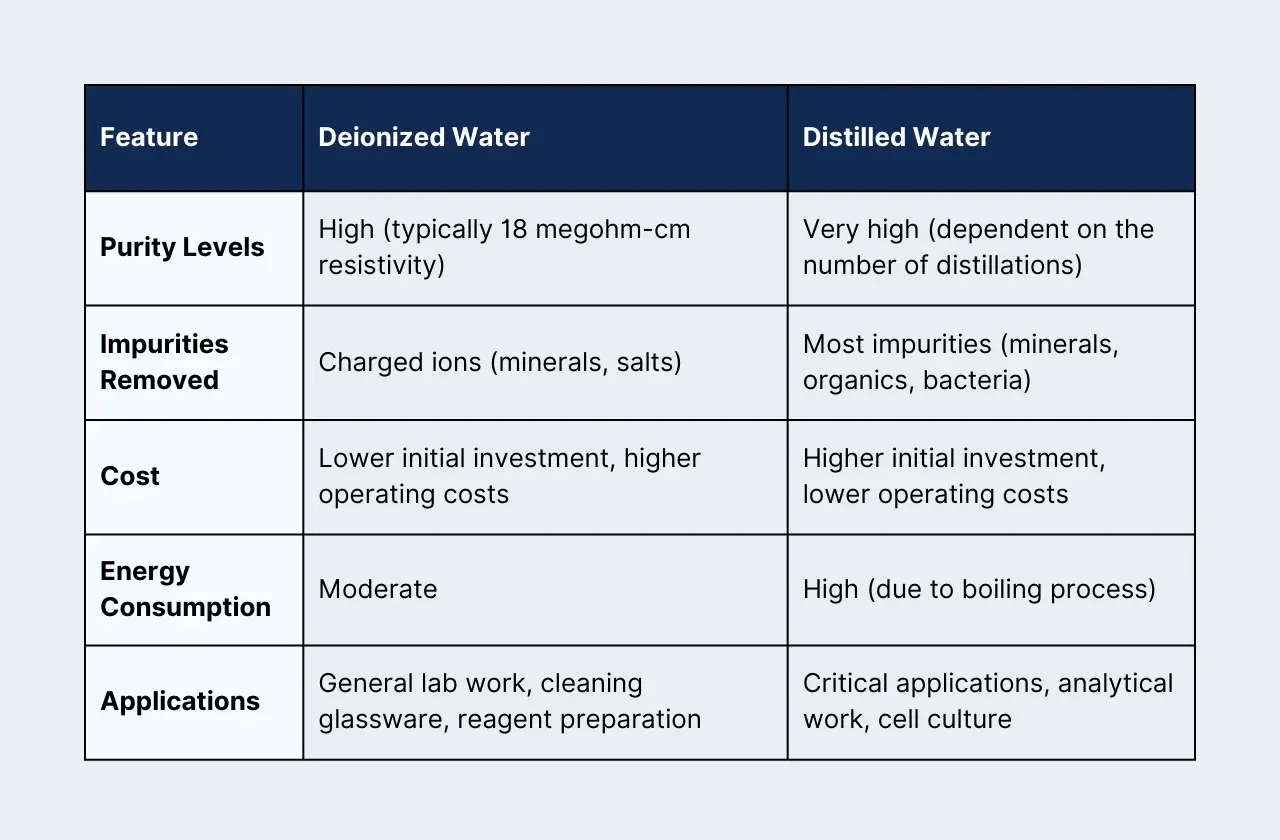
Ever stood in the grocery store aisle, staring at bottles of water like they’re some kind of lab experiment? You’ve got spring water, purified water, and then the mysterious duo: distilled and deionized. They sound like fancy science terms, but what’s the actual difference, and why should you care?
Let’s be real—it’s pretty cool that we can strip water down to its purest form. Both distilled and deionized water are super clean, but they get there in totally different ways. Think of it like a messy room: one method is like sweeping the floor, the other is like using a magnet to pick up every speck of metal.
The Boiling Bucket: How Distilled Water Works
Distilled water is the old-school method. You basically boil the water until it turns into steam, then catch that steam and let it cool back into liquid. It’s like making a cloudy pot of pasta water magically turn into a crystal-clear glass.
Must Read
When water boils, all the heavy stuff—minerals, salts, bacteria, even some nasty chemicals—gets left behind in the pot. That steam is pure H₂O, no extras. It’s why your grandma might have used distilled water in her iron to avoid that white crusty buildup.
But here’s the catch: distillation is slow and uses a lot of energy. It’s like taking a road trip in a steam locomotive—charming but not exactly speedy. Plus, it doesn’t always remove all volatile organic compounds that boil at lower temperatures.
The Magnet Trick: How Deionized Water Works
Now, deionized water is the high-tech cousin. Instead of boiling, it runs water through special resin beads that act like tiny magnets. These beads grab onto charged ions—things like calcium, magnesium, and other dissolved salts—and swap them for hydrogen or hydroxide ions.
Imagine you have a bag of mixed candy, and you only want the red ones. Deionization is like having a robot that plucks out every red candy and replaces it with a neutral one. The result? Water that’s insanely pure—often purer than distilled.
But here’s the fun twist: deionized water can still have tiny particles that aren’t ions, like bacteria or dust. That’s why it’s not always “sterile.” It’s like cleaning your phone screen with a microfiber cloth—great at removing fingerprints, but not so great at killing germs.
So, Which One Is “Better”?
That’s like asking if a cat or a dog is better—it totally depends on what you need. If you’re topping off a car battery or using a humidifier, distilled water is a solid, no-fuss choice. It’s reliable, cheap, and you can make it at home with a pot and a lid.
For science labs, hospitals, or electronics manufacturing, deionized water usually wins. Those places need water that won’t mess with sensitive experiments or leave mineral spots on a microchip. It’s the stuff they use in chemistry class to make your teacher smile.
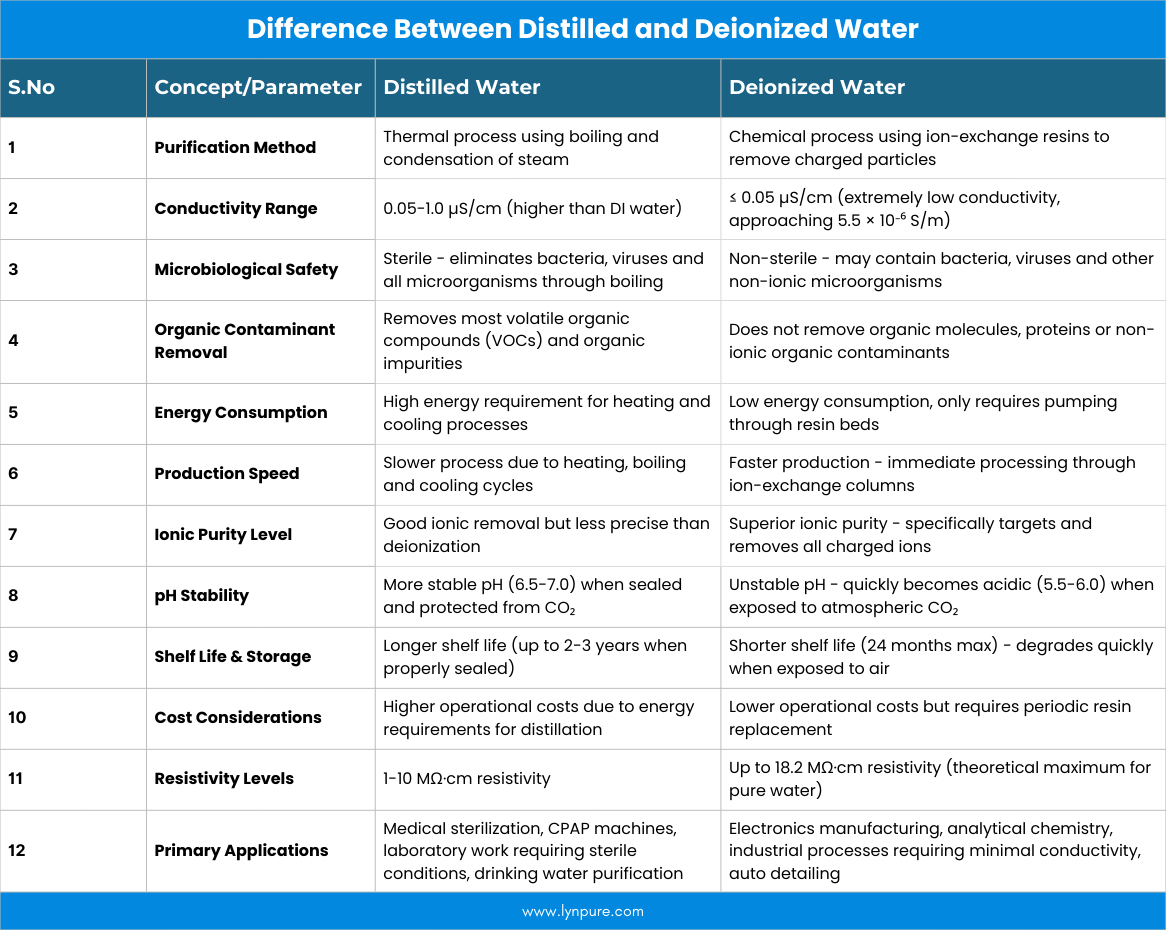 Distilled Water vs Deionized Water | Key Differences
Fun fact: deionized water is so “hungry” for minerals that it can actually leach tiny amounts of metal from pipes over time. So you definitely don’t want to drink it regularly—it’s not toxic, but it tastes flat and weird. Distilled water is fine for drinking, though it’s also pretty bland.
The Practical (and Weird) Uses
Ever wondered why people use distilled water for their CPAP machines or even baby formula? It’s because there’s zero chance of harmful minerals or bacteria. For your morning coffee, though? Stick with filtered tap water—pure water makes a sad, acidic brew.
Here’s a wild one: some aquarium owners use deionized water for saltwater tanks. Since it has no minerals, you can add exactly the right mix of salts yourself. It’s like building a custom pizza instead of eating a frozen one.
And if you’re into gardening, distilled water is great for ferns and carnivorous plants that hate tap water’s chlorine and calcium. Your Venus flytrap will thank you… right before it munches a bug.
The Bottom Line on Pure Water
In the end, distilled and deionized water are both incredibly clean, but they’re like cousins at a family reunion—similar vibes, different journeys. Distilled water gets pure by leaving everything behind; deionized water kicks out only the charged troublemakers.
So next time you see that bottle at the store, you can smirk knowing the secret. Want a lazy, energy-heavy purifier? Go distilled. Want a techy, ion-zapping wizard? Go deionized. Or just drink your tap water and save the fuss—it’s probably fine anyway.
Still curious? Grab a glass of either, and taste the nothingness. It’s kind of poetic, isn’t it? Water so pure it’s practically invisible in flavor. That’s science at its most chill.
