What Is The Difference Between Purified Water And Distilled Water

So, you’re standing in the water aisle, staring at two very serious-looking bottles. One says “Purified Water,” the other “Distilled Water.” They look the same, they cost the...
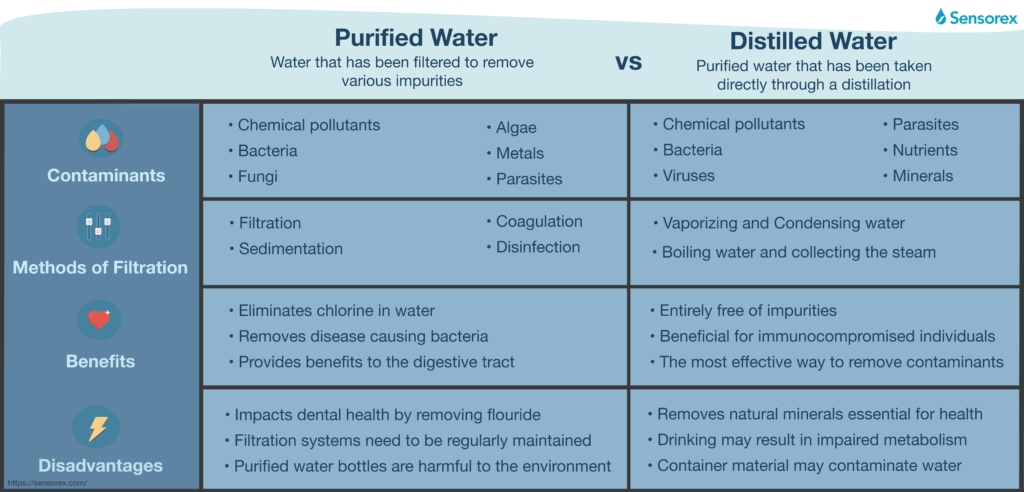
So, you’re standing in the water aisle, staring at two very serious-looking bottles. One says “Purified Water,” the other “Distilled Water.” They look the same, they cost the same, and you suddenly feel like you’ve stumbled into a chemistry pop quiz. Relax, friend—I’ve got your back. Let’s break this down without making your brain hurt.
Think of water like a pizza. The stuff from your tap is the basic cheese pizza—it’s fine, but it’s got some weird little toppings you didn’t order (like chlorine, fluoride, or tiny mineral bits). Purified water is like ordering that pizza with half the toppings removed. It’s cleaner, but it still remembers its pizza roots.
So, what exactly is purified water?
Purified water is tap water that’s had most of its impurities yanked out. It’s like sending your water to a spa for a deep-tissue massage and a detox. The methods include reverse osmosis, carbon filtration, and UV light—basically, a tiny water superhero squad.
Must Read
The goal is to remove at least 99.5% of contaminants. That includes bacteria, chemicals, and that weird metallic taste from old pipes. It’s still got a few trace minerals hanging around, though—like a shy friend at a party who won’t leave.
Fun fact: most bottled “spring water” isn’t purified at all—it’s just fancy tap water. But purified water is deliberately stripped down. It’s the Marie Kondo of water: “Does this particle spark joy? No? Out you go!”
And distilled water? The drama queen of the family.
Distilled water takes things to the next level. It’s not just a spa trip; it’s a full-on rebirth. You boil the water into steam, then condense that steam back into liquid. Imagine leaving all your baggage behind in a puddle while you float up as pure spirit.
This process removes everything—minerals, bacteria, viruses, and even dissolved solids. It’s the purest water you can drink without getting into rocket fuel territory. But here’s the kicker: it also tastes a little flat. Like unseasoned pasta. Sorry, distilled water, you’re a bit boring.
Some people say drinking distilled water leaches minerals from your body. That’s mostly a myth—your body isn’t a wet sponge, it’s a complex machine. But for daily drinking, many folks prefer the slightly more flavorful purified water. You do you.
 Distilled vs. Purified Water: What’s the Difference? – Waterdrop Europe
Key differences at a glance (because we all love lists)
Purified water: Filtered but not boiled. Still has trace minerals. Tastes like actual water. Works great for daily sipping, coffee makers, and keeping your fish tank happy.
Distilled water: Boiled and condensed into a blank slate. No minerals at all. Tastes like a hug from a cloud, but a very boring cloud. Best for steam irons, car batteries, and lab experiments—not for fancy tea.
The most important difference? Your taste buds and wallet. Purified water is cheaper and easier to find. Distilled water is usually a few bucks more and comes in those crinkly plastic jugs that make you feel like you’re buying moonshine.
When should you use each? Let’s get practical.
For everyday drinking, go with purified. It’s clean, it’s cheap, and it doesn’t make your tea taste like a chemistry set. Want to feel fancy? Get a filtered pitcher for your fridge—instant purified water, plus you can brag about being eco-friendly.
For special missions, use distilled. Fill your humidifier with it, and you’ll never see white dust again. Use it to top off a car battery (if you still own a car with a battery cap, you legend). And absolutely use it for baby formula—doctors recommend it because it’s free of any hidden nasties.
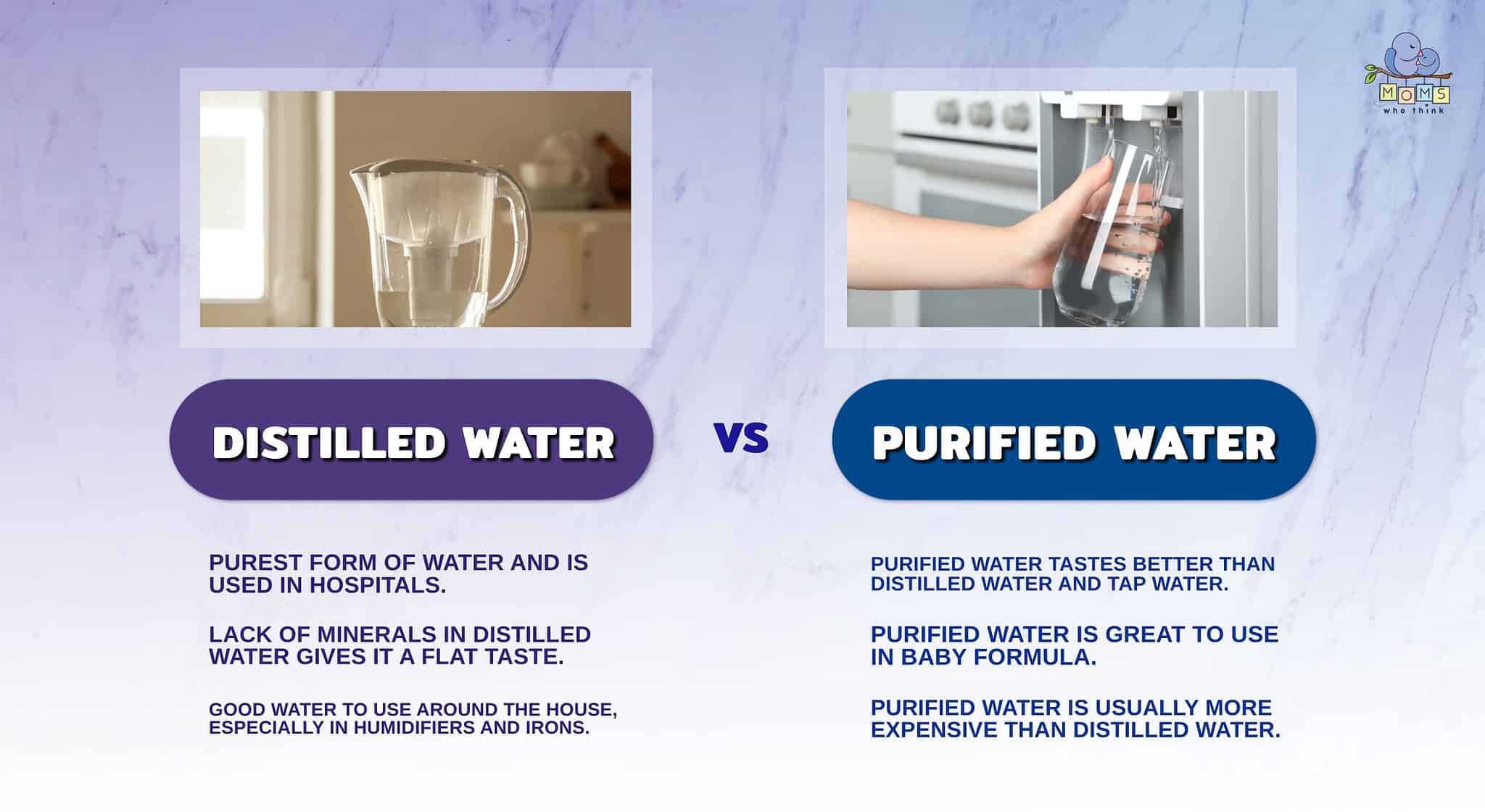 Distilled vs. Purified Water: 4 Differences & Health Benefits
Pro tip: Never drink distilled water exclusively for long periods—not because it’s dangerous, but because it’s so boring you’ll start crying into your cereal. Your taste buds deserve a little mineral zest, you know?
The one weird similarity you never noticed
Both purified and distilled water are legally required to meet the same purity standard in the US. That is, they must have less than 10 parts per million of dissolved solids. They’re the identical twins of the water world—one just took a longer, steamier road to get there.
So if you’re ever in a pinch, you can swap one for the other without turning into a dehydrated prune. Your iron might spit a bit, and your tea might pout, but you won’t die. Promise.
Let’s wrap this up with a smile, shall we?
Here’s the thing: whether you choose purified or distilled, you’re already winning. You’re not drinking rusty hose water or the mystery liquid from an airplane toilet. You’re hydrating like a responsible adult, and that deserves a high-five. Or at least a smug nod.
So next time you’re in that water aisle, don’t panic. Grab a bottle of purified for your lunch, and a jug of distilled for your coffee maker. Or just buy a fun reusable bottle and install a filter at home. You’ll save money, save the planet, and look incredibly clever doing it.
And remember: water is water. Whether it’s been filtered, boiled, or poured from a magical unicorn’s tear, it’s all just H₂O doing its best to keep you alive. So drink up, stay hydrated, and never let anyone make you feel bad for choosing the “wrong” kind. You’re doing great, champ. Cheers, from one water connoisseur to another.
