Does Boiling Water Kill All Bacteria And Parasites

So, you’re staring at a questionable stream of water on a camping trip, or maybe you’ve just dropped your favorite pacifier on the floor. Your brain, the smart little survival...
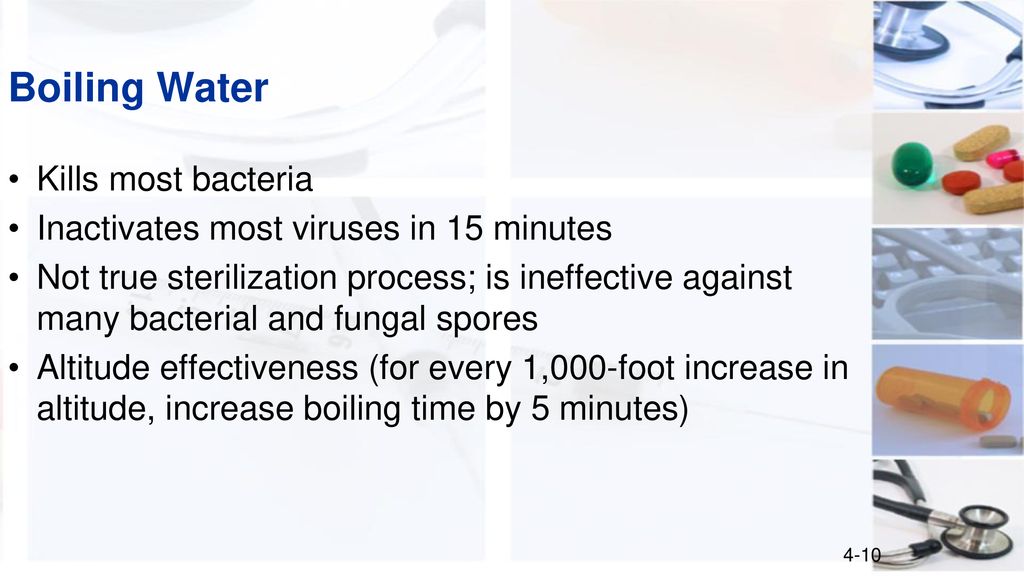
So, you’re staring at a questionable stream of water on a camping trip, or maybe you’ve just dropped your favorite pacifier on the floor. Your brain, the smart little survival machine it is, probably whispers: “Just boil it!” And hey, that’s solid advice—mostly. But does boiling water really kill all the creepy-crawlies, the bacteria, and the parasites that might be lurking inside?
Spoiler alert: the answer is a triumphant “Yes… mostly!” But let’s get into the juicy details, because the devil (and the delicious safety) is in the science. Grab a cup of tea—ideally one made from boiled water—and let’s chat.
The Great Boiling War on Germs
Think of boiling water like a massive, wet, hot apocalypse for most microscopic freeloaders. When water hits its boiling point (212°F or 100°C at sea level), it’s basically throwing a chaotic pool party for heat energy. Bacteria, with their delicate little cell walls, absolutely hate this.
Must Read
Proteins inside these germs start to unravel—a process called denaturation. Imagine a perfectly folded origami swan suddenly getting thrown into a blender; that’s what happens to a bacteria’s insides. Poof! They’re dead, or at least so thoroughly scrambled they can’t hurt you. It’s a beautiful, bubbly massacre.
Parasites like Giardia and Cryptosporidium (the notorious “beaver fever” culprits) are a bit tougher, but they’re no match for a good rolling boil. Giardia cysts are like tiny, armored siege tanks, but a one-minute boil turns them into mushy, harmless soup.
But Wait—The “Almost” Part (Don’t Panic!)
Here’s where I have to be your responsible friend and gently rain on the parade. Boiling kills almost everything that can make you sick in water. But “almost” is the key word. There are some extremophiles—bacteria that love heat—that can survive a boil.
These heat-loving weirdos, like certain thermophilic bacteria, are found in hot springs and volcanic vents. They’re fascinating, but they’re also not the kind of thing you’ll find in your tap water or a mountain stream. So, for 99.999% of “is this water safe?” scenarios, you’re golden. Literally. Your water will be as clear as gold.
Also, boiling doesn’t remove chemical contaminants. If your water has lead, pesticides, or microplastics, boiling won’t help. It might even concentrate some toxins as the water evaporates. That’s a job for a filter, not your kettle.
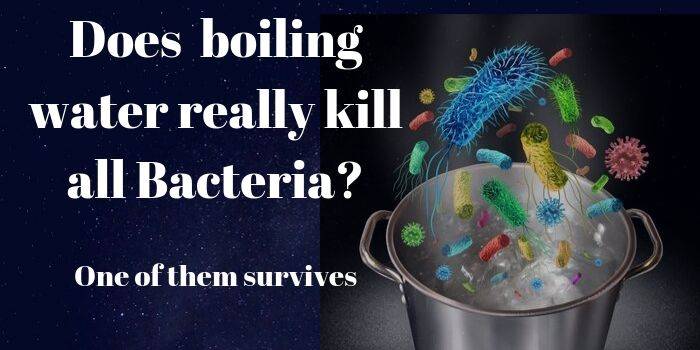 Which Bacteria survive Boiling Water and for How Long?
The Golden Rule of Boiling
So, what’s the official, doctor-recommended, bear-proof method? It’s simple: bring the water to a rolling boil (big, happy bubbles, not just a few shy ones) and let it go for one minute. At higher altitudes (above 6,500 feet), give it three minutes, because water boils at a lower temperature up there.
That’s it! One minute. You don’t need to boil for ten minutes like you’re making a hard-boiled egg. That just wastes fuel and makes your water taste flat. Flat water is sad water.
Fun fact: letting the water cool down after boiling also helps it reabsorb some oxygen, so it won’t taste as metallic. Your taste buds will thank you.
But What About… The Tough Guys?
Remember Cryptosporidium? It’s the sneakiest of parasites. It’s wrapped in a protective outer shell that shrugs off chlorine like it’s nothing. But boiling? Forget about it. A solid boil destroys that shell in under a minute. You’ve basically turned a tank into a pillow.
And bacterial spores? Some bacteria, like Clostridium botulinum (which causes botulism), can form spores that are incredibly heat-resistant. But here’s the catch: these spores are usually destroyed by boiling for a few minutes, or they’re not even present in water. The real danger is in improperly canned food, not your drinking glass. So, calm down.
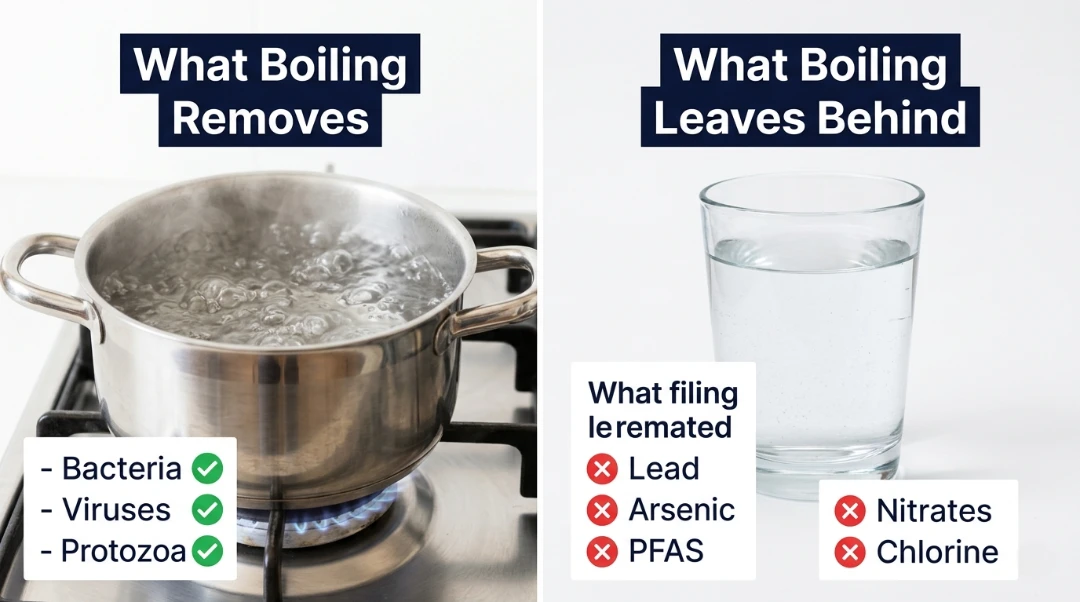 Does Boiling Water Kill Everything? What You Need to Know
What Boiling Doesn’t Do (But That’s Okay!)
Boiling doesn’t make the water sterile in a hospital-sense, meaning it might still have non-harmful bacteria. But who cares? You’re not performing surgery with it. You’re just trying not to get the runs on your hike.
It also doesn’t remove sediment or dirt. If your water looks like mud, strain it through a cloth first, then boil it. Nobody wants to drink mud soup, even if it’s germ-free. Think of boiling as the final boss, not the whole game.
And please, for the love of all that is holy, don’t microwave water to boil it for purification. Microwaves heat unevenly, and you might end up with pockets of cold, live bacteria. Just use a pot or a kettle. Your microwave will thank you.
The Uplifting Conclusion (You Made It!)
Look at you, you responsible water-boiling legend. You now know the secret: boiling kills the baddies—bacteria, viruses, and parasites—with glorious, bubbling efficiency. It’s nature’s little reset button for your hydration station. You don’t need a lab coat; you just need a heat source and a minute of patience.
So next time you’re faced with a dubious drop, take a deep breath. Fire up that camp stove or turn on the stove. Watch the water dance and bubble, knowing that you are its master. You are the conqueror of germs, the pacifier of parasites, the hero of hot drinks!
And when you finally sip that clean, safe, boiled water? Savor it. You earned it. You’re not just hydrating; you’re winning. Cheers, you magnificent, germ-zapping champion. 🥤✨
