How Much Caffeine Is There In Decaffeinated Coffee

Let’s be honest: ordering a decaf coffee feels a bit like ordering a pizza with no cheese. You’re going through the motions, but you’re secretly wondering, “Why even bother?”...
Let’s be honest: ordering a decaf coffee feels a bit like ordering a pizza with no cheese. You’re going through the motions, but you’re secretly wondering, “Why even bother?”
But here’s the kicker—decaf is not caffeine-free. It’s a sneaky little liar, and the amount of caffeine left inside can actually surprise you.
So, how much caffeine is actually in that cup of decaf? Grab your mug, and let’s spill the beans—decaf beans, that is.
Must Read
The Shocking Truth: Decaf Still Packs a Punch
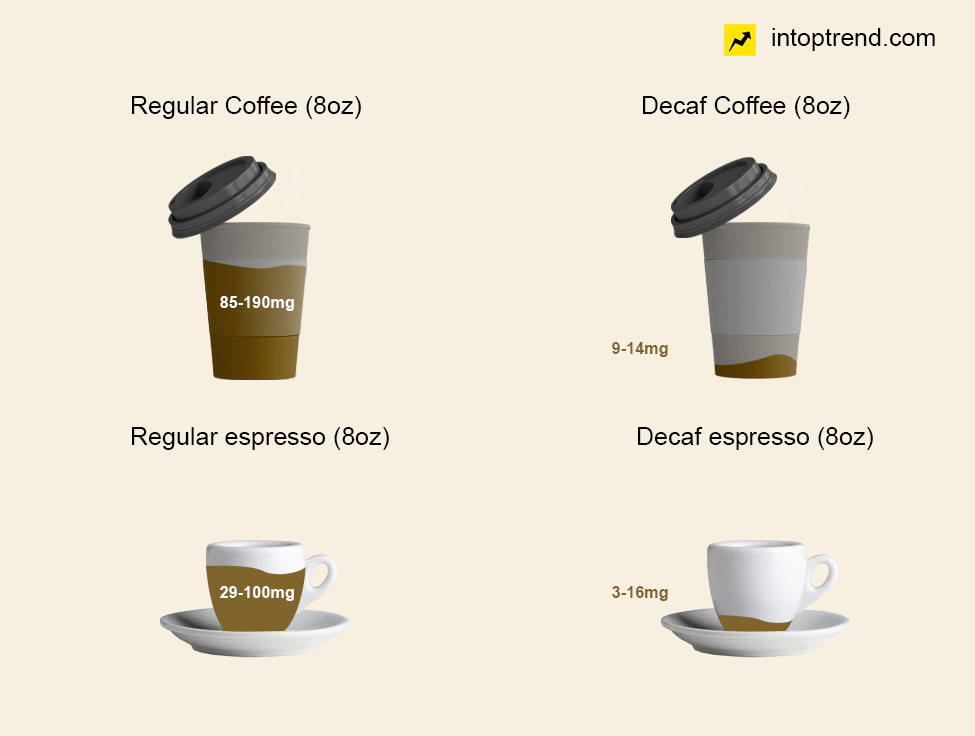
First, let’s set the stage. A standard eight-ounce cup of regular coffee contains about 95 to 200 milligrams of caffeine. That’s enough to turn a sleepy sloth into a tap-dancing squirrel.
Now, decaf? The U.S. government says a cup of decaf must have at least 97% of its caffeine removed. That sounds like a lot, but here’s where it gets funny: 97% gone still leaves 3% behind.
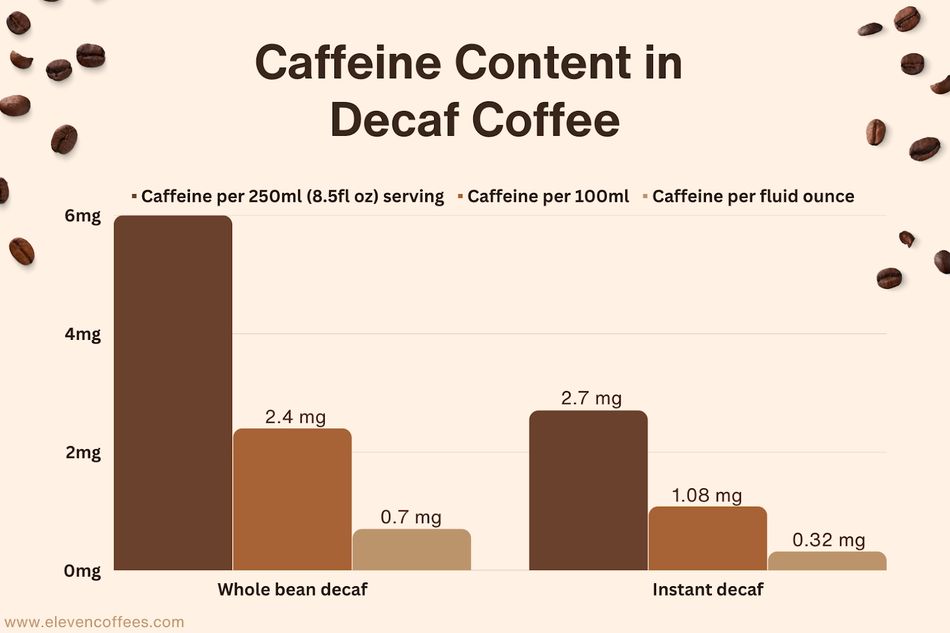
And 3% of a giant number is still a number. Depending on the bean and the brew, a single cup of decaf can contain 2 to 15 milligrams of caffeine. That’s not zero. That’s a secret agent amount of caffeine.
Why 15 Milligrams Matters (Yes, It Does)
Fifteen milligrams might not sound like much. But for context, a single ounce of dark chocolate has about 12 milligrams. So your “decaf” is basically coffee-flavored chocolate water.
If you drink three or four cups of decaf in a day, you’re suddenly consuming 45 to 60 milligrams of caffeine. That’s half a can of soda, or roughly one small cup of black tea. And if you’re sensitive to caffeine? You might as well be mainlining espresso.
This is why some people who “quit caffeine” by switching to decaf still feel jittery. They’re not imagining it—their decaf is gaslighting them.
The Big Myth: Is Decaf Actually Safer for Your Heart?
There’s a common belief that decaf is the safe choice for people with heart conditions. But hold your horses—or your heartbeats.
 How is decaf coffee made | 4 amazing things that you didn't know
Studies show that some decaf coffee actually has higher levels of certain fatty acids that can spike cholesterol more than regular coffee does. Seriously, decaf might be plotting against your arteries.
And because decaf is often made from robusta beans (cheaper and stronger), it can contain more caffeine than a regular Arabica cup, even after processing. So your “safe” decaf could be a Trojan horse for a mild caffeine buzz.
How Do They Even Decaffeinate Coffee? (It’s Weirder Than You Think)
If you’re curious about the process, brace yourself. The most common method involves soaking green coffee beans in a solvent like methylene chloride. Yes, the same stuff used in paint stripper.
Don’t panic—the solvent is removed, and only trace amounts remain. But still, you’re basically drinking beans that took a bath in chemical spa water.
The other method is the “Swiss Water Process,” which uses only water and osmosis. That sounds fancy, but it still leaves some caffeine behind. Moral of the story? You cannot escape the bean’s natural will to wake you up.
The Real-World Test: Your Body Knows
I once watched a friend drink three decaf lattes in an evening, then complain she couldn’t sleep. She blamed the barista’s “bad vibes.” I blamed the cumulative 30 milligrams of caffeine she’d just consumed.
If you’re truly sensitive—like, one espresso sends you into orbit—decaf can absolutely disrupt your sleep. It’s not placebo. It’s math.
 How Much Caffeine is in Decaf Coffee? – Colipse
But if you’re a regular coffee drinker who just wants a second cup after dinner? Decaf might give you just enough of a nudge to stay alert without turning you into a human vibrator.
So, Should You Drink Decaf? (The Honest Answer)
Yes, go ahead. It’s still coffee. It still tastes like coffee. It still comes with that satisfying ritual of sipping something warm and pretending you have your life together.
Just don’t fool yourself into thinking it’s a caffeine-free zone. It’s more like a caffeine calm-down zone—where the party is quieter, but the door is still slightly open.And if you’re really trying to avoid caffeine entirely? Switch to herbal tea. Or hot water with lemon. Or just stare at an empty mug and imagine the warmth. That’s about 0% caffeine, which is more honest than decaf.
The Bottom Line (Pun Intended)
Decaf coffee contains 2 to 15 milligrams of caffeine per cup. That’s enough to matter if you’re sensitive, but not enough to wake up a corpse. Treat it like a low-alcohol beer—it’s not “free” of the stuff, it’s just pretending.
So next time someone tells you they’re “off caffeine” while sipping decaf, you can smile knowingly. They’re not lying—they’re just exaggerating the truth, same as the cup in their hand.
Now, if you’ll excuse me, I’m going to order a regular coffee. Because I like my conscience clear, and my caffeine deliberate. And I sleep just fine, thank you very much.
