What Is A Good Hardness Level For Water Softener

So, you’re finally getting a water softener. Maybe your hair has been staging a rebellion—stiff, brittle, and tasting vaguely of limestone. Or your dishes look like they’ve be...
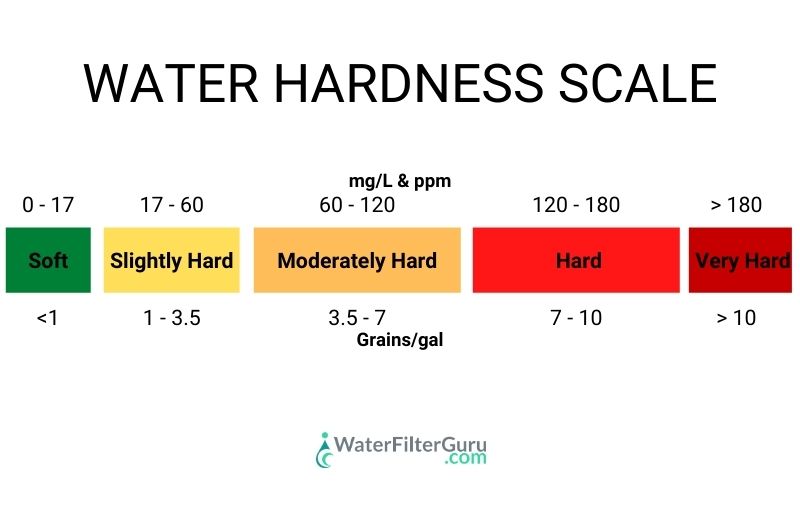
So, you’re finally getting a water softener. Maybe your hair has been staging a rebellion—stiff, brittle, and tasting vaguely of limestone. Or your dishes look like they’ve been through a light dusting of powdered sugar that won’t wash off. Welcome to the club. Now comes the big question: what hardness level should you actually set this magical salt-box to?
First, let’s get one thing straight—hard water is not actually hard. It’s a liar. It feels silky when wet, but then dries into a chalky, miserable residue that haunts your shower doors and coffee maker. The real measure is grains per gallon (GPG). Most people’s water tests between 7 and 15 GPG, which is like having a mild, ongoing war with your plumbing.
Don’t Go Overboard, You Maniac
I see you, new water softener owner, ready to crank that dial to “absolute zero.” You want your water so soft it makes a cloud look tough. Bad idea. Setting it below 1 GPG is like giving your pipes a diet of pure baby oil—slippery, annoying, and your soap will refuse to rinse off. You’ll feel like you can never get clean, just ever-so-slightly lubricated.
Must Read
Your skin will become so slippery that your towel will slide right off you. Showering becomes a sport. And your salt bill? It’ll balloon faster than a pufferfish in a shark tank. Stop. Take a breath. Let’s find the sweet spot.
The Magic Number: 3 to 5 GPG
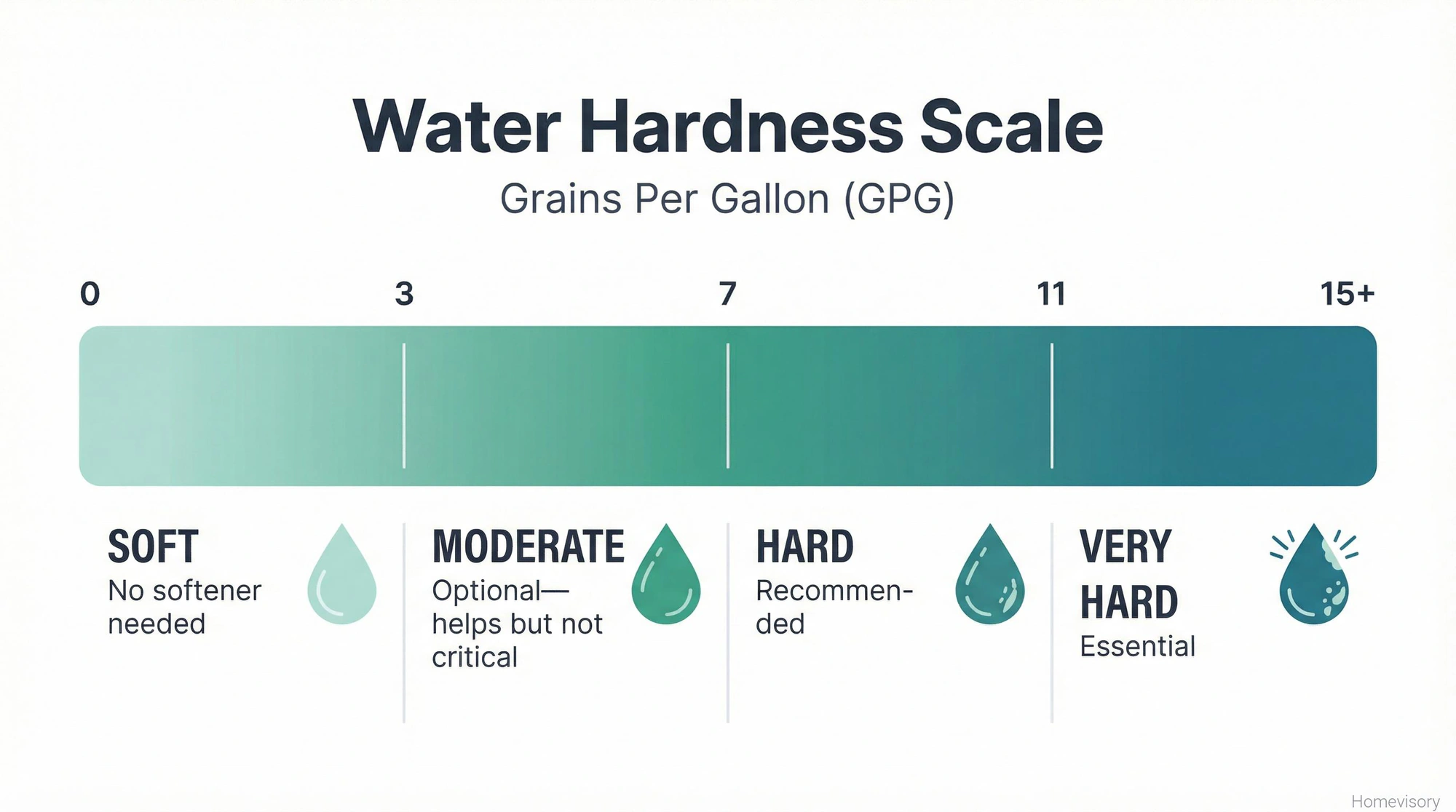
After extensive research (okay, I read one manual and asked a plumber named Gary), the ideal hardness level for a water softener is between 3 and 5 grains per gallon. That’s the Goldilocks zone—not too hard, not a slip-and-slide. At this level, your soap lathers like a dream, your dishes sparkle, and your skin won’t feel like it’s been scrubbed with sandpaper.
You might be thinking, “But I want it to be zero! Zero is perfection!” Wrong. Zero hardness means the water has stripped away all minerals, including calcium and magnesium that actually give water its taste. You’ll find yourself drinking something that tastes like a wet rock’s ghost. And your plants? They’ll go on strike.
 How to Install a Water Softener: Sizing & Setup Guide
But My Water is From the Stone Age
If your water tests at a jaw-dropping 25 or 30 GPG—hello, Texas, Arizona, and parts of the Midwest—you need a different strategy. Do not aim for 3 GPG immediately. That’s like expecting a marathon runner to sprint after eating a Thanksgiving dinner. Your softener will never stop regenerating, and you’ll burn through salt like a Vegas gambler through chips.
Instead, set it to 8 or 10 GPG first. Let your pipes and your sanity adjust. You can slowly dial it down over a few weeks as your softener catches up. Your patience will be rewarded with soft water and a lighter wallet. Also, you won’t have to explain to your neighbor why your front yard is a white, salty wasteland from all the backup brine.
A Surprising Fact That Will Blow Your Mind
Did you know that the water in some parts of the UK is so hard people have been known to suffer from “hard water hair”—a condition that turns your hair into something resembling steel wool dipped in glue? It’s true. But here’s the kicker: very soft water can actually make your hair greasy and flat. That’s right. Too soft, and you look like you haven’t showered in a week. The goal is balance, not a chemical lobotomy.
So, to summarize: 3 to 5 GPG is the sweet spot for normal homes. If you’re absurdly hard (over 20 GPG), ease into it. And for the love of all that is bubbly, do not set it below 1 GPG unless you enjoy showering in a pool of lotion.
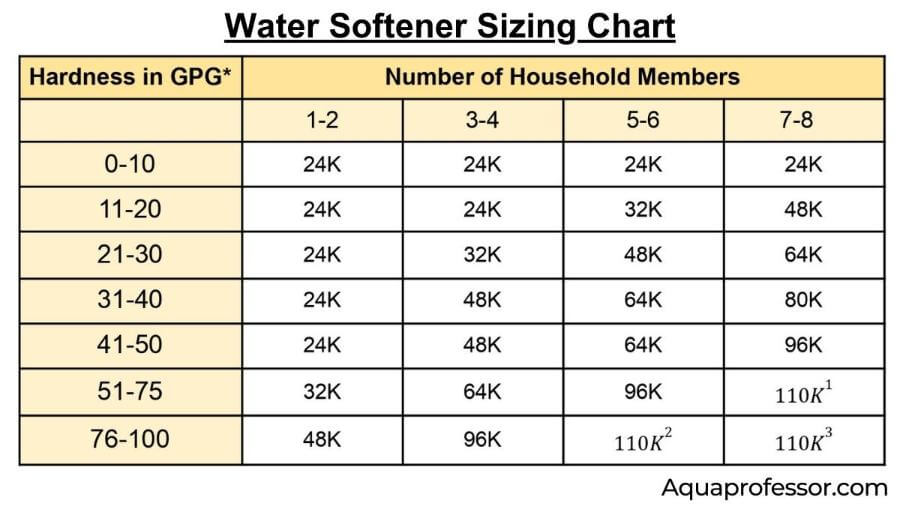 Water Softener Hardness Chart at Arnold Peete blog
How to Actually Tune It
Most modern softeners have a little dial or digital screen that asks for your water’s incoming hardness. Ignore the factory setting of 30. That’s set by a prankster in the factory. Instead, buy a simple water test kit (they’re cheap, like $10) and test your own tap water. It’s not rocket science—it’s just a little vial of liquid that changes color like a mood ring from hell.
Once you know your number, subtract 1 or 2 from it when programming the softener. This gives you a buffer so it doesn’t waste salt trying to get to absolute zero. For example, if your water is 15 GPG, set the softener to 13. It will deliver water around 3 GPG. You’re welcome.
The Parting Wisdom
Remember, your water softener is not a pet. It doesn’t need to be spoiled with the highest setting. Treat it like a teenager—give it just enough guidance (3-5 GPG) and it’ll behave. Overdo it, and it’ll cost you money, make you feel weird, and leave your sinks smelling faintly of salt and regret.
So go ahead. Test your water, set that dial to a reasonable number, and finally enjoy a shower where your skin doesn’t fight back. Your dishes will sparkle, your hair will calm down, and you’ll have one less thing to complain about at dinner parties. You’ve got this. Now go forth and soften wisely.
