How Long Does A Water Softener Take To Recharge

So, you’ve finally joined the soft-water club. Congratulations! Your hair feels like silk, your pipes aren't screaming like a banshee, and your dishes don’t look like they’ve...
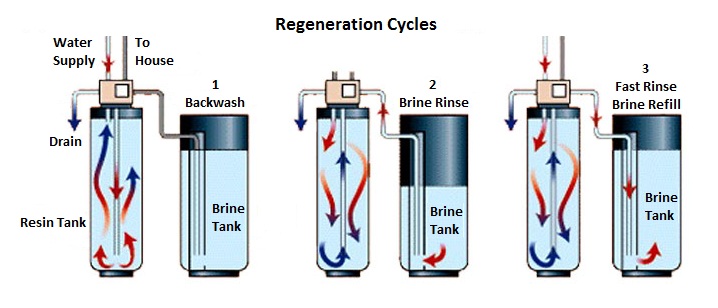
So, you’ve finally joined the soft-water club. Congratulations! Your hair feels like silk, your pipes aren't screaming like a banshee, and your dishes don’t look like they’ve been attacked by a chalk monster. But then comes the moment of panic: your water softener starts making a weird, gurgling noise like a thirsty dinosaur. You check the display, and it says “recharging.” How long will this take? Will you have to drink from the garden hose? Let’s break down this mysterious, mid-cycle nap your softener is taking.
The Short Answer (Because You’re Thirsty)
The typical recharge cycle takes about 90 to 120 minutes. That’s roughly the length of a bad movie or a really good nap. But here’s the kicker: it’s not a steady, predictable hum. It’s more like a slow-motion heist inside your basement.
During that time, your system is doing the equivalent of scrubbing a million tiny salt crystals to banish the evil calcium and magnesium demons from its resin beads. It’s serious work, but I promise you won’t have to pay for a ticket.
Must Read
Why So Long? The Secret Sauce
Your water softener isn’t just taking a coffee break. It’s running through a 5-step program that would make a 12-step program jealous. First, it backwashes to loosen up the dirt—like a spa treatment for plumbing. Then it slowly soaks in a brine solution (saltwater) for 20-40 minutes to exchange the hard minerals for soft ones.
Think of it as a prison swap: the hard water minerals get kicked out, and sodium ions take their place. The actual “recharging” or regeneration step is the slowest part, where the brine sits and works its magic, like a pot of chili left to simmer.
The Plot Twist: Size Matters
Not all softeners are built the same. A tiny, countertop model might finish in 45 minutes—fast enough to make you wonder if it even tried. Meanwhile, a massive whole-house unit with two tanks (called a dual-tank system) can take over two and a half hours.
Here’s a surprising fact: larger softeners actually take longer because they have more resin beads to scrub. It’s like washing a single sock versus washing a giant wooly mammoth. And if your system has a “high efficiency” setting, it might deliberately run slower to save salt and water—like a tortoise winning the race against a very wasteful hare.
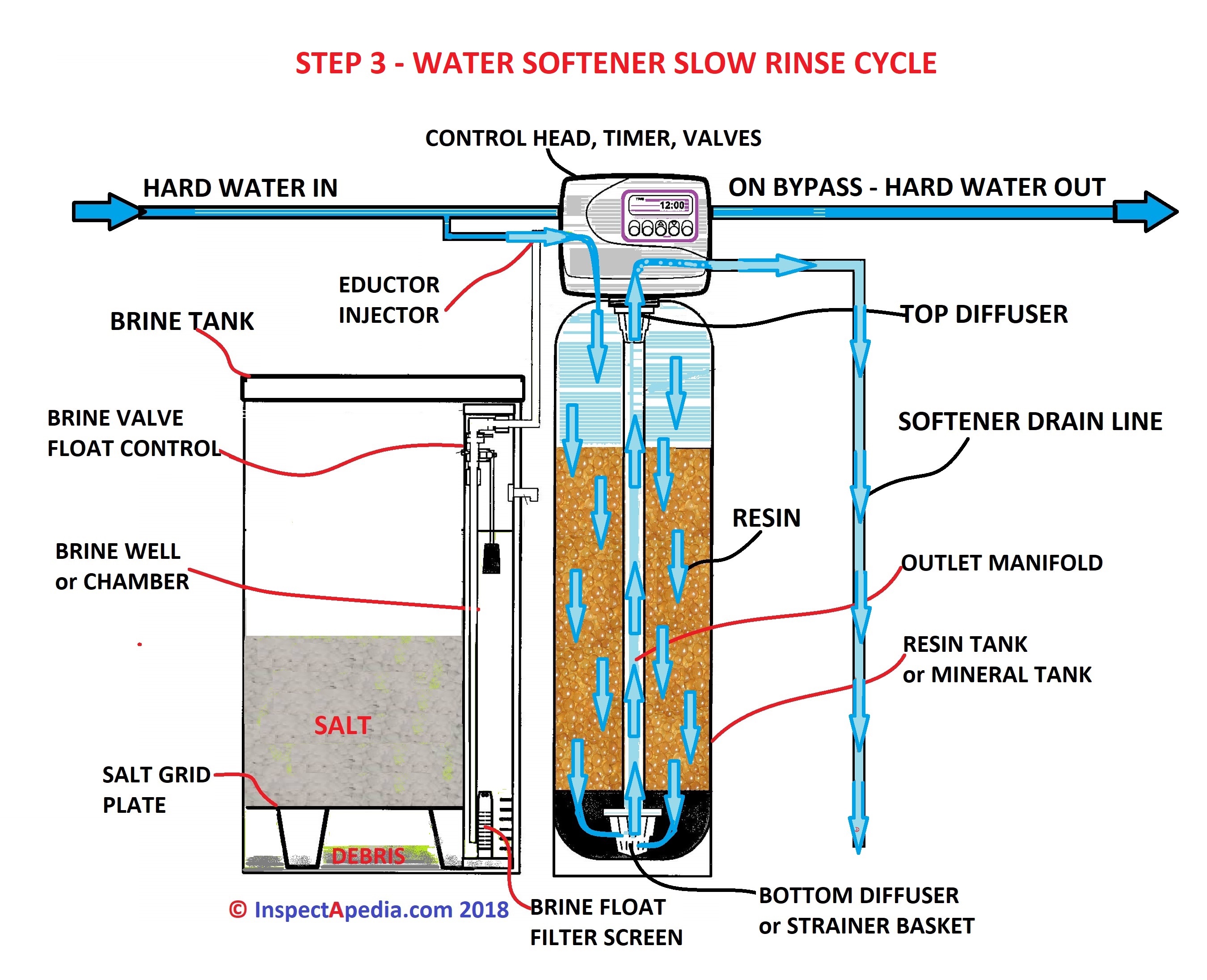 How To Recharge Water Softener Pillow at Andres Lowe blog
When Does It Even Do This?
Most modern softeners are polite guests—they recharge at 2:00 AM when you’re dreaming about floating on a cloud of zero scale. They have a timer that says, “I’ll do this when nobody is using the shower, you’re welcome.” But older models might just do it whenever they feel like it, usually right before you needed a glass of water at 11 AM.
If you ever hear a hissing or clicking sound during the day, don’t panic. That’s just your softener saying, “I’m doing my chores now, please don’t disturb.” It’s basically the appliance equivalent of a teenager with headphones on.
The “Wait, No Water?” Panic
Here’s the part that makes people sweat: during the recharge, your water supply is either completely cut off or trickling like a sad, old man. That’s because the system is busy, and it doesn’t want to spit out salty brine into your drinking glass. A surprising fact? You can actually bypass the softener by turning a valve, giving you raw, hard water for a few hours—like emergency rations.
But most people don’t know that trick. They just stand in front of the faucet, turning it on and off, hoping the water gods will smile upon them. Spoiler: they won’t. Patience, my friend. You’ll survive two hours without the luxury of soft water, I promise.
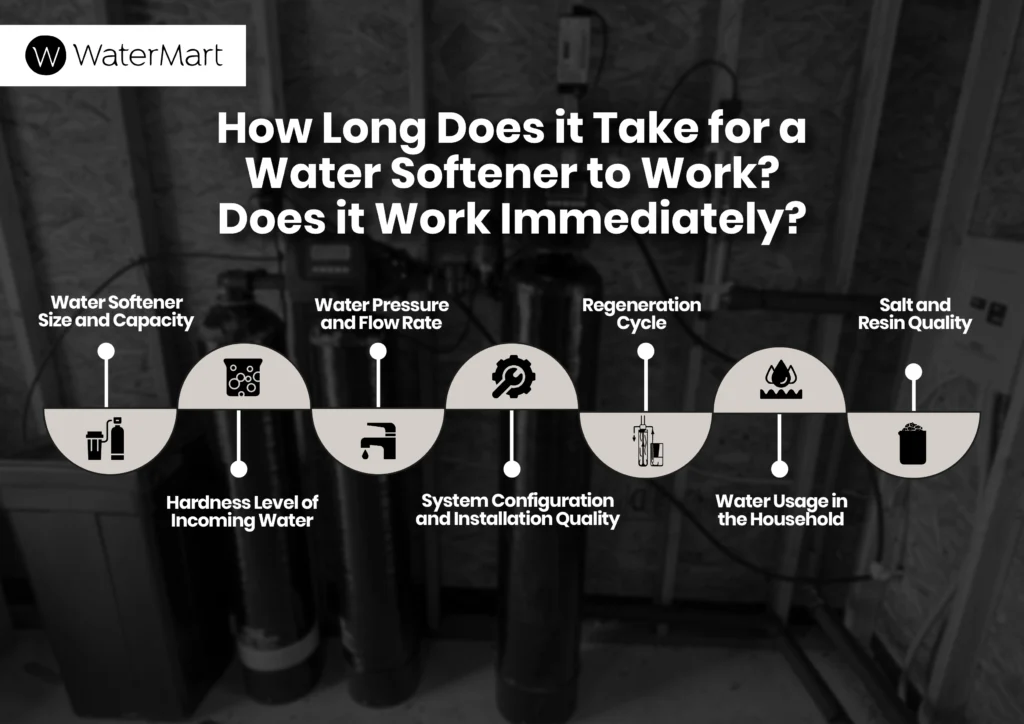 How long does it take for a water softener to work?: WaterMart
What Affects The Time?
Water pressure, brine tank salt levels, and even the temperature of your water can speed up or slow down the cycle. Colder water takes longer to dissolve salt, like trying to melt ice cream in a fridge. If your brine tank is low on salt, the system might run a weaker cycle, stretching the time because it’s basically “understaffed.”
Another pro tip: if you live in a house with well water, your softener might recharge more often because there’s more iron to fight. That means longer cycles, more often—like a superhero fighting crime every single night.
The Verdict: Just Go Make Toast
So, to answer the original question: most water softeners take 90 minutes to 2 hours to recharge. But don’t stare at it. Go read a book, walk your dog, or call your mom and tell her you love her. By the time you’re done, your softener will be ready, your water will be silky, and you’ll have a fantastic fact for your next party conversation.
Remember: the recharge is a sign your softener is working hard for you. It’s not broken, it’s not mad, it’s just taking a salty, dramatic spa day. Let it do its thing. And if anyone asks why you’re out of water for two hours, just say, “The softener is purging its sins.” They’ll either laugh or think you’re a genius. Either way, you win.
