How To Set The Hardness Level On Water Softener

Last Saturday, I poured myself a glass of water, took a sip, and immediately spat it back out. It tasted like someone had dissolved a handful of pennies and a pinch of chalk i...

Last Saturday, I poured myself a glass of water, took a sip, and immediately spat it back out. It tasted like someone had dissolved a handful of pennies and a pinch of chalk in it. I glared at my water softener—that squat, plastic behemoth in the laundry room—and realized I had been ignoring it for months. It was time to set the hardness level, and honestly, I had no clue where to start.
If you’ve ever stared at the little dial on your softener and felt a surge of pure, domestic dread, you’re in good company. That knob isn’t just a random “hardness” setting—it’s basically your water’s personality test. Get it wrong, and you’re either wasting salt or drinking mineral bathwater. Let’s fix that together.
First, you need to know your enemy (aka your water)
Your softener doesn’t magically know how hard your water is—you have to tell it. Think of it like a bartender who needs to know if you want a weak cocktail or something that strips paint. The number you set tells the machine how much calcium and magnesium it needs to remove.
Must Read
To find that number, you can buy a simple test strip from any hardware store—they’re cheap, and they take ten seconds. Or, if you’re feeling fancy, order a water test kit online. Pro tip: some local water utilities will give you the hardness reading for free. Just don’t be that person who googles “water hardness in my city” and trusts a forum from 2005. You deserve better.
The magic formula (don’t worry, it’s easy)
Once you have your water hardness in grains per gallon (GPG), you’re halfway there. Let’s say your test shows 12 GPG—that’s pretty average, like a “medium” coffee. But here’s the trick: you don’t just set it to 12. You also have to factor in your water’s iron content, because iron is a sneaky little jerk that makes softeners work harder.
Here’s the formula: Hardness (GPG) + (Iron ppm x 4) = your actual setting. So if you have 12 GPG and 1 ppm of iron, you’d set it to 16. Yes, it’s that simple. I promise you won’t need a calculator. Write it on your forehead if you have to—just don’t forget to add the iron part.
 How To Set Water Softener Hardness Level - Dean Ouncoung
Now, find the dial (and stop panicking)
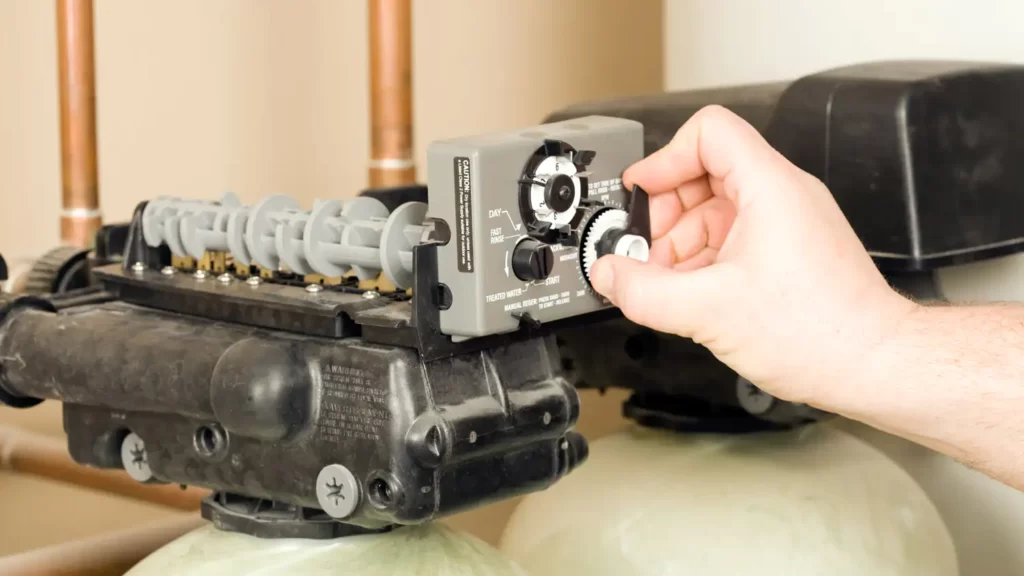
Most softeners have a simple rotary dial or a digital keypad. If you have an old-school model, it might be a numbered wheel you twist. Count from 1 to your target number—that’s literally it. No secret handshake required. If your softener is digital, you’re usually pressing “Menu” or “Set” until you see “Hardness” blinking, then using arrows to adjust.
A word to the wise: if your dial goes from 1 to 50, your target number is probably in the 10–25 range. Do not, under any circumstances, crank it to 50 unless you want your water to feel like soapy, slippery jelly and your salt bill to jump tenfold. I learned that one the hard way—my shower felt like I was being slathered in a melted candle.
The “sweet spot” adjustment trick
After you set the hardness, wait a week. Then, pay attention to how your skin feels after a shower. If it still feels sticky or filmy, your setting is too low—increase it by 2–4 grains. If your hair feels brittle and your dishes have spots, you might have gone too high. Your perfect setting is the one where your soap lathers nicely and you don’t need a bottle of lotion post-shower.
Here’s a fun reality check: you might need to tweak it every season. Yes, seasons affect your water hardness. Spring runoff carries more minerals into the ground, so your water might get harder in April. Don’t hate me for telling you that—just add it to your annual to-do list, right between “check smoke alarm batteries” and “pretend to clean the garage.”
 Water Softener Hardness Chart at Arnold Peete blog
What about those “automatic” settings?
Modern softeners sometimes have a “sensor” mode that claims to adjust itself. Don’t trust it blindly. I once let my “smart” softener decide, and it decided to regenerate every single night for two weeks because it thought I had an iron fortress in my pipes. Manual override is your friend. If you have a digital model, just look for the hardness setting in the menu—it’s usually under “Diagnostics” or “Water Info.”
If you’ve lost the manual, google your model number and “hardness setting.” I did that for mine and found a PDF written by someone who clearly hated writing manuals—the font was Comic Sans, but the instructions worked. Desperate times, my friend.
Final sanity check before you walk away
Once you set it, run a cold water tap for a minute to flush the system, then taste it. If it tastes clean and crisp, you nailed it. If it still tastes like a mineral spring, give it 48 hours—the resin beads need a few regeneration cycles to catch up. Patience is not my strong suit either, but don’t start cranking dials in frustration.
And remember: if you mess it up, you can always reset and try again. There’s no permanent damage—unless you set it to 50, in which case your wallet might feel some brief pain. You got this. Now go enjoy water that actually tastes like water, not like the inside of a cave.
