How Hot Does Water Need To Be To Kill Bacteria

So, you’re staring at a cloudy glass of tap water, or maybe you’re prepping for a camping trip. The big question pops into your head: how hot does water actually need to be to...

So, you’re staring at a cloudy glass of tap water, or maybe you’re prepping for a camping trip. The big question pops into your head: how hot does water actually need to be to kill bacteria? It’s one of those facts we sort of learn but never really feel until we’re desperate for clean water. Let’s dive in, but keep it chill—this is science, not a lecture.
The Magic Number: 70°C (158°F)
Here’s the short answer: to reliably kill most harmful bacteria in water, you need to bring it to a rolling boil of 100°C (212°F) or, for pasteurization-style safety, hold it at 70°C (158°F) for at least 30 seconds. Wait, why two numbers? Because heat is a slow dancer—it needs time to waltz through the bacteria’s defenses. Boiling is the gold standard because it’s easy to confirm (bubbles!), but lower temperatures can work if you’re patient.
Think of it like cooking a steak: you don’t need a blowtorch to kill germs if you give them a long, cozy stay at medium heat. But for water, most experts agree that a vigorous boil is the safest bet for outright destruction. Cool, right? Your kettle is basically a bacteria assassin.
Must Read
Why Heat Kills (It’s Not Magic, It’s Protein)
Bacteria are little bags of proteins and enzymes that keep them alive. When you heat water high enough, those proteins start to denature, which is a fancy way of saying they unravel and stop working. Imagine a wool sweater shrinking in the wash—same idea, but with germs. At 60°C (140°F), some bacteria start sweating, but at 70°C, the party’s over for most pathogens like E. coli and Salmonella.
It’s actually fascinating that a simple temperature change can cause this molecular meltdown. You’re not just boiling water; you’re scrambling the very structure of life. Yet, you do it every time you make tea.
Comparisons That Make You Go “Huh”
Let’s get visual. Boiling water is like a lava lamp of destruction—the bubbles are violent, and nothing escapes. But if you only heat water to 60°C (like a hot tub), you’d need to wait about 10 minutes to kill some bacteria. That’s like trying to melt butter with a candle—it works, but you need patience.
Now compare that to your fridge: it keeps food cold (around 4°C) to slow bacteria growth, but heat is the only way to erase them. Think of cold as a pause button, and heat as the delete key. Which one feels more satisfying? Exactly.
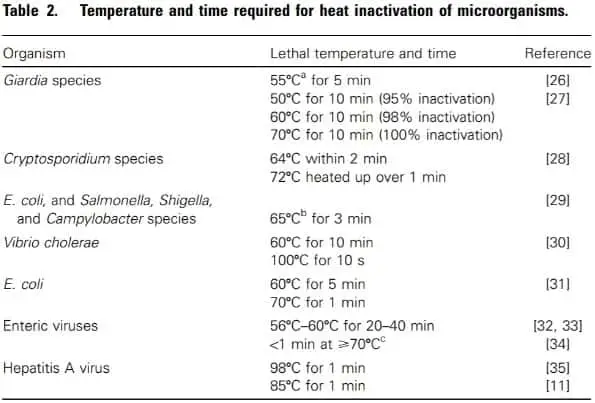 How Long Does Water Need to Boil to Kill Bacteria? – Tryout Nature
But Wait—What About “Safe” Warm Water?
You’ve probably heard that warm tap water (like 40°C) is fine for drinking. And it is—because the water is already treated at the plant. But if you’re in the wild or worried about contamination, lukewarm water is basically a hotel for bacteria. They love that temperature. It’s their vacation spot.
So no, a warm water bottle from your car on a sunny day won’t do the trick. You need that sizzle, that steam—that unmistakable boil.
The Fun Twist: Not All Bacteria Are Equal
Here’s where it gets really interesting: some bacteria are tough nuts. Bacillus stearothermophilus, for example, can survive at 60°C for ages. That’s why autoclaves (the machines that sterilize medical tools) crank up to 121°C (250°F) under pressure. For our everyday lives, though, ordinary boiling kills the villains you’d meet in a pond or a rusty pipe.
So, if you’re making pasta or coffee, you’re already hitting the kill zone. Isn’t that weirdly empowering? The water you boil for spaghetti is a weapon against invisible monsters.
 How long you must boil drinking water to Kill Bacteria
A Little Practical Advice
If you’re camping or in a cleanup scenario, boil water for at least 1 minute at sea level. At high altitudes (above 2,000 meters), boil for 3 minutes because water boils at a lower temperature there. And yes, you can let it cool before drinking—the bacteria are already dead ghosts.
But here’s the kicker: boiling doesn’t remove dirt or chemicals, only living bugs. So if water looks muddy, you’ll need to filter it first. Heat is a surgeon, not a janitor.
The “So What?” Takeaway
Look, you don’t need to memorize exact numbers. Just remember this: if you can make a cup of tea, you can make water safe to drink. The fact that 212°F (100°C) turns dangerous germs into harmless soup is one of nature’s simplest, coolest hacks.
Next time you boil pasta, smile at the steam. You’re not just cooking—you’re sterilizing. Now tell me, isn’t that a hotter topic than you thought?
