How Does Water Pollution Affect Environment

Okay, let’s talk about water pollution. Not the boring science class version. The fun, slightly gross, totally wild version. Imagine your favorite river. Crystal clear, right...

Okay, let’s talk about water pollution. Not the boring science class version. The fun, slightly gross, totally wild version.
Imagine your favorite river. Crystal clear, right? Now imagine someone poured a massive vat of blue raspberry slushie into it. That’s kinda what we do—but with worse ingredients.
We’re dumping everything in there. Oil, soap, plastic, old socks, mystery chemicals. It’s a bad soup.
Must Read
The Fish Are Not Impressed
First up: the fish. They’re the ones living in our trashy soup. When pollution hits, they can’t just call a plumber.
Some fish get super sick. They grow weird tumors. They forget how to find their babies. It’s a fishy soap opera.
Here’s a quirky fact: a fish named the “mudskipper” can actually breathe air—but only if the water doesn’t smell like a chemical dump. No pressure, buddy.
And then there’s frogs. They breathe through their skin. That’s right—they’re basically walking gills. Polluted water? Their skin turns into a toxic sponge.
The Weirdest Pollutant: Caffeine
You know what’s in our rivers? Coffee. Not the beans—the leftover caffeine from your morning latte. It washes down drains and gets into streams.
Fish on caffeine? They get jittery. Seriously. They swim faster, act paranoid, and miss feeding time. It’s like a fish version of a Monday morning.
Another weird one: birth control pills. Tiny hormones slip into the water. Male fish start growing eggs. It’s a gender-bending underwater party, and nobody asked for invites.
Birds Are Not Safe Either
Birds don’t live in water, right? Wrong. They eat fish. They drink from polluted ponds. They get oiled from spills.
A single oil spill can cover a penguin in goo. They look like sad slime monsters. And they can’t fly when their feathers are glued together.
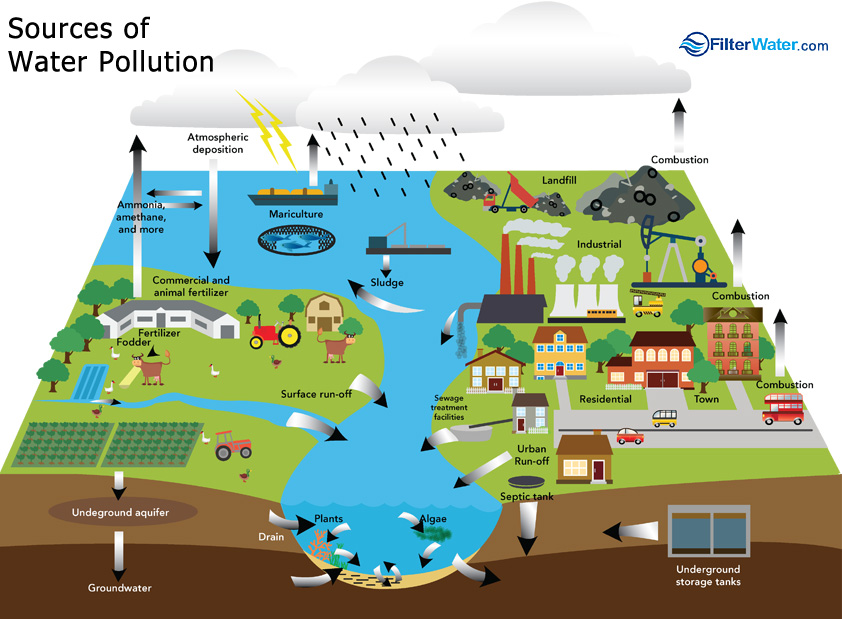 Water Pollution: Effects on health and sustainability | THRIVE Project
Here’s a funny (but sad) detail: seagulls sometimes mistake plastic bottle caps for food. They peck 'em, eat 'em, and then—well, let's just say bottle caps don’t digest well.
The "Dead Zone" Is Real
When we dump fertilizer (from farms and lawns) into water, it’s like feeding the algae a giant pizza. Algae go wild. They grow into a green slime blanket.
That blanket blocks sunlight. Plants die. Then the algae themselves die. Bacteria eat the dead algae—and they suck up all the oxygen.
Result: a dead zone. Nothing can live there. Not fish, not crabs, not even a single bacteria party. It’s a watery ghost town.
The biggest dead zone in the U.S.? The Gulf of Mexico. It’s the size of New Jersey. That’s a lot of sad water.
What About Your Tap Water?
You might think: “I don’t swim in rivers, so who cares?” You drink water, right? And that water came from somewhere.
Pollution can seep into groundwater. That’s the hidden water under your feet. It’s how we get water from wells. If that gets dirty, your faucet pours out yuck.
Microplastics are the villains here. They are tiny bits of plastic smaller than a sesame seed. You can’t see them. But you’re probably eating a credit card’s worth of plastic every week. Gross, but true.
The Fancy Word: Eutrophication
That’s the science name for "lake turns into green swamp." It sounds like a spell from Harry Potter. "Eutrophication!" Poof—algae everywhere.
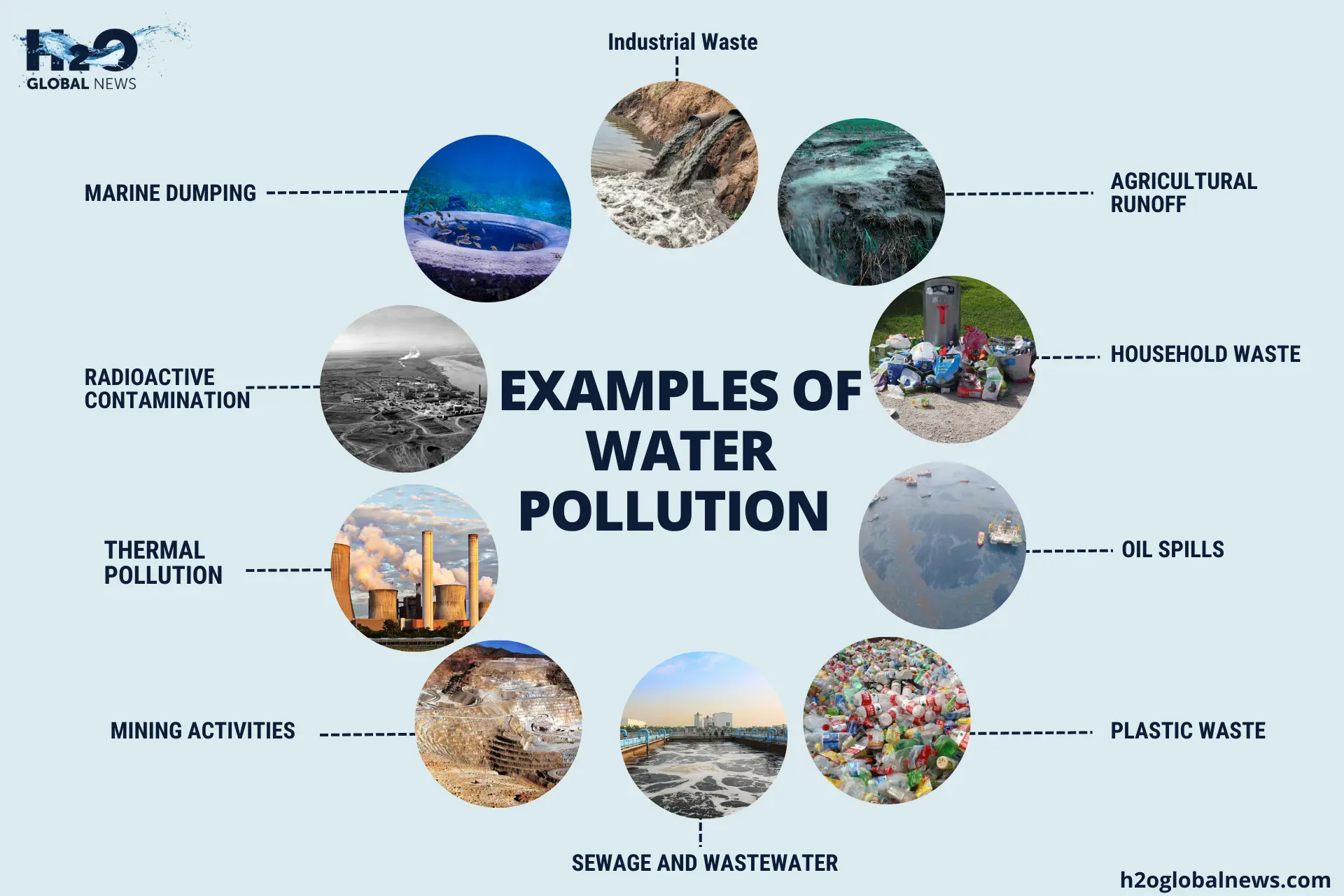 Effects Of Water Pollution Diagram
When a lake gets too many nutrients (from our poop, farm runoff, or that neighbor who over-waters his lawn), it suffocates. The water turns green, slimy, and smells like a gym locker.
You can’t swim in it. You can’t fish in it. You can only stare at it and feel bad.
The Good News? We’re Weirdly Good at Fixing This
Here’s the punchy twist: we can stop. It’s not hopeless. It’s just a little messy.
Some cities use oysters to clean water. Yes, oysters. They filter gallons of yuck every day. They’re basically the janitors of the sea.
There’s also rain gardens. They’re just fancy patches of plants that soak up pollution before it hits rivers. Nature’s mop.
And you, yes you, can help. Don’t flush wet wipes (they cause giant fatbergs in sewers). Pick up dog poop (it’s full of bacteria). And maybe skip that weird drain cleaner for a greener one.
The Final Weird Fact
There’s a river in India called the Yamuna. It’s so polluted that it actually foams. Like a giant bubble bath. But the bubbles are toxic. You don’t want that bath.
Meanwhile, in Sweden, they’ve turned sewage into biogas. Yes, they power buses with poop. It’s the most Swedish thing ever.
Water pollution is messy, weird, and honestly a little funny. But it’s also our mess. The good news? We’ve got the brains to clean it up. And maybe a few oysters to help.
