How Much Water In Ml Should You Drink A Day

Let’s be honest: the “eight glasses a day” rule has been hanging around like that one friend who overstays their welcome at a party. It’s not wrong, exactly, but it’s painfull...
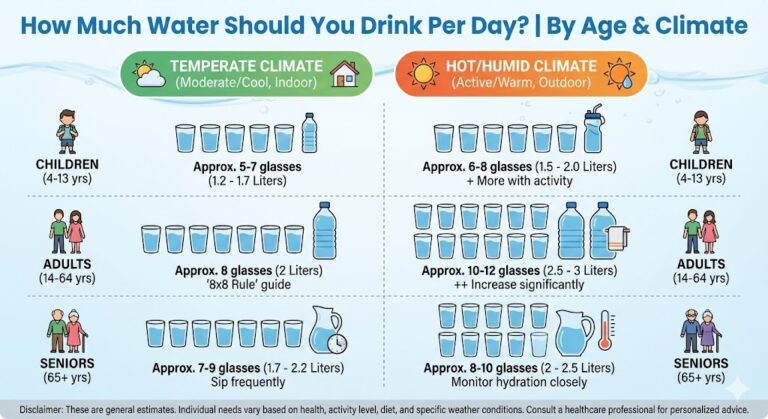
Let’s be honest: the “eight glasses a day” rule has been hanging around like that one friend who overstays their welcome at a party. It’s not wrong, exactly, but it’s painfully outdated. Your body is a sophisticated, high-performance machine—not a measuring cup. So, how much water in ml should you actually drink? The answer is more personal than your Spotify playlist, and way more fun to figure out.
Forget the Cookie Cutter
The old “2 liters” (or 2,000 ml) guideline is a decent starting point, but it’s a bit like saying everyone should wear a size 8 shoe. It’s a myth, perpetuated by decades of repetition. Science says your needs depend on your weight, activity level, climate, and even how much coffee you had this morning. A better formula? Take your body weight in kilograms and multiply it by 30 to 35 ml. A 70 kg person, for example, needs somewhere between 2,100 and 2,450 ml daily.
That’s your baseline. Then, you adjust. Think of it as a sliding scale, not a rigid law. If you’re sweating through a hot yoga session or walking the streets of Rome in August, you’ll need to top up. Your body is basically a plant that sweats—treat it with that level of respect.
Must Read
The Tell-Tale Signs (No Stethoscope Needed)
Forget counting milliliters like an accountant. Your body has two genius built-in indicators. First: thirst. Sounds obvious, right? But many of us wait until we’re parched, which means we’re already running on empty. Drink before you’re desperate, like you would with a good brunch reservation.
Second, check your pee. Yes, really. Aim for a pale, straw-yellow color. If it looks like dark apple juice, you’re dehydrated—go chug. If it’s crystal clear, you might be over-hydrating (yes, that’s a thing). Think of it as your body’s personal dashboard. No fancy apps required.
Fun Fact: The French Do It Differently
In Paris, you’ll rarely see someone with a massive gallon jug on their desk. Instead, they sip sparkling water or “une carafe d’eau” with their meals. It’s a brilliant lifestyle hack: drink water with your food, not in between. This naturally spaces out your intake and prevents that sloshy feeling. It’s also why the French seem so effortlessly chic—it’s not just the wardrobe, it’s the hydration rhythm. Channel your inner flâneur and make water a part of your meal ritual, not a chore.
 Hydration 101: How Much Water Should You Drink Each Day?
Practical Tips to Hit Your Ml Quota (Without Drowning)
Let’s get tactical. First, invest in a marked water bottle—the kind with time stamps or milliliter lines. Fill a 500 ml bottle in the morning, and commit to finishing it by noon. Then fill it again. That’s an easy 1,000 ml before lunch, and you barely noticed. Visual cues work magic because your brain is lazy and loves shortcuts.
Second, flavor your water like a pro. Drop in cucumber slices, a sprig of mint, or a few frozen berries. You’re not a gym bro; you’re a hydration artist. Add a pinch of salt and a splash of lemon if you’re feeling fancy—that’s an electrolyte hack that athletes use, but it works for your WFH desk job too. It makes water feel like a treat, not a punishment.
Third, drink a glass right when you wake up. Your body is naturally dehydrated after a night’s sleep—like a dried-out sponge. A 250 ml glass with your morning coffee sets a hydrated tone for the whole day. Pro tip: leave a glass on your nightstand so you don’t have to think. Habits are stronger than willpower.
The Caffeine Conundrum
Good news: coffee and tea do count toward your daily fluid intake. For years, we were told caffeine was a diuretic that cancelled out the water. The reality? The net effect is negligible for most people. A morning latte is basically cloudy water with benefits. So relax—your espresso habit isn’t sabotaging your hydration. Just don’t replace all your water with triple-shot Americanos. Balance, darling.
 B Fit B Hydrated - The Braden Aboud Memorial Foundation
When You Need More (And When to Stop)
Certain moments call for extra ml. If you’re sick, pregnant, or nursing, bump up your target by 300 to 500 ml. The same goes for high altitude or dry climates—think Denver or a desert retreat. Your skin will thank you, and your energy will stay steady. Conversely, if you’re eating a bowl of watermelon or a cucumber salad, you’re already 20-30% hydrated from food alone. So listen to your body, not a rigid number.
Over-hydration is rare but real—it dilutes your blood’s sodium levels. Signs include nausea, headache, and that “I’m floating” feeling. Unless you’re running a marathon in the Sahara, don’t force it. The goal is consistent sipping, not chugging a liter in one go. Your kidneys are overachievers, but even they need a break.
A Little Cultural Context
In Japan, it’s common to drink hot water with meals to aid digestion. In India, a copper vessel keeps water naturally cool and infused with trace minerals. In Italy, they say “l’acqua è vita”—water is life. These traditions remind us that hydration isn’t a modern invention or a wellness fad. It’s a daily ritual that connects us to where we live and how we eat. Borrow a bit of their wisdom: drink with intention, not fear.
Finally, a simple reflection: the next time you reach for your glass, pause. Notice the coolness against your lips, the quiet swallow. This tiny act is a check-in with yourself. You’re not just feeding your cells; you’re reminding your brain that you’re present, grounded, and taking care. In a world that feels chaotic, that small, consistent gesture—those 2,000 or 2,500 ml—is a quiet act of self-respect. Drink up, darling. You’ve got this.
