How Much Water To Drink When Sick With Flu

There you are, wrapped in a cocoon of blankets, the world reduced to the glow of your phone and the steady hum of the humidifier. The flu has turned your body into a negotiati...

There you are, wrapped in a cocoon of blankets, the world reduced to the glow of your phone and the steady hum of the humidifier. The flu has turned your body into a negotiation—every ache is a demand, every sniffle a complaint. Among the chaos of syrups and tissues, one question bubbles up: how much water should you actually be drinking?
The Old Wives' Tale Meets Modern Science
We’ve all heard it: "Drink eight glasses a day," as if our kidneys were running a strict clock. But when you’re battling influenza, hydration isn’t about a magic number—it’s about listening to your body’s desperate signals. The flu dehydrates you faster than a desert wind, thanks to fever, sweating, and that delightful symptom we call “everything exiting your body.”
Your immune system runs on water like a car runs on gas. Every cell needs fluid to transport nutrients, flush out toxins, and keep your mucus membranes from turning into sandpaper. When you’re sick, your basal metabolic rate spikes, meaning you burn through H2O like a teenager through phone battery.
Must Read
The Goldilocks Guideline
Here’s the sweet spot: aim for 8 to 12 ounces of fluid every hour you’re awake. That’s roughly one small water bottle per hour—not a chug, but a steady sip. If your pee looks like pale lemonade, you’re winning. If it’s the color of iced tea, drink up.
But here’s the twist: water alone isn’t always the hero. Flu can mess with your electrolyte balance, the tiny mineral orchestrators that keep your heart beating and your nerves firing. Think of them as the backup dancers to water’s lead singer—essential for the show.
Enter the Electrolyte Elite
You don’t need a fancy sports drink with neon colors and a marketing budget. Coconut water, bone broth, or a pinch of salt and honey in warm water do the trick. A splash of lemon juice isn’t just for Instagram—it adds potassium and a zing of vitamin C.
My personal trick? I keep a Yeti tumbler of ice water on my nightstand, plus a small thermos of ginger tea with a teaspoon of maple syrup. It’s hydration with a side of comfort—a cultural nod to the “flu soup” your grandmother swore by. Grandma knew things.
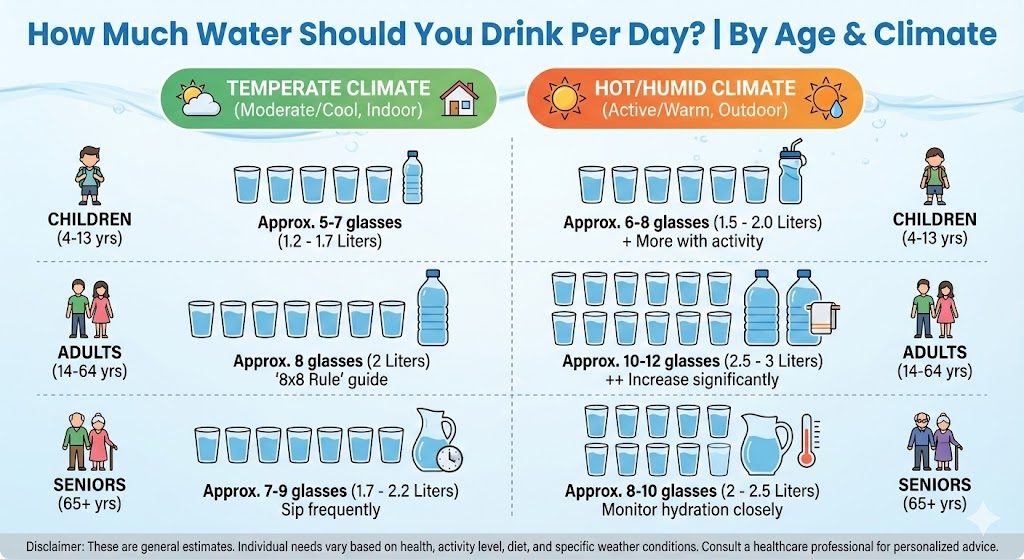 How Much Water Should You Drink Per Day?
Signs You’re Dehydrating (Even When You Think You’re Not)
Your body sends subtle texts before it starts yelling. Dry mouth and chapped lips are the first emojis. Then comes a headache that feels like a tiny drummer inside your skull, or a drop in urine frequency—if you haven’t visited the bathroom in four hours, you’re in the danger zone.
A fun little fact: muscle cramps when you’re sick aren’t always from the virus—they’re often from a lack of magnesium. Ever notice how athletes sip pickle juice? That’s electrolyte alchemy. If you’re brave, a pickle spear might be your flu superhero.
The Cough Conundrum
A dry, hacking cough actually steals more water from your lungs. Every cough expels tiny droplets of moisture, and your throat dries out faster than a sponge in the sun. Sip, don’t gulp—slow hydration coats your throat and soothes the irritation. Think of it as a gentle rain, not a fire hose.
One cultural reference I can’t resist: in Japanese households, they often serve yuzu tea with honey during flu season. Citrus + warm liquid + sweetness = a triple threat against dehydration. Borrow that energy, even if your local market only carries lemons.
 Premium Photo | Sick woman and drinking water in home for sore throat
The Overhydration Trap
Yes, it’s a thing. Drinking gallons of water in a panic can dilute your sodium levels, leading to a condition called hyponatremia—fancy for “your cells are drowning.” Symptoms include nausea and confusion, which the flu already provides in spades. Listen to your thirst; it’s a surprisingly reliable GPS.
If you’re vomiting or have diarrhea, you’re losing both water and electrolytes. In that case, reach for a pharmacy-bought oral rehydration solution (ORS). It’s the same stuff used in developing countries—simple, effective, and backed by the World Health Organization.
Daily Life Reflection
Here’s what I’ve learned from too many winters curled up with a box of tissues: hydration is an act of self-respect. When you’re sick, every sip is a tiny vote for recovery. It’s not just about science—it’s about ritual. The steam from a warm mug, the quiet clink of ice cubes, the slow feeling of liquid sliding down a tender throat.
In the rush of modern life, we often treat drinking water like a chore—a checkbox on a to-do list. But when the flu strips you down to your bones, you realize that water is rebirth in a cup. So tonight, as you reach for that glass, do it slowly. Let the coolness remind you that your body is not an enemy—it’s a garden you are watering back to life.
