Does A Reverse Osmosis System Remove Pfas

Let’s talk about PFAS. You know, the “forever chemicals.” They sound like a bad sci-fi villain. They lurk in your non-stick pan, your rain jacket, and even your drinking water...
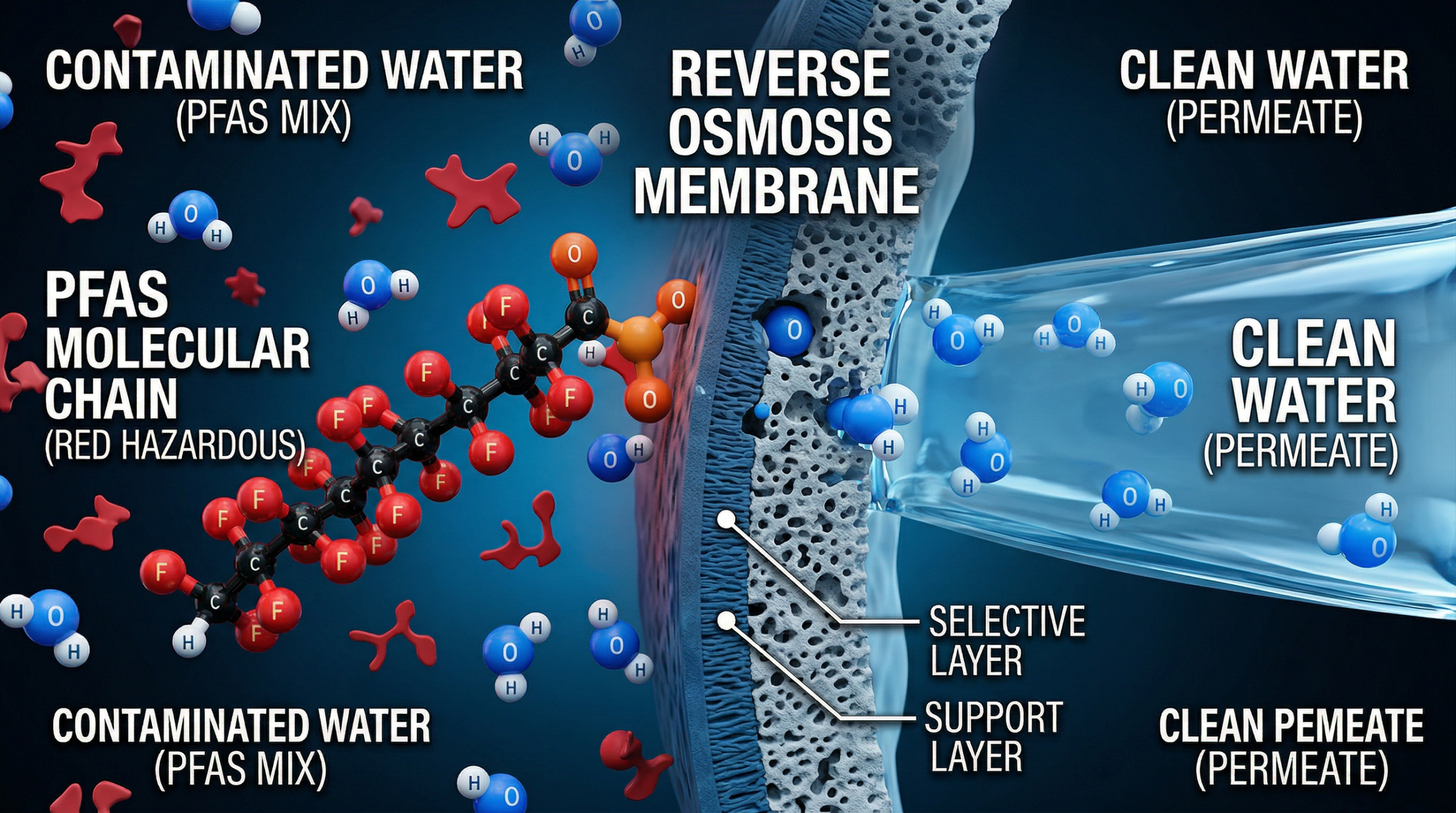
Let’s talk about PFAS. You know, the “forever chemicals.” They sound like a bad sci-fi villain. They lurk in your non-stick pan, your rain jacket, and even your drinking water.
Now, here comes Reverse Osmosis. It’s the water-filter superhero. But can this fancy gadget actually remove these sneaky chemicals? The answer is a big, shiny YES.
PFAS are tough little buggers. They don’t break down easily. That’s why they’re called “forever.” They’ve been around since the 1940s, hanging out like uninvited party guests.
Must Read
Reverse Osmosis (RO) works like a super-strict bouncer. It forces water through a membrane with holes so tiny, you can’t even see them. These holes are smaller than a virus. Seriously—a virus.
So, PFAS molecules? They’re too big to slip through. The RO system says, “Nope, you’re not coming in.” It’s like trying to shove a watermelon through a keyhole. Impossible.
The Science Bit (Made Fun)
Imagine a coffee filter. It lets water through but holds back the grounds. RO does that, but a million times better. It blocks particles as tiny as 0.0001 microns.
PFAS are around 0.001 to 0.01 microns. That’s still huge compared to the RO membrane's pores. The result? Over 90% of PFAS get kicked out. Some studies say up to 99%.
But here’s a quirky fact: PFAS come in two flavors. Short-chain and long-chain. The long ones are easier to catch. Short ones are sneaky, but RO still grabs most of them.
Funny Details You’ll Love
PFAS are in everything. Your dental floss, your pizza box, even your yoga pants. They’re the glitter of the chemical world—impossible to clean up.
One study found PFAS in polar bears. Yes, polar bears. These chemicals travel thousands of miles in rainwater. They’re like world travelers with terrible manners.
RO systems don’t just remove PFAS. They also zap lead, chlorine, and arsenic. It’s like a Swiss Army knife for water. But it’s slow. It produces water one drip at a time.
 Figure 9: How reverse osmosis (RO) removes PFAS from sourc… | Flickr
But Wait—There’s a Catch
RO systems waste water. For every gallon of clean water, they dump three gallons down the drain. That’s a water-guzzling habit. Not great for the planet, but great for your health.
Also, they strip out good minerals. Calcium and magnesium? Gone. Your water becomes “dead” and flat. You’ll miss that crisp taste.
But hey, you can add a remineralization filter. That puts the good stuff back in. It’s like giving your water a makeover.
Is RO the Only Option?
No. There are cheaper ways. Activated carbon filters help, but they’re weaker. They catch some PFAS, not all. Think of them as a regular bouncer vs. RO’s Navy SEAL.
Boiling water? Useless against PFAS. In fact, boiling makes them more concentrated. You’re basically making PFAS soup. Don’t do that.
And please, avoid buying bottled water. It’s often tap water in fancy packaging. Plus, plastic bottles shed microplastics. That’s another forever mess.
Why This Topic is Fun
Because it’s a chemical soap opera. PFAS are the villains, RO is the hero, and your tap water is the damsel in distress. You get to play the smart consumer who saves the day.
Also, the word “PFAS” sounds like “pass the gas.” I dare you not to chuckle. And “Reverse Osmosis” sounds like a dance move. Do the Osmosis.
 How to Remove PFAS from Water? Can RO Help?
Here’s a wild stat: PFAS were found in the blood of 99% of Americans. Yes, you probably have them inside you right now. But don’t panic—your liver filters them out slowly.
Should You Buy an RO System?
If PFAS are a big concern in your area, yes. Check your local water report. Some cities have high levels. Others are clean. Knowledge is power.
RO systems cost $200 to $600. That’s cheaper than a lifetime of bottled water. And you get bragging rights: “I have forever-free water.”
Installing one is easy. It sits under your sink. It looks like a mini spaceship. You’ll feel like a mad scientist every time you pour a glass.
The Bottom Line
Yes, a reverse osmosis system removes PFAS. It’s the best tool we have. It’s not perfect, but it’s awesome.
Remember: PFAS are stubborn, but RO is stubborn-er. That membrane works harder than a squirrel storing nuts for winter.
So, go ahead. Get an RO system. Drink water that’s cleaner than a whistle. And smile knowing you’ve outwitted the forever chemicals. High five.
Curious about more wild water facts? Keep exploring. Your tap is a storybook—just add a filter. Cheers.
