How To Check If Water Softener Is Working

So, you’ve got a water softener. Congratulations. You’ve entered the soft-water elite. But is it actually working? Or are you just feeding salt to a very fancy rock tumbler?...

So, you’ve got a water softener. Congratulations. You’ve entered the soft-water elite. But is it actually working? Or are you just feeding salt to a very fancy rock tumbler?
Let’s be honest: you didn’t buy a water softener for the glamour. You bought it to save your pipes, your skin, and your sanity. But machines are sneaky. They can break silently.
Here’s the thing: hard water is like a clingy ex. It leaves scale on everything—on your faucets, in your shower, and inside your coffee maker. If you don’t check your softener, you might wake up to a plumbing disaster.
Must Read
Don’t panic. I’m here to help you play water detective. Let’s dive into the weird, fun, and slightly scientific world of softener diagnostics. You’ll be a pro in ten minutes.
The Soap Test: Your First Clue
Go to your kitchen sink. Grab a bar of soap. Not liquid soap—the real stuff. Hard, slippery, and ready for action.
Rub the soap under running water. Watch closely. Is it foaming like a frat party? Or is it making a weird, slimy film? If you see no suds and a lot of goo, your softener might be napping on the job. That slime is a sign of hard water minerals fighting your soap.
Fun fact: Hard water can reduce soap’s cleaning power by up to 50%. That means you’re washing your hands with sad, defeated bubbles. Your softener should fix that.
The Fingerprint Check
Turn off the water. Dry your hands completely. Now, rub your fingers together. Do they feel squeaky? That’s the sound of victory.
If your skin feels rough, sticky, or like you just touched a chalkboard, you’ve got a problem. Soft water makes your skin feel slippery—like you’re a dolphin. Hard water leaves a mineral film that feels like sandpaper. Trust the dolphin.
Quirky truth: In ancient Rome, people cleaned themselves with olive oil and a scraper. They had zero soap problems. We’re soft. But you’re testing with science, not oil.
Spot the Scale Spots
Check your faucets and showerhead. Look for white, crusty deposits. That’s limescale—the enemy of your pipes and your ego.
If these spots are gone, your softener is a hero. If they’re growing like a science experiment, you’ve got a leaky system. Scale can clog your showerhead in six months. That’s the speed of a slow-motion disaster.
Pro tip: Run your finger over a glass from the dishwasher. If it looks etched or cloudy, your water is hard as nails. Sparkling glass = soft water joy.
 How to Tell if Water Softener is Working Properly? (Major Signs
The Salt Level Mystery
Pop open your brine tank. Yes, the big plastic bin with salt. Is it full? Or is it looking like a desert after a drought?
Your softener needs salt to regenerate. If the salt level is below the water line, it’s like a car with no gas. It’s just sitting there, looking pretty.
Weird fact: Some salt blocks have a mushroom-like shape. It’s designed to dissolve evenly. If you see a giant bridge of salt (called “salt bridging”), your system is blocked. Smash it with a broom handle. Yes, it’s fun. Be careful.
The Regeneration Dance
Find your timer or control valve. Most softeners regenerate automatically—usually at 2 AM. That’s when the water goes on a midnight workout.
Set an alarm for 2:15 AM. Go to your basement. Listen. You should hear a gentle whoosh of water flushing. That’s the regeneration cycle. If you hear silence, your softener might be in a coma.
I know, it’s weird to listen to your appliances at night. But it’s cheaper than a plumber. Plus, you’ll feel like a secret agent stalking your water pipes.
The Water Hardness Test Kits
Buy a test strip from the hardware store. It costs five bucks. Dip it in your tap water. Wait for the color to change.
Soft water should read 0-1 grains per gallon. Anything above 7 is pure, naked hard water. If you get a high number, your softener is partying without you.
Fun science moment: Test your water before and after the softener. If both samples look identical, your machine is a liar. Time to call a pro or poke it with a stick.
The Salt Bridge and Other Drama
Open the brine tank again. Do you see a hard crust on top of the salt? That’s a salt bridge. It’s a solid layer that traps water underneath. Your softener can’t make brine. It’s a tragedy.
Break the bridge with a sturdy stick or a rubber mallet. Don’t use metal—you might poke a hole in the tank. This is not the time for anger. Be gentle. Then listen for gurgles.
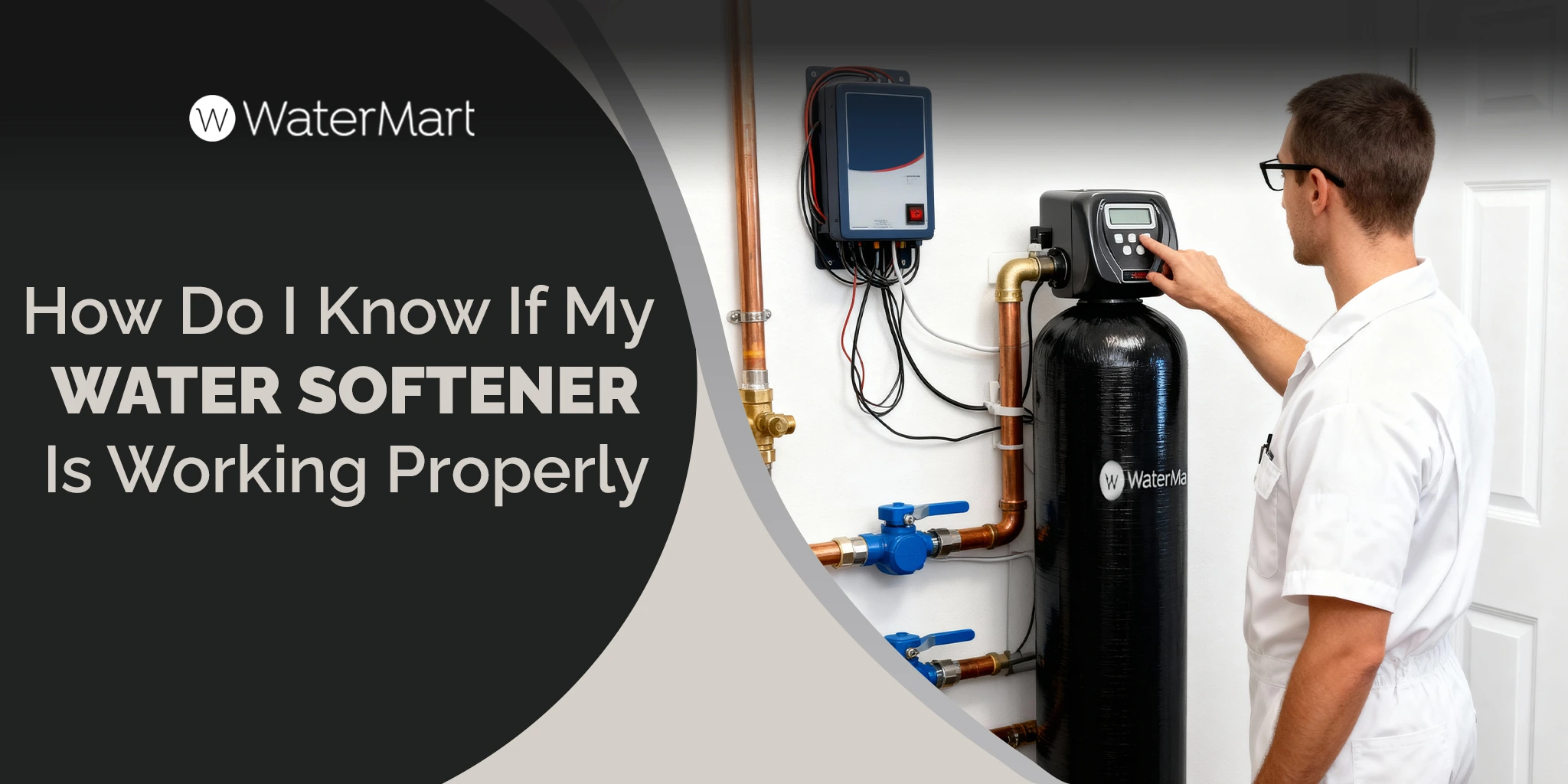 How do I know if my water softener is working properly?
Fun fact: Salt bridges form because of impurities in cheap salt. Buy evaporated solar salt. It’s like buying premium gas for your car. Your softener will purr.
The Water Pressure Trick
Turn on a faucet. Feel the pressure. If it’s weak and sputters, your softener might be clogged. Hard water minerals or sediment are blocking the valve.
If the pressure is strong, but the water still feels hard, you have a bypass issue. Someone might have accidentally turned the bypass valve. Check the pipes near the softener. Twist any handles. It’s like solving a tiny plumbing puzzle.
My neighbor once had a bypass valve stuck for three years. He was paying for salt, but getting hard water. Don’t be my neighbor.
The Final Trick: The Water Taste Test
Yes, I’m asking you to taste your water. Fill a glass from the kitchen. Smell it. Take a small sip.
Soft water should taste neutral—maybe a little flat. Hard water often tastes metallic or “earthy.” Why? Because it’s full of calcium and magnesium. You’re drinking rock juice.
If your softener is working, the water will feel smoother on your tongue. You might even say, “Wow, this water is boring.” That’s a good thing. Boring water is soft water.
When All Else Fails
If you’ve done all these tests and you’re still suspicious, look at your water bill. Soft water means less soap usage. If you’re buying soap every week, your softener is ghosting you.
Or just call a technician. They have fancy gadgets that measure water hardness in seconds. Some even use laser beams. Okay, maybe not lasers. But it’s high-tech and you don’t have to break a salt bridge at 2 AM.
Remember: Water softeners are like pets. They need attention, salt, and occasional midnight checks. Treat them well, and they’ll give you silky skin and spotless glasses. Ignore them, and you’ll be scraping limescale off your shower until you’re old and bitter.
Now go check your brine tank. Your faucets are waiting for their close-up. You’ve got this.
