How Does Ultraviolet Light Kill Bacteria

Picture this: You’re a bacterium, just minding your own business, maybe splitting in two like a good little germ. You’ve found a cozy spot on a doorknob, and life is basically...

Picture this: You’re a bacterium, just minding your own business, maybe splitting in two like a good little germ. You’ve found a cozy spot on a doorknob, and life is basically a non-stop buffet of dead skin cells. Then, out of nowhere, a tiny, invisible assassin shows up. It’s not a ninja with a sword; it’s a photon from a UV lamp. Welcome to the brutal, hilarious world of being killed by sunlight’s angrier cousin.
The Cosmic Tanning Bed of Doom
Ultraviolet light is like regular light, but it’s really had too much coffee. Think of visible light as a friendly wave, while UV light is a toddler with a magnifying glass and a grudge against ants. It has just enough energy to mess with things on a molecular level.
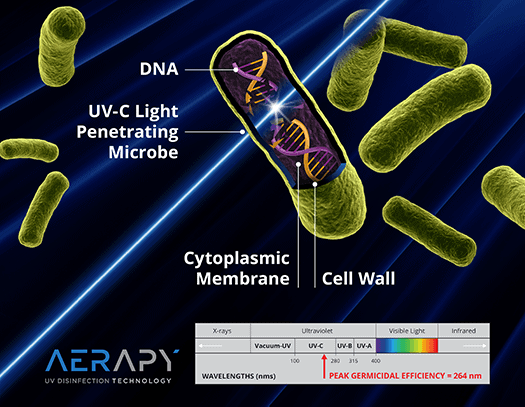
Specifically, the good stuff—UV-C light—has a wavelength between 200 and 280 nanometers. That’s so small it makes a gnat’s eyelash look like a redwood tree. And when it hits a bacterium, it doesn’t just give it a sunburn. It commits genetic vandalism.
Must Read
Breaking and Entering the DNA Fortress
A bacterium’s DNA is its grand library of instruction manuals. It tells the little bug how to eat, how to reproduce, and how to resist your hand sanitizer. The DNA strands are held together by chemical bonds that resemble tiny, delicate zippers.
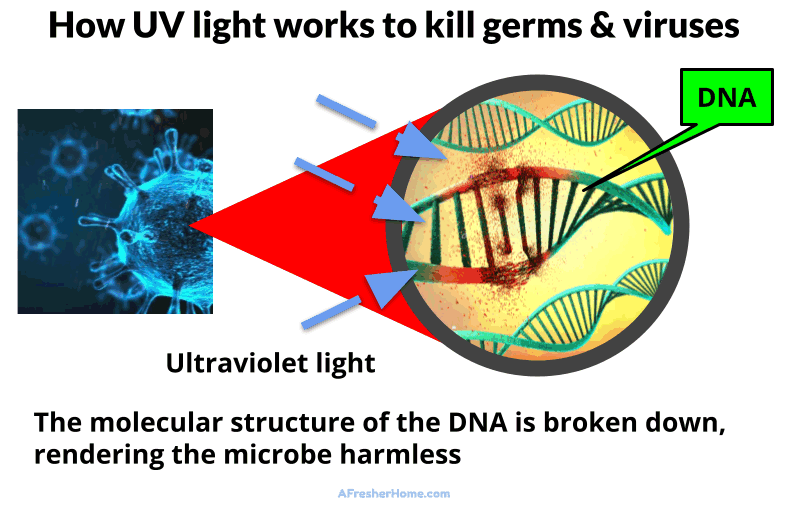
When a UV-C photon smashes into one of those zippers, it doesn’t ask politely. It forces two neighboring links to fuse together into a lumpy, useless knot. Scientists call this a thymine dimer, but I call it the “lump of regret.” Now the DNA can’t unzip properly to copy itself.
The bacterium is effectively killed by a paper jam in its own command center. It can’t read the blueprints anymore. It just sits there, confused, like a guy with a Lego set but no instructions—except it dies.
Why Doesn’t This Happen to Us?
You might be sweating right now, thinking, “Hold on, I walk in sunlight! Am I being DNA-vandalized?” Yes, a little bit. Sunlight has some UV, which is why you get sunburn and, eventually, wrinkles. But your skin cells have a superpower: an enzyme crew called photolyases.
 Uv Light Effect On Bacteria at Johnathan Olivar blog
Think of them as tiny repair elves. When the lump of regret appears in your DNA, these elves swoop in, use a bit of visible light for energy, and snip the lump out. It’s like having a mechanic who fixes your car while you’re still driving it. Bacteria? They have these elves too, but they’re lazy, easily overwhelmed, and their repair kits are garbage.
That’s why a quick zap from a UV lamp is like a supervillain attack for bacteria, while for us, it’s just a mildly annoying Tuesday.
The Surprising Fact: It’s Not Instant Gratification
Here’s the weird part: UV light doesn’t pop bacteria like balloons. You won’t see the little guys explode into confetti. They actually walk away alive for a short time—they just can’t reproduce. Since a bacterium’s entire life goal is to make a billion copies of itself, this is a fate worse than death.
It’s like being told you can eat all the cake you want, but you can never, ever burp. You’ll still be full of cake, but you’ll also be tragically miserable. The UV just sterilizes them. They become zombie germs, wandering aimlessly until they eventually starve or get mopped up.
 How Does Uv Light Kill Bacteria | Gas Furnace
Where You See This In Action
Ever used one of those UV wands you bought online during a panic? That little flashlight is basically a bacterium death ray. Hospitals use them to zap operating rooms after the janitor leaves. It’s why your toothbrush sanitizer looks like a sci-fi gadget.
But here’s a joke for you: UV light is terrible at killing things through dirt or glass. If your light can’t see the germ, the germ lives. So if you wave that wand over a dusty counter, you’re basically giving the bacteria a light show while they laugh at you. You need a clear line of sight, like a sniper, not a flamethrower.
The Grand Finale: It’s All About Timing
The actual killing dose is measured in millijoules per square centimeter. That’s a unit that sounds like a bad sci-fi movie. For most bacteria, you need about 20 millijoules to mess up their DNA beyond repair. To put that in perspective, a full hour of bright sunlight delivers about 10 millijoules of UV-C—but Earth’s atmosphere blocks almost all of it.
So a high-powered UV lamp can deliver that same dose in seconds. It’s like comparing a slow drip of water to a fire hose. The bacteria don’t stand a chance.
Next time you see a purple glow in a dentist’s office, just smile. You’re watching a silent, invisible war where the bad guys get their homework scribbled on by an angry cosmic toddler. And it’s absolutely hilarious—unless you’re a bacterium. In which case, may your thymine dimers be few, and your repair elves come quickly. Good luck, little buddy. You’re going to need it.
