How To Fix Salt Bridge In Water Softener

Alright, let’s talk about that grumpy little monster hiding in your basement: the salt bridge. You know the one. You check your water softener, everything looks fine, but sudd...

Alright, let’s talk about that grumpy little monster hiding in your basement: the salt bridge. You know the one. You check your water softener, everything looks fine, but suddenly your water feels like you’re washing your hands with gravel. Yikes.
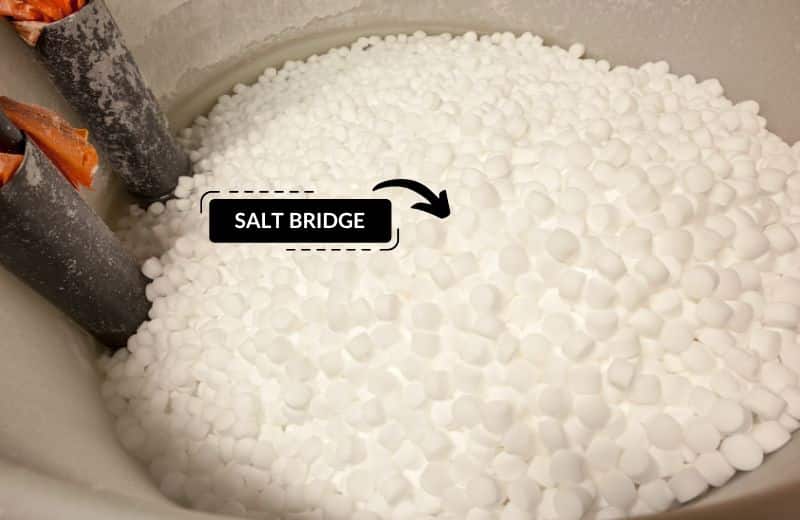
Before you panic and call a plumber (and pay them in your firstborn child), take a deep breath. I’m betting it’s just a salt bridge. It’s basically a crusty, hard layer of salt that forms a dome inside your brine tank. The worst part? It looks full of salt, but the water can’t touch the good stuff underneath.
So, what is this salt bridge thing, really?
Imagine a giant, rock-hard salt cookie sitting on top of your salt. That’s it. That’s the bridge. It happens when humidity, weird salt pellets, or temperature changes glue the top layer of salt together.
Must Read
Meanwhile, your softener is down there crying because it can’t draw any brine. It’s like having a full pantry but no way to open the door. Rude, right?
Your dishes will spot up. Your skin will feel itchy. And your water heater might grumble at you. Let’s fix it before you start showering in bottled water.
Step one: The inspection (aka, time to poke things)
First, grab a flashlight. Do not skip this. Peek inside your brine tank. Do you see a solid, hard layer on top? If you tap it with a long stick and it sounds like you’re knocking on a concrete floor—bingo. You’ve got a bridge.
If you see loose salt that moves when you poke it? Congratulations. You’re not in trouble yet. But if you hit a wall of salt, keep reading, friend.
Step two: Arm yourself (with a broom handle, not a sword)
You need something long, sturdy, and not sharp. A broom handle is perfect. A wooden dowel works too. Please avoid metal pipes—you might puncture the tank or scratch it, and that’s a whole new kind of headache.
Now, approach the tank like you’re about to break a piñata. Gently tap around the edges of the salt bridge. You’re not trying to win a demolition derby—just crack that crusty dome.
 Water Softener Salt Setting at Latonya Langley blog
Work your way inward. You’ll feel it give way with a satisfying crunch. (That crunch is your water softener saying “thank you.”) Once the bridge collapses, break it into smaller chunks so it falls to the bottom.
Step three: Avoid the big no-no.
Here’s the part everyone messes up: do not pour hot water on it. I know, I know. It sounds logical—heat melts things! But hot water can mess up your brine tank’s internal parts. It can also turn the salt into a mushy, sludge-like nightmare.
If the bridge is super stubborn, use room temperature water. Just a little bit to soften the edges. But honestly, the broom handle trick works 90% of the time. No hot water baths for your salt, okay?
Also, resist the urge to hit it with a hammer. You’ll crack the tank. Then you’ll be fishing for a new softener, not just fixing a salt bridge. Use your brain, not your brute force.
Step four: Cleanup and prevention (because we don’t want a repeat)
Once the bridge is gone, scoop out any mushy, wet salt at the bottom. That gunk can cause the next bridge to form faster. Throw it away, not down the drain. Trust me.
Now, refill with fresh salt. But here’s the secret: don’t fill it to the top. Leave a few inches of space. Salt pellets expand and absorb moisture, so a full tank is a bridge waiting to happen.
Also, check your softener’s settings. If your brine tank sits in a humid garage or basement, it’s more prone to bridging. Solution? Use high-purity salt pellets (the ones with fewer impurities) and keep the lid on tight. You’re not seasoning a steak—you’re trying to avoid a salt iceberg.
 How To Fix A Water Softener Salt Bridge at Herman Stpierre blog
Pro tip: The “don’t be a hero” rule.
If you’ve poked, prodded, and sweated over that bridge for 20 minutes and it won’t budge? Stop. You might have a different problem, like a clogged venturi valve or a dead motor. That’s a whole different coffee chat.
In that case, call a pro. It’s cheaper than replacing the entire system. Plus, you get to watch someone else fight the salt monster. Win-win.
What if the bridge keeps coming back?
If you’re fixing a salt bridge every few months, your system is telling you something. Maybe you’re using the wrong type of salt. Salt crystals (the little pellets) are less likely to bridge than cheap rock salt. Spend the extra two bucks.
Or maybe your tank is too old. Over time, plastic tanks get rough and grabby, making bridges stick. A new tank isn’t cheap, but neither is the mental toll of constantly playing whack-a-mole with salt.
Finally, run a regeneration cycle after you fix the bridge. This ensures everything is back to normal and purges any leftover debris. Your softener needs a victory lap, too.
And that’s it! You’ve outsmarted the salt bridge. Your water will be soft again, your dishes will sparkle, and your skin will stop feeling like sandpaper. Go reward yourself with a coffee—no, not with the softener water. That’d be gross.
You’re a champ. Now go take a nice, scalding, non-scaly shower. You’ve earned it.
