What Does Grain Mean In Water Softeners

Ever wondered what the word “grain” means when you’re shopping for a water softener? It sounds like you’re about to install a tiny cereal dispenser under your sink, right? I p...

Ever wondered what the word “grain” means when you’re shopping for a water softener? It sounds like you’re about to install a tiny cereal dispenser under your sink, right? I promise, it’s much less confusing—and a lot more useful—than that.
Think of grain as a measuring cup for hardness. In your water, minerals like calcium and magnesium are what make it “hard.” Each grain is a tiny unit that tells you how much of that unwanted mineral stuff is floating around in your tap water.
Imagine you’re making cookies. If the recipe calls for two cups of sugar, you wouldn’t throw in a whole bag, right? A water softener’s grain capacity works the same way—it’s the maximum amount of hardness it can handle before needing a “regeneration” (a fancy word for a deep clean).
Must Read
Why Should You Even Care About Grains?
Here’s the real story: you care because your water feels like it’s fighting you. Have you ever washed your hands and felt like the soap just won’t rinse off? Or scrubbed a glass until your arm aches, only to see those cloudy white spots staring back at you?
That’s hard water being a bully. It builds up inside your pipes, ruins your washing machine, and makes your hair feel like straw. Grains are the secret language between you and your softener that says, “I’ve got this, let’s kick that mineral out.”
When you know about grains, you can pick a softener that actually matches your home. It’s like buying the right size shoes instead of squeezing into something that pinches your toes.
How to Picture a Grain (Without a Math Lesson)
One grain per gallon (gpg) is roughly equal to 17.1 parts per million of hardness. But that’s boring! Instead, visualize this: a single grain of hardness is like one tiny marble of calcium floating in a gallon jug of water.
If your water has 10 grains of hardness, it’s like having ten marbles in every gallon. Your dishwasher has to scrub those marbles off every plate. A softener’s job is to grab those marbles and swap them for soft, friendly sodium ions that rinse away clean.
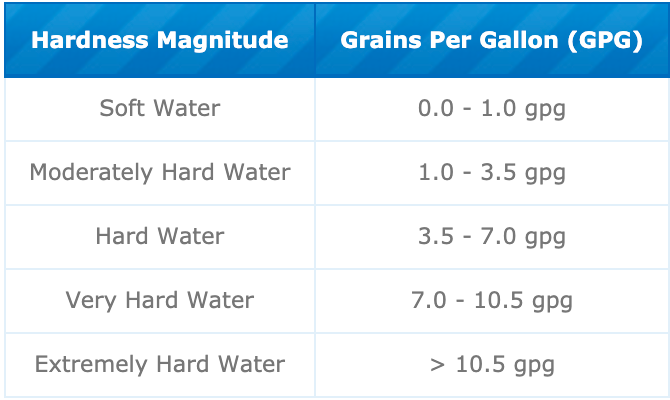
Most homes have water between 5 and 15 grains. If you’re over 15 grains, your water is considered very hard, and your laundry probably feels like sandpaper. Don’t worry—we get it, and so does your softener.
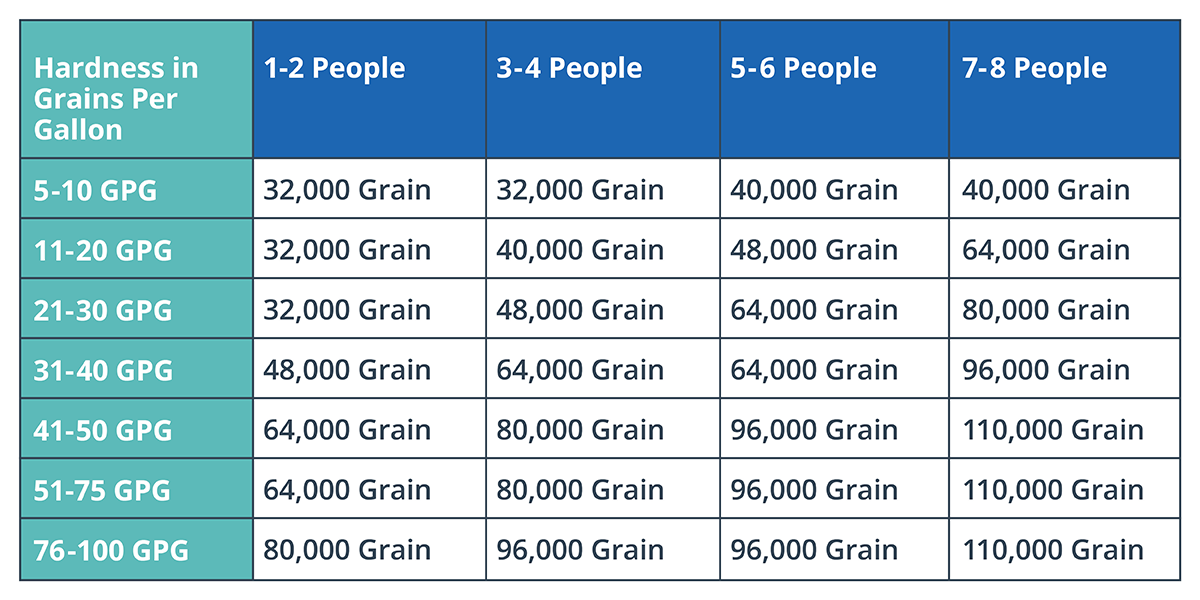 How to Size a Water Softener: Sizing Chart and FAQs | Aquasana
The “Which Size Grain?” Dilemma
Here’s where most folks get stuck. You’ll see softeners with ratings like “24,000 grains” or “48,000 grains.” That number tells you how many marbles the softener can hold before it says, “I’m full, time to regenerate.”
A smaller unit (around 24,000 grains) is perfect for a couple or a small apartment. It regenerates more often, but it’s cheaper. A bigger unit (like 40,000 or 48,000 grains) is the overachiever—great for a family of four with lots of showers, laundry, and dishwashing.
My buddy once bought a huge 64,000-grain unit for himself. He lives alone. He called me every week complaining about the noise from the extra regenerations. It’s like buying a dump truck to haul a bag of groceries—overkill!
A Real-Life Comparison: Grain vs. Salt
Think of your water softener as a fish tank with a filter. The grains are the fish waste. The water is clean at first. Every time you shower or wash dishes, you add a little “waste” (hardness). The softener needs to flush that waste out by washing itself with salt (brine).
If you buy a softener with too few grains for your home, it will regenerate constantly, wasting salt and water. Buy one with too many grains, and it regenerates too rarely, letting dirty water sit around and breed bacteria. It’s a Goldilocks situation—you need just right.
A quick rule of thumb: multiply the number of people in your home by the hardness level (in gpg). Then add a little cushion. That’s your daily grain usage. A 30,000-grain unit works for most average families.
 Certiflow Water Softeners
How to Find Your Grain Number
You don’t need to be a chemist. Just grab a water test kit from your local hardware store—they cost about $10. Fill a small tube with tap water, add a drop of testing liquid, and count how many drops it takes to change the color. Each drop equals one grain.
If you’re feeling lazy, call your city water company. They’ll often tell you your water’s hardness level over the phone. Or check your annual water quality report—it’s usually posted online.
Once you know your number, buying a softener becomes as easy as ordering pizza. You either need a small, medium, or large. Don’t stress about being exact—most units are adjustable anyway.
Why You Should Smile About Grains
I know “grain measurement” sounds like a homework assignment. But here’s the warm hug: once you get the right size softener, your life changes gently. Your skin stops itching after a shower. Your coffee maker stops clogging every three months. Your glasses come out sparkling without needing a wipe.
Suddenly, you’ll notice you’re using half the soap you used before. Your laundry smells fresh without that chalky residue. The scale on your showerhead? It vanishes like a bad memory.
It’s the small victories—a smooth shave, a clean baby bottle, a dishwasher that actually works—that make understanding grains worth it. You’re not just buying a machine; you’re buying peace of mind for your plumbing and your skin.
So next time you see “grain” on a water softener box, don’t panic. Nod at it like an old friend. You now know that a few thousand grains are simply the perfect amount of help your water needs to stop being a jerk. And honestly, isn’t that what we all want?
