Where Does My Well Water Come From

So, you’re standing at your kitchen sink, filling up a glass. The water is cold, clear, and yours. But have you ever actually stopped to think, “Where did you come from, littl...
So, you’re standing at your kitchen sink, filling up a glass. The water is cold, clear, and yours. But have you ever actually stopped to think, “Where did you come from, little droplet?”
I’m looking at you, well-water people. You’re a special breed. You don’t have a municipal water bill, but you have a pump, a pressure tank, and a whole lot of mystery underground.
Let’s just get this out of the way: your water isn’t coming from a magical underground river. Nope. It’s not a giant lake with fish swimming around down there. Sorry to burst that bubble.
Must Read
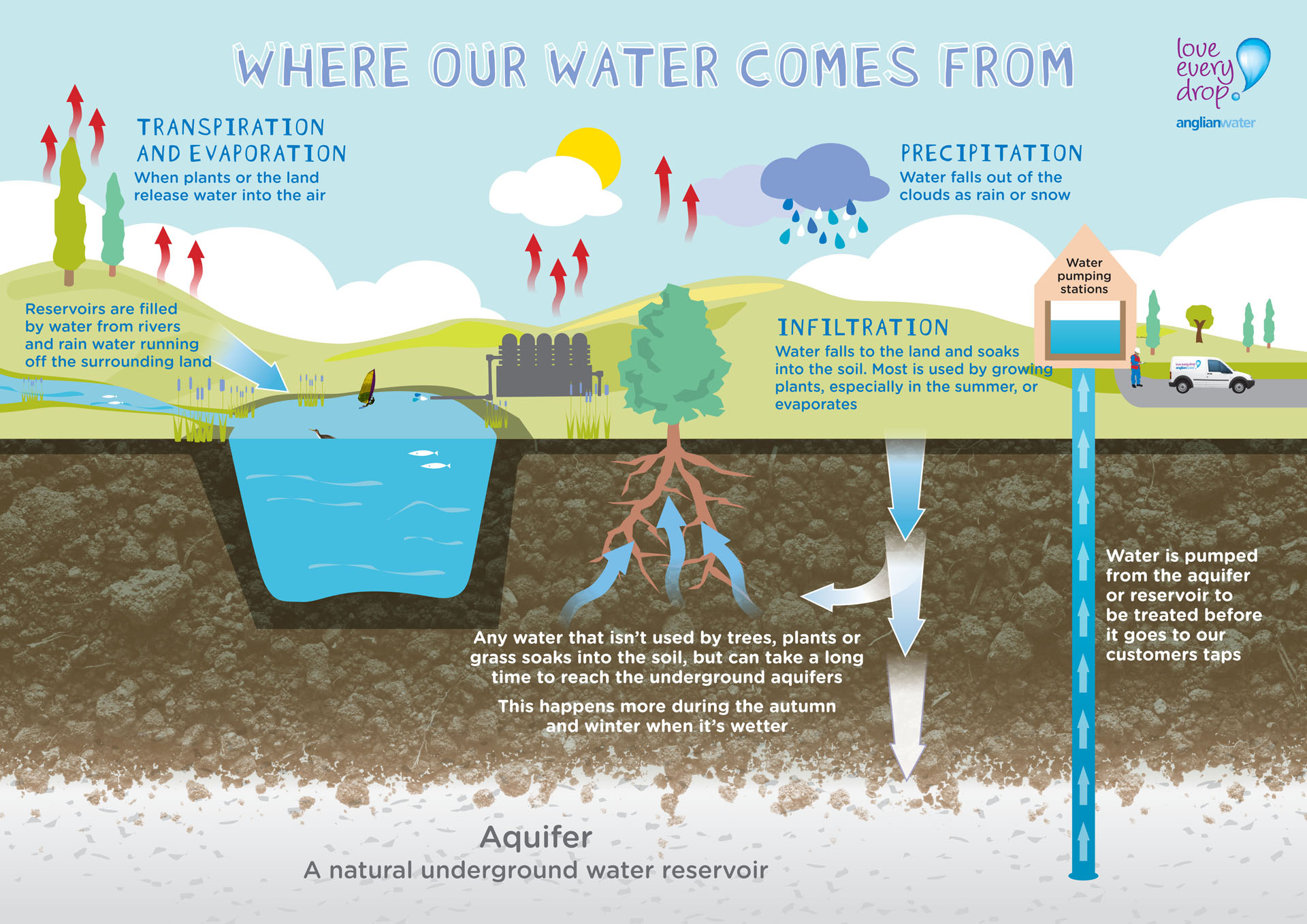
Your water is hiding in the tiny spaces between rocks, sand, and gravel. Geologists have a fancy name for this: groundwater. Basically, it’s rain that took a very, very long nap.
Picture a giant, soggy sponge made of earth. That’s the aquifer. Your well is just a really long straw you’ve shoved into that sponge. You suck, and the sponge gives up its juice.
But wait—where did that rain come from? It fell from the sky, obviously. It soaked into the ground, trickled past tree roots, through layers of soil, and kept going. It traveled down, down, down until it hit a layer of rock it couldn’t get past.
This journey can take a while. Like, years a while. The water from your tap might have been falling as rain when you were still in high school. Wild, right?
So, is it clean? Like, really clean?
That’s the million-dollar question. The answer is: eventually. When rainwater soaks through the ground, it gets a natural filter. Think of it as Mother Nature’s Brita filter, but made of sand and clay.
This filter strips out dirt, bacteria, and some gross stuff. But it’s not perfect. It can also pick up other stuff, like minerals. That’s why you might have “hard water” that leaves spots on your glasses. It’s not dirty—it’s just crunchy.
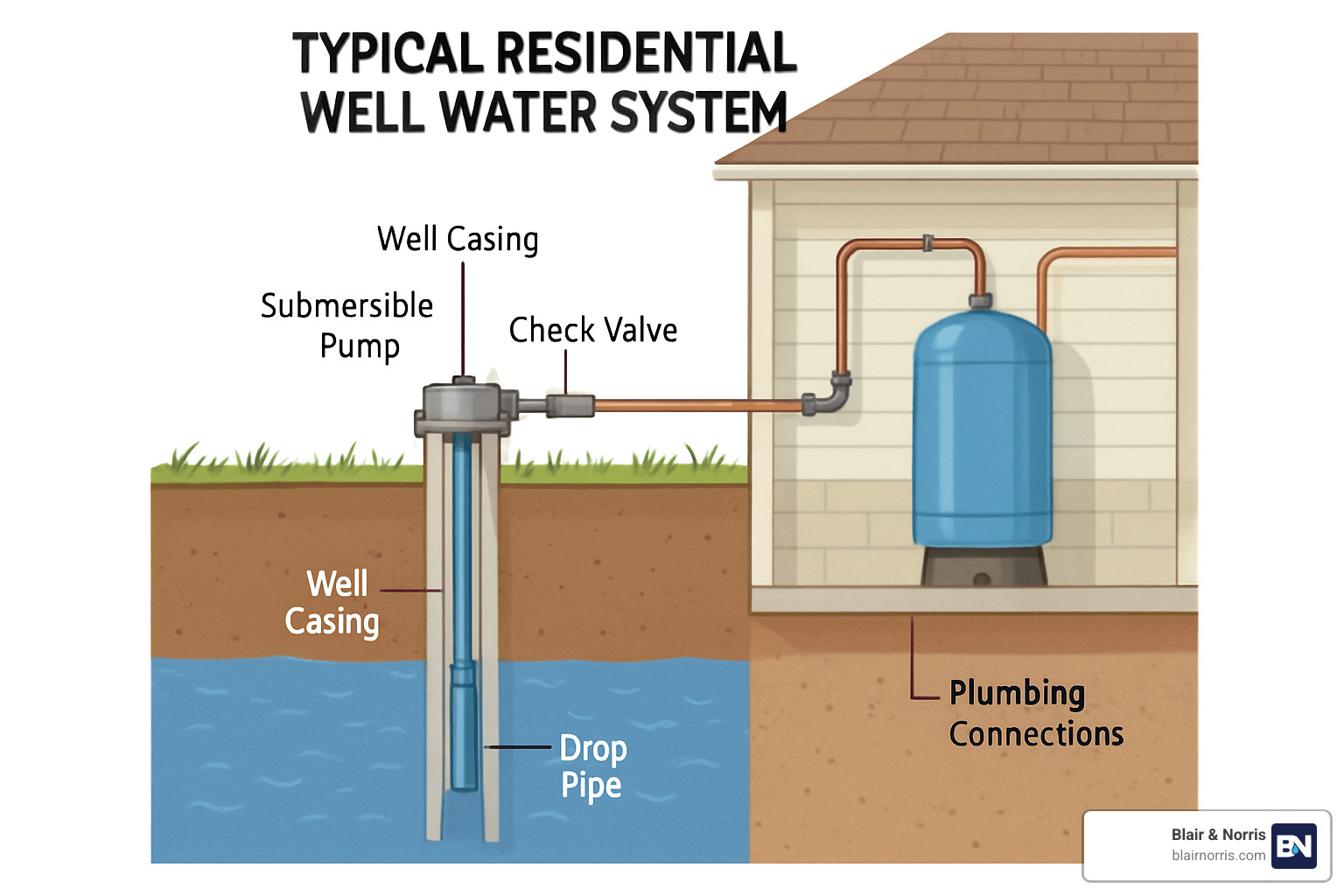 well pump setup: 10 Essential Steps for a Powerful 2025 Success
Here’s the kicker: your well is basically a bucket dropped into a deep, dark hole. That hole connects directly to the aquifer. Whatever is in that aquifer ends up in your glass.
That’s why you have to test your water. Not just when you buy the house. Like, every year. Because you never know if a neighbor’s septic tank is having a bad day. Gross, but true.
The “secret life” of your well
Your well isn’t just a hole in the ground. It’s a pipe (called casing) that goes down to the water table. At the bottom, there’s a screen that keeps out big chunks of rock and sand. It’s like a bathroom drain stopper, but way more important.
Then there’s the pump. It lives down there, submerged in the water, working 24/7. It pushes the water up a pipe, into your pressure tank. That tank is the reason you don’t get a drizzle when you flush the toilet.
And here’s the best part: your well is a closed system. No one else is using it. That water is all yours. You are the sole CEO of your personal water utility. Congratulations, you’re a water baron.
But being a CEO comes with responsibilities. You have to protect your “supply.” Don’t dump old motor oil in the backyard. Don’t let the kids build a rocket launch pad over the wellhead. Treat it like a shrine.
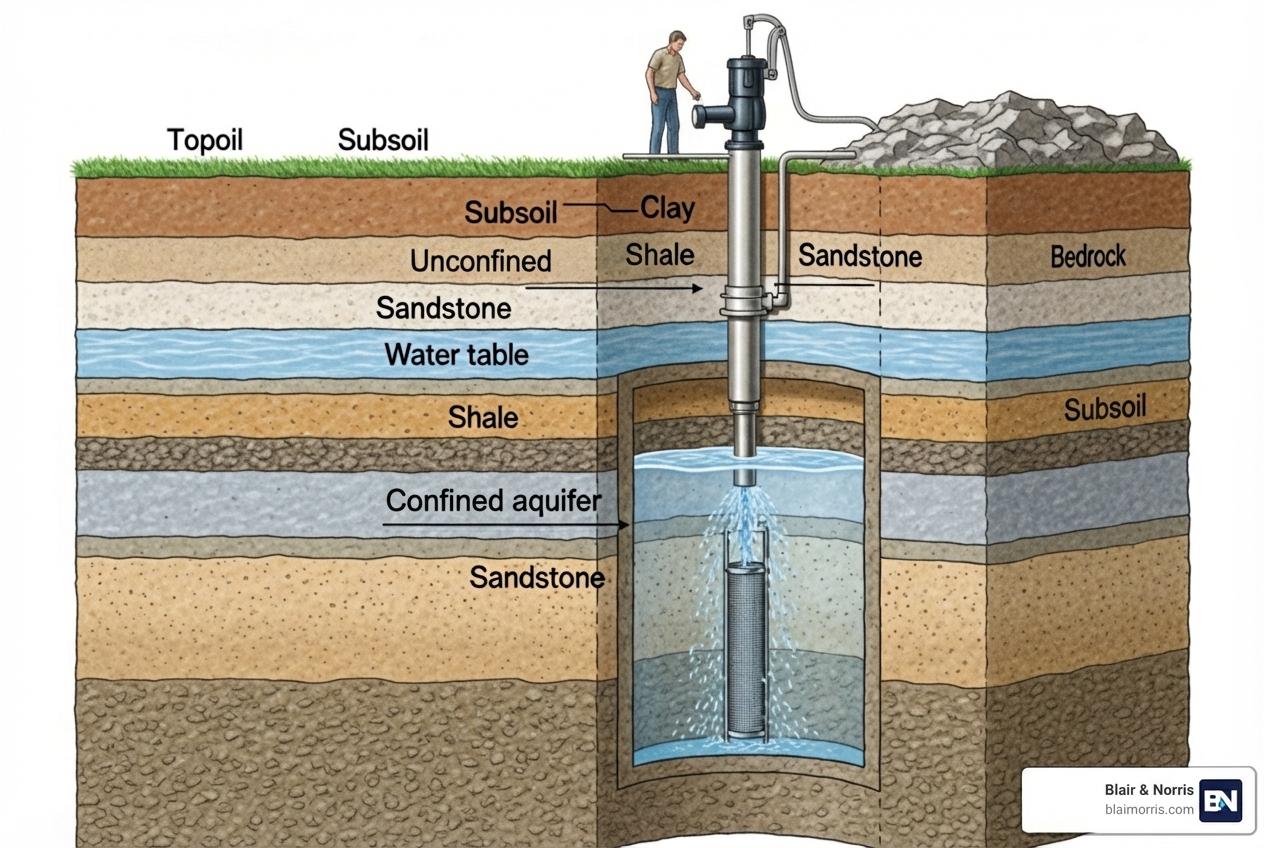 How do wells work: Ultimate Safe 2026 Guide
Can you run out?
Technically, yes. Don’t panic yet. Most wells won’t go dry unless there’s a major drought. But the water table can drop. It can rise. It’s like a moody teenager.
If you’re worried, you can check your well’s static water level. That’s the distance from the ground to the water when the pump is off. If it’s getting deeper, you might need to drill deeper. That’s a pricey conversation.
Or, you can just be smart. Don’t water your lawn during a drought. Take shorter showers. Tell your teen to stop taking 45-minute “steam treatments.” Your aquifer will thank you.
So, what was the point of all this?
You’re not drinking from a river. You’re drinking ancient rainwater that squeezed through a rocky filter, got sucked up by a machine, and landed in your cup. That’s pretty awesome.
Next time you fill a glass, give a little nod to the aquifer. Thank the rain from 1987. And maybe, just maybe, pour one out for the poor, overworked pump living in the dark, 200 feet below your feet.
Now go drink that water. You earned it. Cheers.
