How To Test How Hard Your Water Is

You know that feeling. You step out of the shower, and your skin feels like it’s been shrink-wrapped in cling film. Your hair goes flat before you’ve even finished drying it,...
You know that feeling. You step out of the shower, and your skin feels like it’s been shrink-wrapped in cling film. Your hair goes flat before you’ve even finished drying it, and your kettle looks like a miniature limestone cave.
Welcome to the world of hard water. It’s not a curse, but it is a fact of life for over 85% of American households. The good news? You don’t need a chemistry degree to figure out exactly what you’re dealing with.
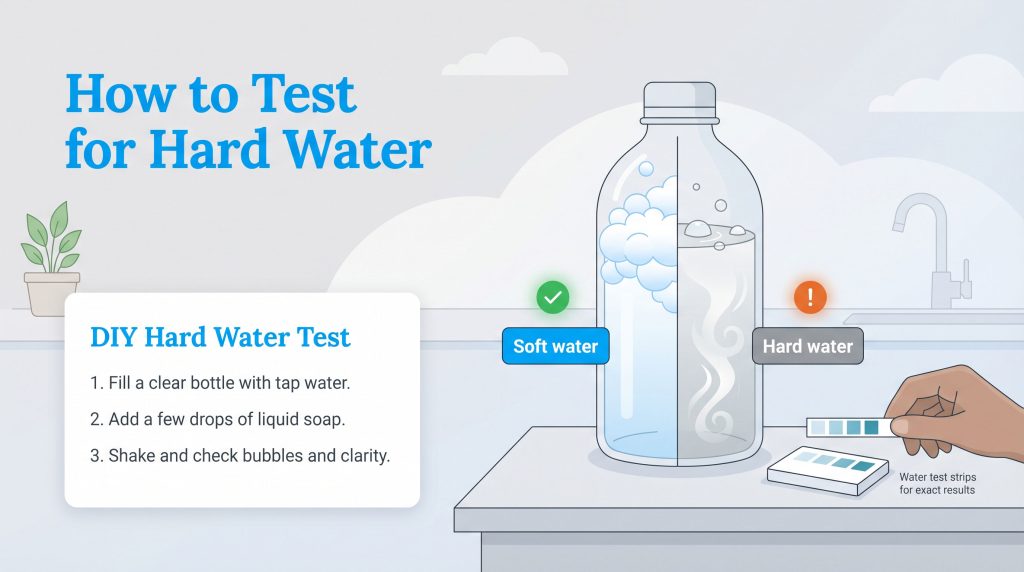
The classic trick is the soap test. Fill a clear bottle halfway with tap water, add a few drops of pure liquid soap, shake it like you’re at a house party in 1999.
Must Read
If the water turns cloudy and the suds vanish quickly, you’ve got hard water. If you get a rich, fluffy foam that lingers, congratulations—you’re probably living in a soft-water paradise.
Think of calcium and magnesium as the clingy friends of the mineral world. They bond with soap to form a sticky scum, which is what leaves that film on your skin.
Fun fact: The word “hard” water comes from the difficulty of washing things in it, not the actual feel. But let’s be honest, the name fits perfectly.
DIY Hardness Test: The Kitchen Edition
For the truly curious, grab a clean glass. Boil a cup of your tap water, let it cool, and pour it out slowly.
Look at the bottom of the glass. If you see a chalky white residue—often called “scale”—you’ve just met your mineral makers. That white stuff is calcium carbonate, and it’s the same stuff that builds up in your pipes.
Another ultra-modern test: drop a clear ice cube from your fridge into a glass of room-temperature water. If the cube melts into a cloudy blob with white specks, that’s hard water freezing its minerals into visibility.
You can also check your glassware after a dishwasher cycle. Spots and a hazy rainbow film? That’s not a cleaning failure; that’s minerals acting like tiny, invisible spies.
Fun cultural reference: Remember the movie My Big Fat Greek Wedding when the dad sprays Windex on everything? Hard water is basically the reason that joke works—it leaves surfaces looking permanently foggy.
The Scientific Method (Without the Lab Coat)
If you want numbers, buy a water hardness test strip. They cost about ten bucks online. Dip it in your tap water for five seconds, then compare the color to a chart.
:max_bytes(150000):strip_icc()/how-to-test-for-hard-water-1824904-03-9b5001b74a284455a801b36fc03da539.jpg) How to Test for Hard Water
How to Test for Hard Water
The scale usually runs from 0 (soft, like Maine or Florida) to 10+ (very hard, like Arizona or Indiana). Anything above 7 means you’re living in Mineral Town.
Pro tip: Test your water from two different sources—the kitchen sink and the bathroom tap. Sometimes hardness varies by pipe material or if you have a local water softener.
Did you know that the ancient Romans actually preferred hard water? They found it tasted “stronger” and used it to build their famous aqueducts. Scale acted as a natural concrete lining.
Of course, Roman togas probably weren’t ideal for looking fresh. Your modern laundry, however, might be suffering. Hard water can make whites turn yellow and colors fade faster than a TikTok trend.
Why This Matters for Your Morning Routine
Hard water doesn’t just affect your dishes. It directly impacts how your soap interacts with your skin. The minerals bind to the soap molecules, leaving a residue that clogs pores.
If your face feels tight right after washing, or if you notice more breakouts, your water might be the culprit. It’s not your expensive cleanser—it’s the chemistry.
Hair experts say hard water can cause buildup that makes color-treated hair fade faster. You might need a clarifying shampoo once a week, especially if you live in a hard-water zone.
Think of it this way: your water is a character in your daily story. It’s not a villain, but it is an influencer. Understanding it helps you take control.
Quick fix: A showerhead filter costs about forty bucks and attaches in ten minutes. It won’t soften your whole house, but it will make your morning shower feel like a spa again.
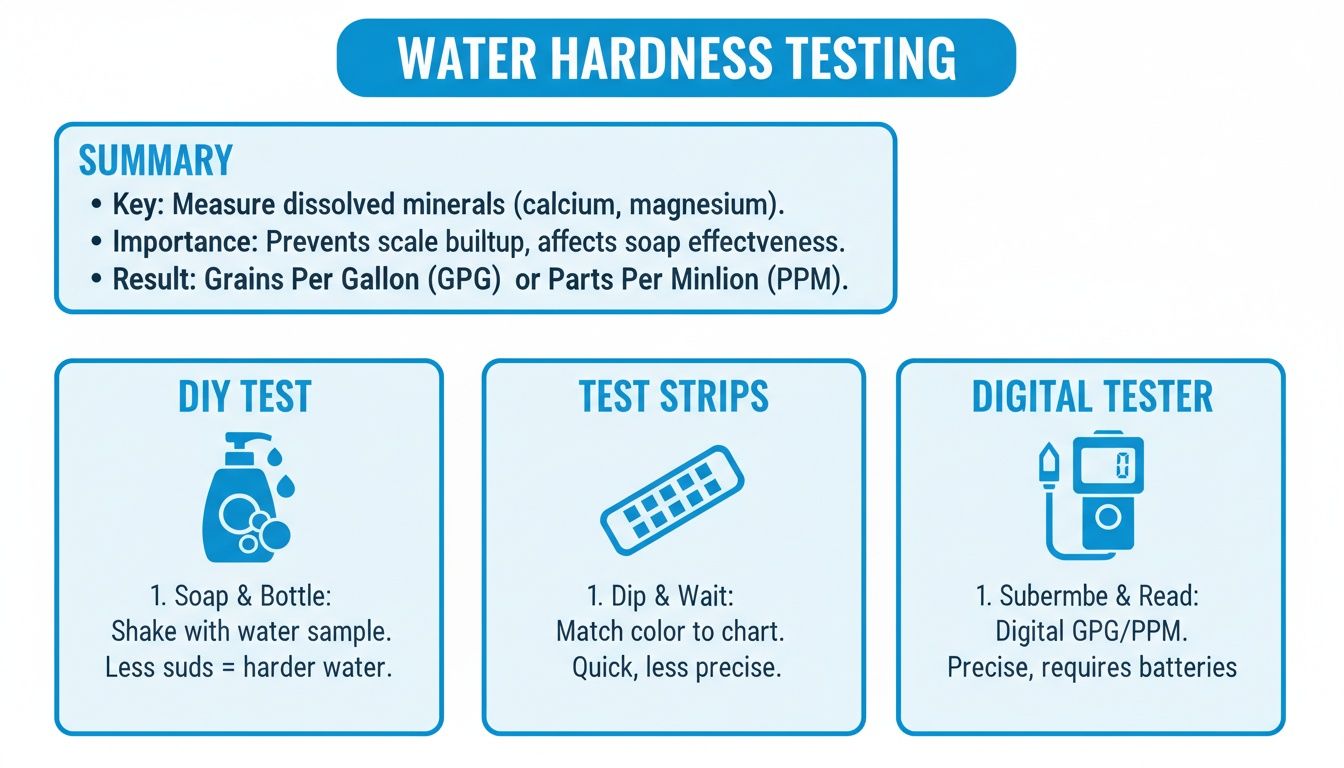 How to Treat Hard Water: A Homeowner's Filtration Face-Off
The Fridge Test (Your Kids Will Love This)
Fill a glass baking dish with tap water and freeze it overnight. Pop the ice cube out and look at the middle—if it has a cloudy, snow-like core, that’s hard water frozen into art.
Show it to your family. It’s like a little science project. “See that? That’s your shower’s secret identity.” Bonus points for dramatic music.
For deeper insight, call your local water utility. Many cities post water hardness data online—usually between 120 and 180 parts per million (ppm). Under 60 ppm is soft; over 200 ppm is essentially a rock tumbler.
There’s even an app for that. Water Hardness by Aquarius uses your zip code to give you a local estimate. It’s like a weather app, but for your pipes.
And yes, hard water tastes different. Many experts say the minerals give it a “bold” flavor, while soft water can taste a bit flat. It’s a matter of preference, like choosing between sparkling and still.
Final Reflection: Water as a Mirror
Testing your water hardness is really a test of patience and perspective. We often ignore the invisible forces shaping our lives—until they leave a spot on the glass.
The next time you dry a spotty dish or step out of a squeaky shower, don’t get frustrated. Instead, see it as a nudge from nature to pay attention. Water is literally life, and even its quirks have a story to tell.
So run that soap test tonight. You might just discover that the hardest thing about your water isn’t the minerals—it’s learning to love the journey from the tap to your morning mug.
And hey, if all else fails, just buy a water filter and pretend you’re a celebrity. You deserve water that works as hard as you do.
