How To Test For Hard Water At Home

So, picture this: I’m standing in my kitchen, staring at a coffee pot that looks like it’s been through a chemical war. There’s a white, crusty film on the glass—almost like s...
So, picture this: I’m standing in my kitchen, staring at a coffee pot that looks like it’s been through a chemical war. There’s a white, crusty film on the glass—almost like someone sneezed chalk dust all over it. I scrubbed it for ten minutes, and nothing budged. That’s when I realized: my water might be plotting against me.
That crusty villain is hard water, and it’s basically liquid rock. It’s packed with calcium and magnesium, which sounds healthy until you see what it does to your pipes. (Spoiler: your soap won’t lather, and your skin will feel like sandpaper.) The good news? You don’t need a lab coat to figure out if you’ve got it. Just a few home tricks.
The Soap Test: The Lather Lie
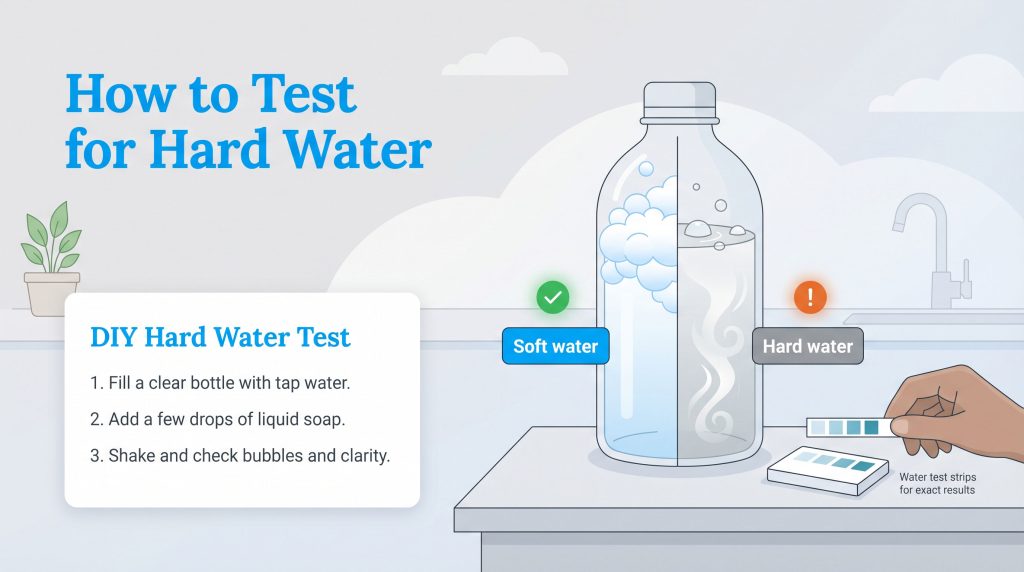
Grab a clear, empty water bottle—the one from your last road trip works fine. Fill it about halfway with tap water, then add three drops of pure liquid soap. (Not dish soap, not detergent—just plain soap, like Castile.)
Must Read
Now, put the cap on and shake it like it owes you money. Seriously, give it a good ten seconds. If the water turns cloudy with a sad, thin layer of suds on top, you’ve got hard water. Soft water, on the other hand, gives you a mountain of fluffy foam that looks like a bubble bath for elves.
Don’t trust the foam? Look for scum. Hard water leaves a ring of white, greasy residue around the bottle neck. That’s calcium reacting with the soap. (Nature’s way of saying, “Your water is stubborn.”)
The "Spot Check" Method (It’s Literally Just Checking Spots)
Next time you wash a glass, let it air dry—no towel. If you see white spots or streaks where the water droplets evaporated, that’s hard water’s calling card. It’s literally leftover minerals, like tiny salt flats on your favorite mug.
If those spots are hard to scratch off with your fingernail, you’re in the very hard zone. I once had a glass that looked like it had a permanent case of dandruff. (Not a good look for your wine night.)
 How to Filter Water in Your Country House or Cottage – A Complete Guide
The Penny-Whistle Test? No, The Cloudy Ice Cube Test
Freeze some tap water in an ice cube tray. Hard water cubes are cloudy at the center, soft water cubes are crystal clear. Why? Because minerals clump up as the water freezes, scattering light like a disco ball for germs. (Don’t worry: it’s still safe to drink, just less pretty.)
If the cubes look like a foggy window, that’s confirmation. Bonus irony: you can also check your kettle or coffee maker for scale. That chalky buildup inside? Yeah, that’s hard water’s autograph.
The "Skin Feeling" Scale (Very Scientific)
Wash your hands with soap and hot water. After rinsing, do they feel squeaky clean or sticky? Hard water leaves a residue that makes your skin feel tight, like you dipped your hands in glue and then let them dry. Soft water leaves you feeling silky, almost like you forgot to rinse.
That “squeaky” sensation isn’t clean—it’s a chemical film from soap reacting with minerals. Your skin is literally getting a mineral bath. (Thanks, geology.)
The (Not-So) Scientific Water Bottle Trick
If you’ve got a clear, basic water filter pitcher, fill it up and let it sit for a few hours. See any white sediment at the bottom? That’s hard water settling out like it’s tired. Or if you have a fish tank, check the heater—scale builds up fast in hard water.
 Do Water Hardness Test Strips Work at Dennis Fleming blog
But let’s be real: the simplest test is listening to your appliances. Does your washing machine sound like a rock tumbler? Does the dishwasher leave white powder on your plates? Those are screams for help. (And a sign you might need a water softener.)
The Vinegar Fizz Trick (For The Bold)
This one’s for skeptics. Pour a tablespoon of white vinegar over a hardened spot of scale on your faucet. If it fizzes and bubbles, you’ve got hard water. The acid in the vinegar reacts with the alkaline minerals, like a tiny science fair volcano in your sink. (Don’t worry, it won’t explode—just clean it afterward.)
No fizz? You might be in a soft-water paradise. Or you’re testing a plastic spoon. (Use metal or glass for best results.)
What To Do With This Information
If three out of five tests said “hard,” you’re not doomed. Hard water is safe to drink—it just annoys your plumbing and dries out your hair. A faucet filter or a simple water softener can fix most of the drama. (Your coffee maker will thank you.)
And if you find out your water is soft? Great. But you can still be smug about it. Just don’t tell your friends with the cloudy ice cubes. Let them guess.
