How To Test Water For Lead At Home

Let's be real: you probably haven't thought about lead in your water since that one time you saw a news headline while waiting for your coffee to brew. But then your neighbor,...

Let's be real: you probably haven't thought about lead in your water since that one time you saw a news headline while waiting for your coffee to brew. But then your neighbor, Karen, starts talking about her fancy water filter like it's a religious experience. Suddenly, you’re staring at your tap with a mix of suspicion and mild dread, like it’s the family cat who just knocked over a vase.
The good news? Testing for lead at home is way easier than assembling that IKEA bookshelf that’s still leaning in your hall closet. You don't need a chemistry degree or a lab coat that makes you look like a background character in a sci-fi movie. You just need a little patience and a willingness to play detective with your own plumbing.
The Sniff Test (Spoiler: It Doesn't Work)
You might be tempted to do what I did first: hold a glass of water up to the light, swirl it around, and take a dramatic sniff. Newsflash: lead is not like spoiled milk or a gas leak. It has no taste, no smell, and it’s completely invisible to the naked eye. My great-uncle Bob swore he could "taste the minerals," but Bob also thought the "check engine" light was a suggestion.
Must Read
So, skip the amateur sommelier routine. Your sense of smell is great for detecting burnt toast, but it’s useless here. You need a proper plan, not a hunch that feels like a scene from a detective show.
Step One: The "Let's Get a Test Kit" Shuffle
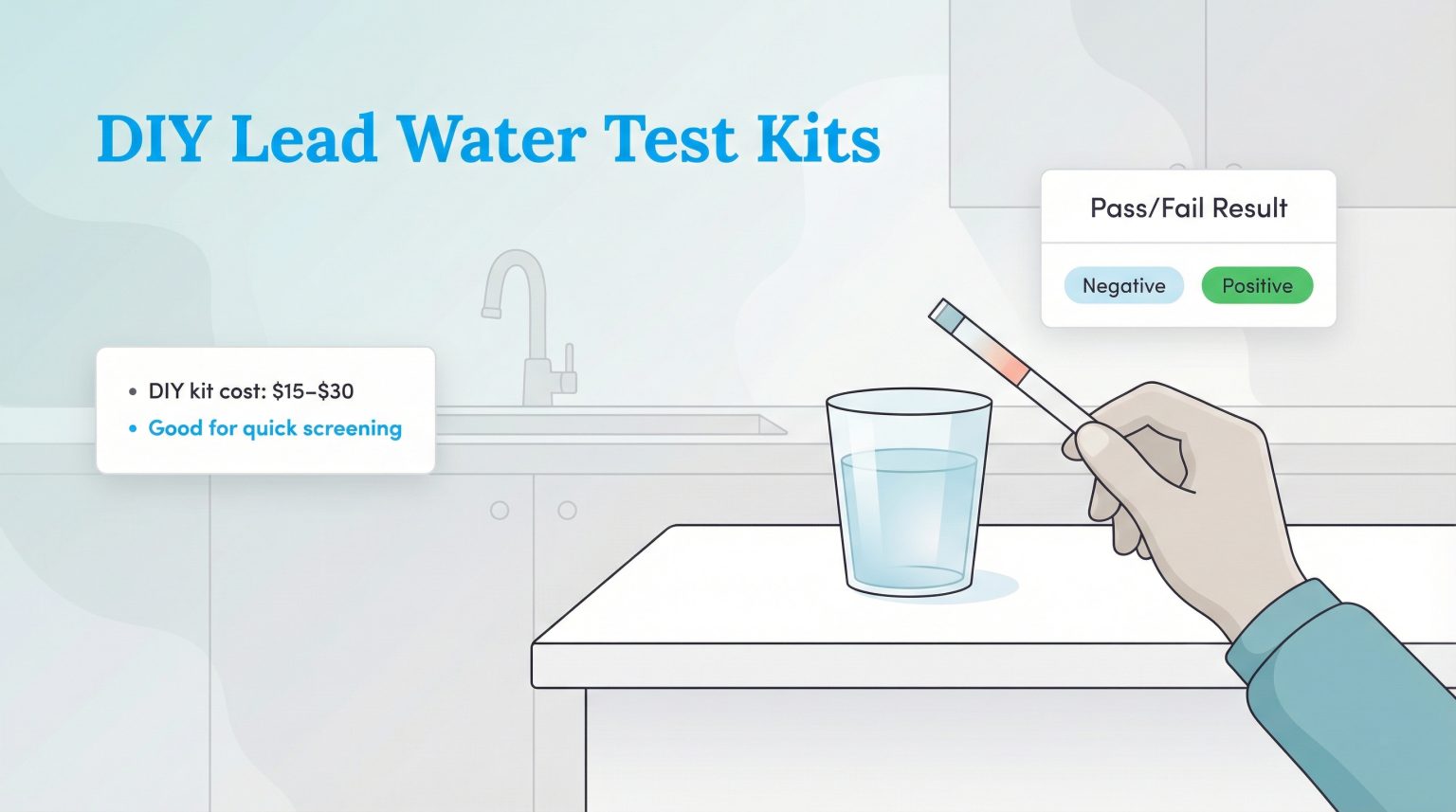
Your first stop is the local hardware store or a big online retailer. Look for a home lead test kit that is EPA-approved. They usually come in a little box that promises "peace of mind," which is marketing-speak for "less anxiety while brushing your teeth." Think of it as a pregnancy test for your pipes—hopefully with a less dramatic pause.
Don’t grab the cheapest one you see that looks like it was printed in a basement. Invest a few extra bucks. The good ones use a chemical reaction that changes color, like a mood ring for heavy metals. You want clear instructions, not a cryptic riddle.
 How to Test Your Water for Lead: DIY Kits, Free Options, and Lab
Step Two: The "Night Owl" Water Collection
Here’s where it gets weirdly specific. You should not test the first water that comes out of the tap. Why? Because water that sits in your pipes overnight (or while you’re at work) has had more time to absorb lead from solder or old fixtures. That’s the "stagnant" sample—the one that tells you about your pipes’ bad habits.
So, set an alarm for the morning. Before you brush your teeth or make your life-giving coffee, let the water run cold for about a minute. I know, it feels wasteful, like throwing out perfectly good bread crusts. But trust the process. Then, fill the test bottle from the manufacturer. It feels oddly ceremonial, like you’re a mad scientist on a budget.
The Waiting Game (TV Time)
Now you have to wait. Most kits require you to shake the solution, dip a strip, or add a powder, then wait anywhere from one to ten minutes. This is the part where your brain goes wild. You’ll start imagining lead particles doing a conga line in your glass. Relax. Go fold a load of laundry or watch a three-minute video of a panda sneezing.
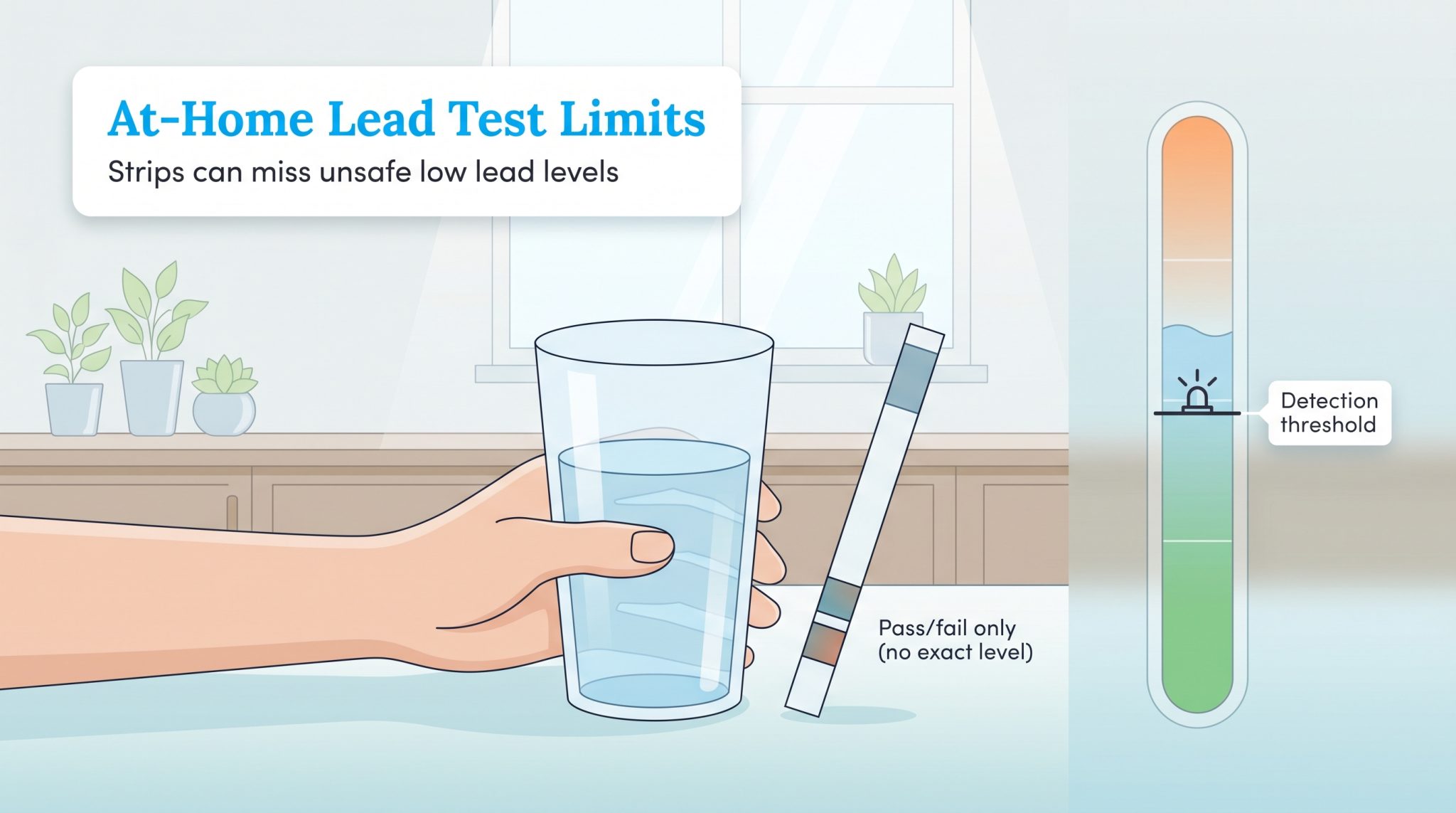
When the timer goes off, you compare the color on the strip to the little chart. It’s like a paint swatch, but the stakes are slightly higher. If it turns red, pink, or blue (depending on your kit), you’ve got a positive result. If it stays clear or a neutral color, you can do a little happy dance. I did a happy dance that looked suspiciously like a dad at a barbecue.
 How to Test Your Water for Lead: DIY Kits, Free Options, and Lab
What If It's Positive? (Cue Dramatic Music)
First, don’t panic. A positive home test doesn't mean you need to evacuate your home. It just means you have a reason to call a professional. Think of this test like a canary in a coal mine—the canary is alive, but it’s looking a little dizzy. You don’t need to buy a hazmat suit yet.
Second, start drinking bottled or filtered water for now. Switch to using cold water for cooking (hot water dissolves lead faster). And for the love of all that is bubbly, don't boil water to remove lead—that actually concentrates it, like making a lead reduction sauce. Bad idea.
The Real Takeaway
Testing your water at home is a simple Saturday project that feels oddly satisfying. It’s cheaper than a fancy spa day, and the results are way more useful than a horoscope reading. You get to look at your sink and say, "I know your secrets now."
And honestly? Even if the result is clean, you’ll feel a weird pride. Like you’ve won a small battle against the invisible forces of household chaos. You’ll sip your water with the confidence of a knight who just defeated a dragon—or at least a leaky pipe. Now go forth, test your tap, and stop worrying about that one weird stain on the ceiling.
