What Hard Water Does To Your Hair

So, picture this: you move into a cute little apartment, the rent is decent, and the bathroom has those fancy subway tiles. You’re feeling like a queen. Then, after your first...
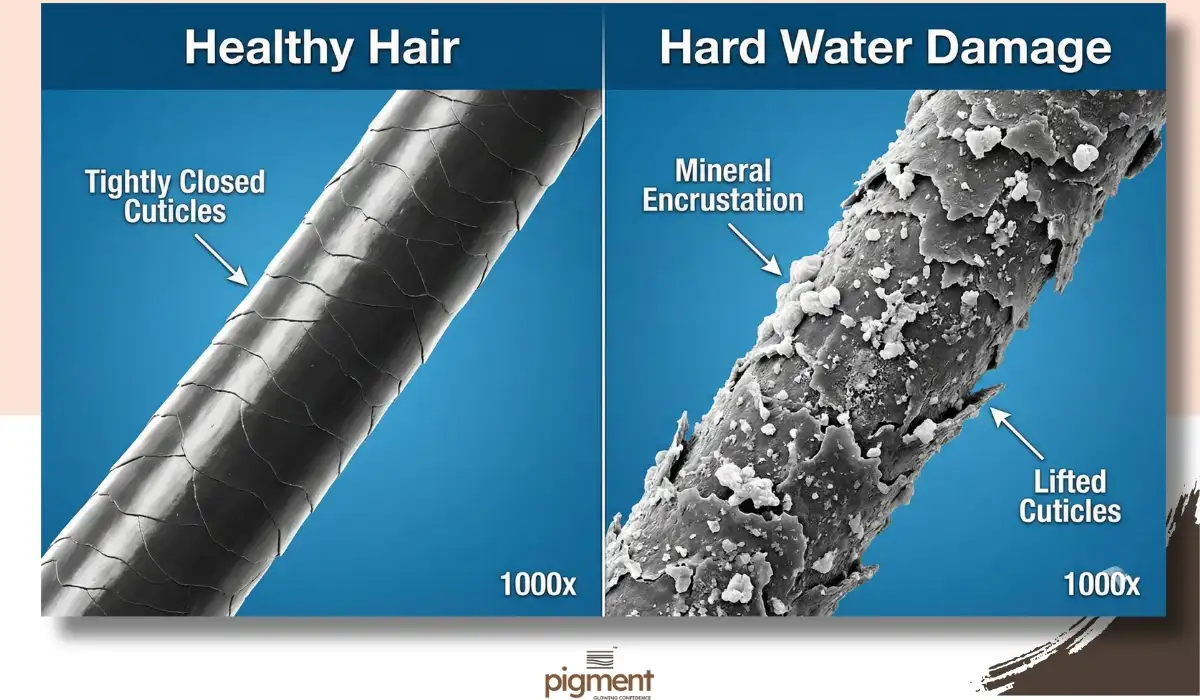
So, picture this: you move into a cute little apartment, the rent is decent, and the bathroom has those fancy subway tiles. You’re feeling like a queen. Then, after your first shower, your hair feels… weird. Like straw. And that squeaky-clean sound? That sound is your hair screaming for help. Welcome to the world of hard water, my friend. You’re not crazy—your shower is out to get you.
So, What’s the Deal with Hard Water?
Hard water isn’t water that’s been hitting the gym. It’s water that’s packed with dissolved minerals, mostly calcium and magnesium. Think of it as nature’s mineral water, but for your pipes, not your palate. When you shower, these minerals cling to your hair like uninvited guests at a party.
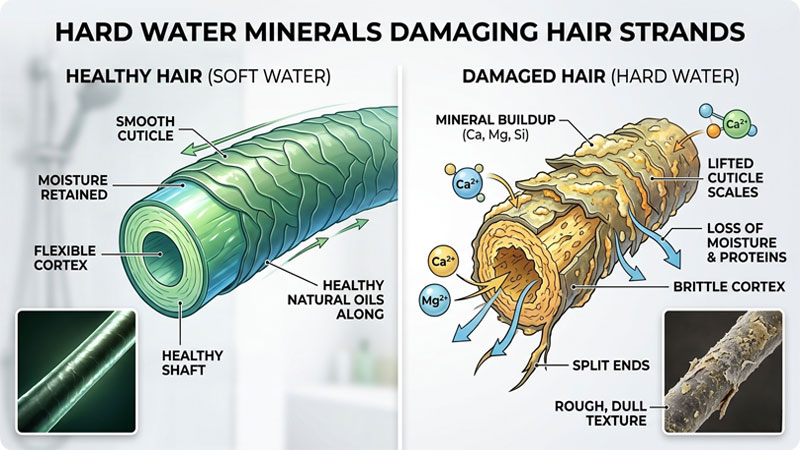
They’re positively charged ions, and your hair (especially if it’s damaged or dry) has a negative charge. Opposites attract, right? So they form a stubborn, crusty film on each strand. It’s basically a mineral jacket your hair never asked for.
Must Read
And no, you can’t just scrub it off with regular shampoo. These guys are clingy. (Seriously, it’s like trying to break up with a stage-5 clinger.)
The Squeaky Clean Myth
You know that squeaky feeling you get after washing with hard water? That’s not clean—that’s friction. The mineral film makes your hair rough, so when you run your fingers through it, you’re just hearing the scales of your hair cuticle grinding together.
It’s the same sensation as rubbing chalk on a blackboard, just on your head. Your natural oils can’t penetrate that mineral barrier, so your scalp goes into panic mode. It produces more oil to compensate, leaving you greasy at the roots and crispy at the ends.
And let’s be honest: having a dry, frizzy, greasy mess is the worst combination. It’s like your hair can’t decide if it’s a desert or a swamp.
The Visual Horror Show
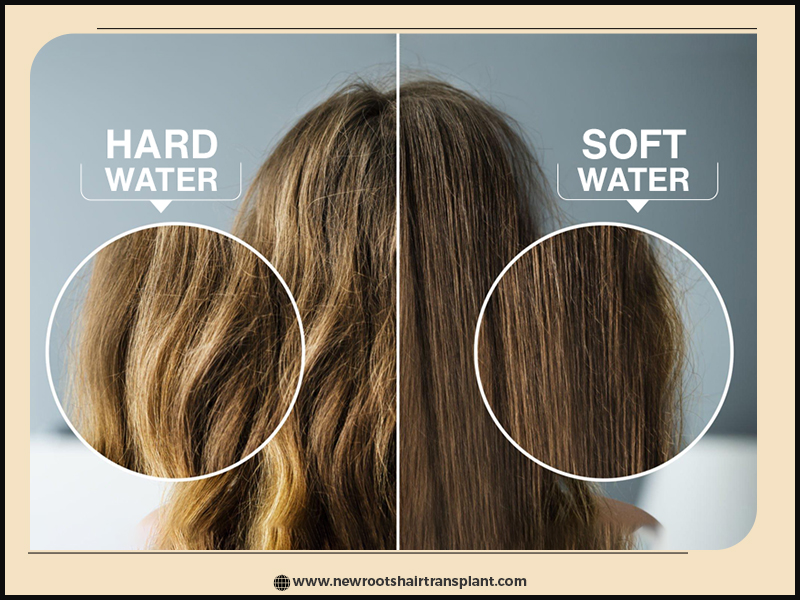
Hard water doesn’t just feel bad—it makes your hair look tragic. Blondes get a brassy, orangey tint that screams “I tried to dye my hair at 2 AM.” Brunettes lose their shine and turn a weird, ashy gray.
 Does Hard Water Cause Hair Fall? Chlorine, Iron & Bath Water Explained
It’s because those minerals oxidize, especially with heat from styling tools or sun exposure. Your expensive color-treated hair? It fades faster than my motivation on a Monday. You’re basically paying for a salon look just to have it murdered by your tap.
And the frizz? Oh, the frizz. The mineral coating lifts your cuticles, letting moisture sneak in and out. Your hair becomes a frizz magnet, and it’s not the cute, “I woke up like this” kind. It’s the “I touched a Van de Graaff generator” kind.
Breakage and That Weird Stiffness
Here’s the creepiest part: hard water actually makes your hair brittle over time. The calcium builds up on the fiber, causing it to snap under pressure. Your hair loses its elasticity, so it stretches, breaks, and ends up looking like a neglected houseplant.
You might also notice your hair feels stiff after drying. Like you could style it into a helmet. That’s not product buildup—that’s a mineral crust. (Pro tip: if your hair can hold its shape in a windstorm, you’ve got hard water problems.)
And don’t think you’re safe just because you have curly or coily hair. You are the most vulnerable! Curls need moisture to bounce, and that mineral film suffocates them. Your ringlets turn into frizzy, undefined clumps. It’s criminal.
 Is Using A Pick Bad For Your Hair at Erminia Heavner blog
Can You Fix It Without Moving?
You could install a whole-house water softener, but that’s like buying a yacht to catch a fish. For most of us, a chelating shampoo is your new best friend. It’s a special shampoo designed to grab and remove those mineral deposits. Use it once a week, no more—it’s strong stuff, and you don’t want to strip all your natural oil.
Also, try an apple cider vinegar rinse. Mix one part vinegar to four parts water, slather it on after shampooing, let it sit for a minute, then rinse. The acidity breaks down the mineral film and seals your cuticles. Your hair will feel like silk—and your bathroom will smell like a salad.
Oh, and get a showerhead filter. They’re cheap, easy to install, and they remove a lot of the minerals before the water even touches your hair. It’s like a bouncer for your strands, kicking the bad guys out before they get in.
The Bottom Line
Hard water isn’t destroying your hair overnight—it’s a slow, sneaky assassin. But with the right tools, you can fight back. Your hair doesn’t have to live in a mineral prison.
So next time your hair feels like straw, remember: it’s not you, it’s the water. And maybe, just maybe, stop blaming your conditioner for everything. (I know I did.)
Now go forth, grab a filter, and give your hair the soft, shiny life it deserves. You’ve got this. Just don’t drink the vinegar rinse—it’s for your head, not your toast.
