Does Boiling Sink Water Purify It

So, you’re standing at the sink, wondering if that tap water is really safe to drink. Maybe you’re a curious camper, a thrifty budgeter, or just someone who read a scary headl...

So, you’re standing at the sink, wondering if that tap water is really safe to drink. Maybe you’re a curious camper, a thrifty budgeter, or just someone who read a scary headline online. The question pops into your head like a bubble: does boiling sink water actually purify it?
Let’s get one thing straight from the get-go: boiling is a superhero move against the messy world of microbes. It’s like a heat wave that says “game over” to bacteria, viruses, and protozoa. You know, the little party crashers that can give you a seriously bad stomach ache.
Think of it like this: a rolling boil is the heat equivalent of a blasting furnace for tiny organisms. At 212°F (100°C), their little proteins denature and they die. That’s the cool part—you can transform questionable water into something safe to sip in just a few minutes.
Must Read
The Hidden Guests You Can't Boil Away
Here’s where it gets interesting, and why you can’t just slap a pot on the stove and call it a day. Boiling kills the living stuff, but it does absolutely nothing to chemicals, heavy metals, or sediment. Lead, pesticides, nitrates, chlorine byproducts—they all laugh in the face of a bubble.
Imagine you have a cup of muddy tea with a pinch of arsenic. Boiling it will make the water hot and kill any germs, but the mud and poison are still there. Poof—the steam escapes, but the nasties concentrate! That’s why relying on a boil alone can be a little risky, especially if your sink water comes from a well or an older building.
What About Chlorine and Fluoride?
Ah, the municipal water treaters deserve a high-five, adding chlorine to zap germs and fluoride for our teeth. But here’s a fun fact: boiling can make chlorine evaporate, which actually changes the taste—sometimes for the better. That “pool water” flavor? Gone.
 4 Ways to Purify Water - wikiHow
On the flip side, fluoride isn’t going anywhere. It’s a stubborn mineral that survives the heat, so if you’re worried about that, boiling won’t help. It’s like trying to bake away a rock from your soup—it just doesn’t work.
The Cool “Boil Water Advisory” Trick
Ever notice how cities issue boil water advisories after a pipe burst? That’s because boiling is the fastest, cheapest way to kill bacterial invaders like E. coli and Giardia. It’s a temporary fix, not a permanent purification system.
Here’s the neat trick: once your water hits a rolling boil, let it go for just one minute (or three minutes if you’re at high altitude). That’s it. Any longer, and you’re just wasting energy and letting water evap away. It’s like over-toasting a marshmallow—pointless and a little sad.
So, When Is Boiling Actually Enough?
If your sink water is from a treated municipal source and you just want to nuke any odd bacteria from a dirty tap, boiling is totally fine. Camping, emergency tap issues, or after a storm? Perfect. But if your water is brown, smells weird, or you live near a farm with pesticide runoff, boiling won’t save you.
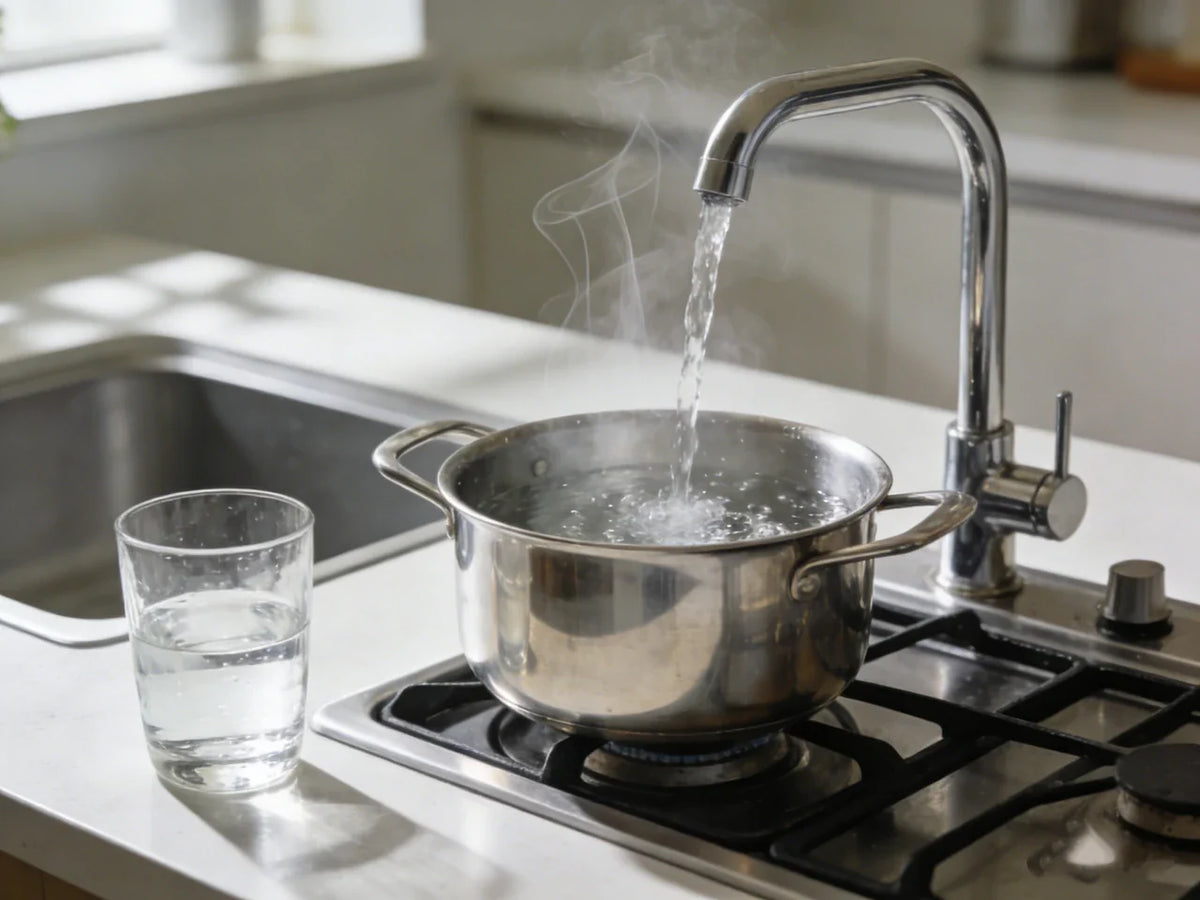 Does Boiling Tap Water Purify It? What Boiling Really Removes—and What
That’s when you need a filter—like a charcoal or reverse osmosis system—or a distiller. Think of boiling as the first line of defense, not the whole army. It’s like putting on a rain jacket but leaving your pants behind. Helpful, but incomplete.
The Final Sip: Boil or Not?
So here’s the chill, honest truth: boiling sink water does purify it against the living, wriggly threats. It’s a fantastic, low-tech tool that humans have trusted for millennia. But it doesn’t remove the stuff you can’t see, like lead pipes or leftover meds.
If you’re in a normal city with decent water, boiling for tea or coffee is pure overkill—but it tastes great. If you’re in a sketchy spot, boil first, then filter. Or just buy a Brita, you know? Science is cool, but convenience is king.
Go ahead, ask your sink: “Are you the real deal, or just pretending?” And remember, a boil is like a friendship—great for the germs you can see, but it won’t fix everything underneath. Stay curious, stay hydrated, and keep that stovetop adventure going.
