How To Test For Hardness Of Water

Let’s be honest—water hardness isn’t exactly the first thing you think about while brushing your teeth or brewing your morning coffee. But here’s the thing: if your showerhead...
Let’s be honest—water hardness isn’t exactly the first thing you think about while brushing your teeth or brewing your morning coffee. But here’s the thing: if your showerhead looks like it’s covered in snowflakes that won’t budge, or your soap just refuses to lather, you’ve got a little secret visitor called hard water. It’s not dangerous, but it’s a bit of a nuisance, like that one friend who always leaves the cap off the toothpaste.
So, what is hard water anyway? Simply put, it’s water that has picked up extra minerals—mostly calcium and magnesium—as it traveled through rocks and soil. Think of it as water that went on a road trip through a limestone cave and brought home some souvenirs. These minerals love to stick around, leaving white deposits on your dishes, scaling your kettle, and making your hair feel like straw.
Now, why should you care? Well, hard water can shorten the life of your appliances, clog your pipes, and make cleaning a real chore. Plus, it costs you money in extra detergent and energy bills. But don’t worry—testing for it is easy, cheap, and honestly, kind of like a fun little science experiment for your kitchen sink.
Must Read
The old-fashioned soap test
Grab a clear glass jar, fill it with tap water, and add a few drops of liquid soap (not detergent—the real stuff). Secure the lid, shake it like you’re mixing a cocktail, and then check what happens. If you see lots of fluffy suds and the water stays clear, you’ve got soft water. If the suds are thin and the water turns milky or cloudy, that’s hard water waving a little white flag.
Why does this happen? The minerals in hard water grab onto the soap molecules before they can foam up, leaving you with sad, scummy bubbles. It’s a bit like trying to get a party started when the DJ’s equipment is glitching—the energy just isn’t there. A friend of mine tried this test and was shocked to see her water looked like a weak latte after two shakes.
The boiling water trick
Boil a pot of tap water on the stove and let it cool. If you spot a thin, white crust around the edge, that’s calcium carbonate, the hard stuff. You know that white ring you sometimes see in your tea kettle? That’s exactly what we’re talking about. It’s harmless, but it’s a dead giveaway that your water has been playing minerologist.
If there’s no residue—or just a faint trace—you’re in the soft water zone. One time, I did this test and ended up with a pot that looked like a snow-covered mountain range. I felt oddly proud of my discovery, even though it meant descaling my coffee maker was now a weekend project.
 Water hardness(1) testing | PPTX
The store-bought strip test
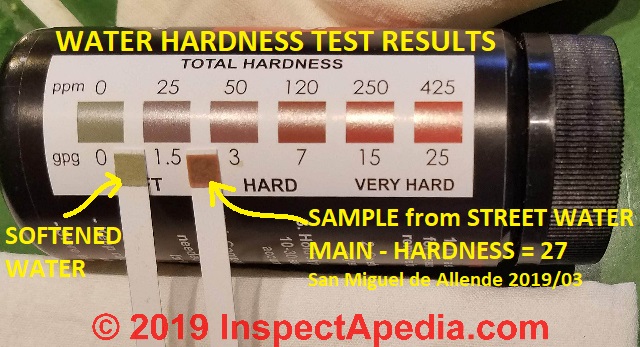
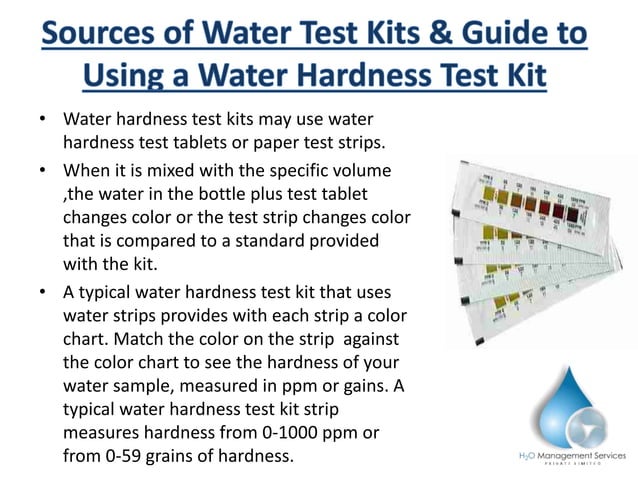
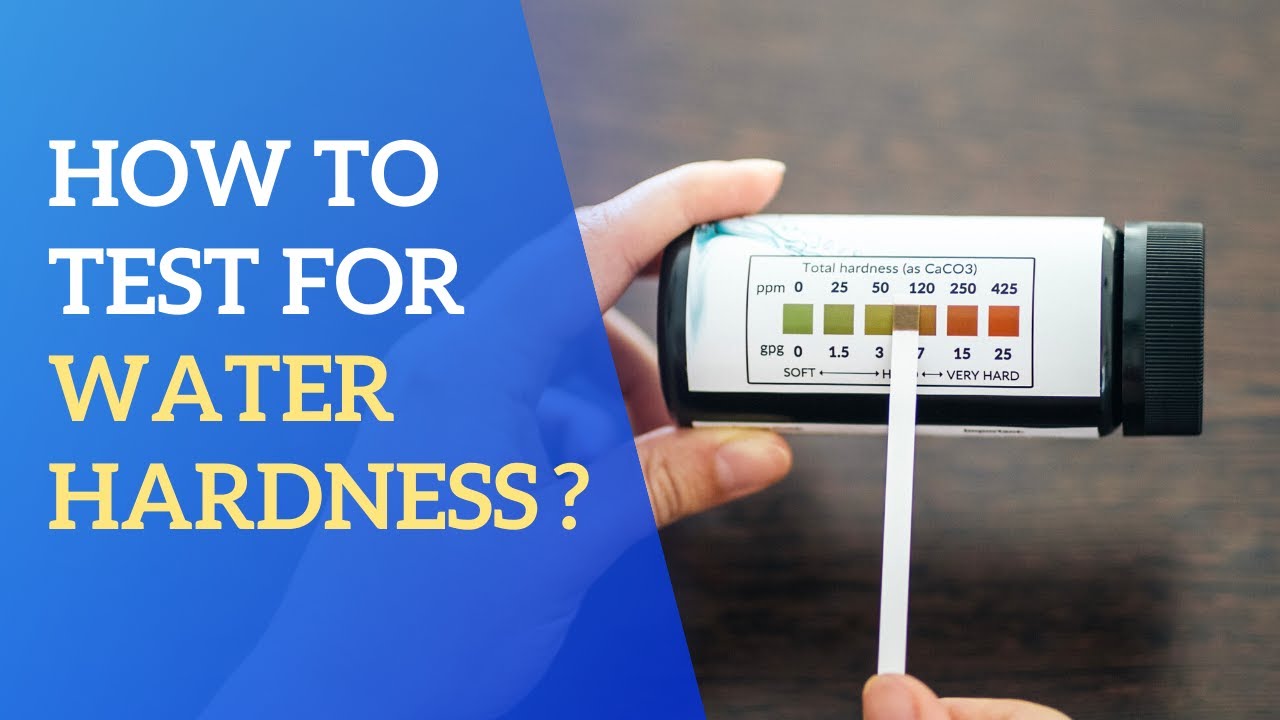
If you want a number instead of a guess, grab a water hardness test strip from your local hardware store or online. They’re cheap, easy, and come with a color chart that makes you feel like a water detective. Dip a strip in a glass of tap water for a few seconds, then compare the color change to the chart.
These strips measure the exact parts per million (ppm) of calcium and magnesium. Under 60 ppm is considered soft, 60–120 is moderate, and over 120 is where things get crusty. My neighbor did this and discovered his water was a stunning 200 ppm—he called it “liquid rock juice” and finally understood why his dishwasher was struggling.
What your faucet tells you
Look at your bathroom faucet or showerhead. Those white, flaky deposits that are a pain to scrub off? That’s hard water leaving its calling card. If you see a buildup that looks like a miniature stalactite, your water is definitely hard. It’s nature’s way of decorating, but not in a good way.
I once cleaned my showerhead with vinegar and a toothbrush, only to find a tiny, solid tube of scale inside. I thought, “Ah, so that’s where my water pressure went.” It was oddly satisfying to remove, like picking a stubborn sticker off a new phone.
 A Guide For How To Test Water Hardness – JFFA
Why it matters for your everyday life
Hard water doesn’t just annoy you—it actually makes your soaps and shampoos less effective. You end up using more product to get clean, which is a waste of money. Your laundry can feel stiff, and those white streaks on your glasses are not a mysterious ghost—they’re just mineral deposits.
Even your skin and hair feel the difference. Hard water can leave a thin film on your skin, making it itchy or dry, and your hair might feel rougher over time. My sister moved to a hard water area and complained her conditioner stopped working. A quick test revealed the truth, and she bought a simple shower filter that changed her life (and her hair).
The simple fix if you have hard water
You don’t need to panic. A basic water softener system or a pitcher filter can help. Or, just embrace it and use a little more soap, but clean your appliances regularly with vinegar to fight the scale. The most important step is knowing what you’re dealing with.
Testing for water hardness takes under five minutes and costs almost nothing. It’s the sort of tiny, satisfying task that makes you feel like a home expert, even if you’ve never fixed a leaky faucet. And hey, next time your soap won’t lather, you’ll be the one who smiles and says, “Ah, it’s just my water being dramatic.”
So go ahead—shake that jar, boil that pot, and get to know your tap water. You’re not just testing for minerals; you’re unlocking the secret to softer skin, cleaner dishes, and a happier kettle. And who doesn’t love a happy kettle?
