Does Boiling Water Make It Clean

Okay, let’s settle this once and for all. You’re staring at a pot of water, bubbles are going wild, steam is fogging up your glasses. Does that mean it’s suddenly squeaky clea...
Okay, let’s settle this once and for all. You’re staring at a pot of water, bubbles are going wild, steam is fogging up your glasses. Does that mean it’s suddenly squeaky clean? Well, yes and no—and that’s the fun, slightly frustrating part.
The short, honest answer
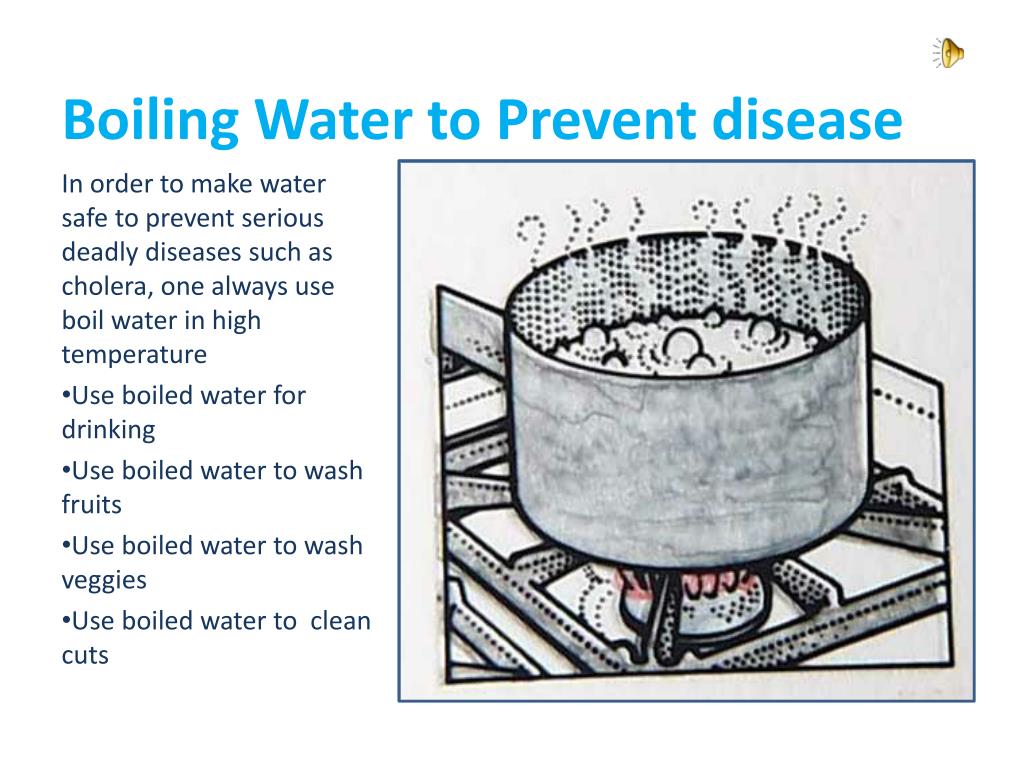
Boiling water kills the living stuff—bacteria, viruses, little protozoa that would love to crash your digestive system’s party. Think of it as a sauna for germs. They can’t handle the heat.
But here’s the kicker: boiling does not remove dirt, chemicals, or heavy metals. If your water looks like a muddy puddle or smells like a swimming pool, boiling won’t make it crystal clear. It just makes it hotter and slightly less deadly.
Must Read
So, is it “clean”? Depends on your definition. For camping, emergencies, or questionable tap water? Yes, it’s a lifesaver. For everyday fancy drinking? Eh, you might want a filter too.
What actually happens when you boil?
Water boils at 212°F (100°C). That temperature is the sweet spot for denaturing proteins in germs—basically, it scrambles their little biological brains. Most nasties die within one minute at a rolling boil.
But some sneaky bacteria (like Clostridium botulinum) have heat-resistant spores. They laugh at boiling unless you do it for 10+ minutes. So, a quick bubble isn’t always a full victory dance.
Also, fun fact: boiling doesn’t remove sediment. That gritty stuff you see swirling around? It’s still there after the bubbles stop. You’re just drinking hot grit now. Delicious.
The stuff boiling can’t touch
Let’s talk about the bad guys boiling ignores: heavy metals like lead, mercury, and arsenic. These are atomic-level party crashers. Heat doesn’t phase them. They’ll just concentrate as the water evaporates—so you’re actually getting a stronger dose of the bad stuff. Yikes.
 Does Boiling Tap Water Purify It? What Boiling Really Removes—and What
Pesticides, herbicides, and industrial chemicals? Nope, boiling won’t break them down. Some, like chlorine, can even turn into more toxic compounds (like chloroform) when heated. So if your tap smells like bleach, don’t boil it—let it sit out first.
And salt? Forget about it. Boiling seawater gives you steam and salty grit. You’d need a distiller to separate salt from water. Boil all you want; that ocean soup stays salty.
The one time boiling is a superhero
If you’re hiking in the wilderness and the only water source is a suspicious creek, boiling is your MVP. It kills Giardia, Cryptosporidium, and E. coli—the unholy trinity of outdoor tummy troubles.
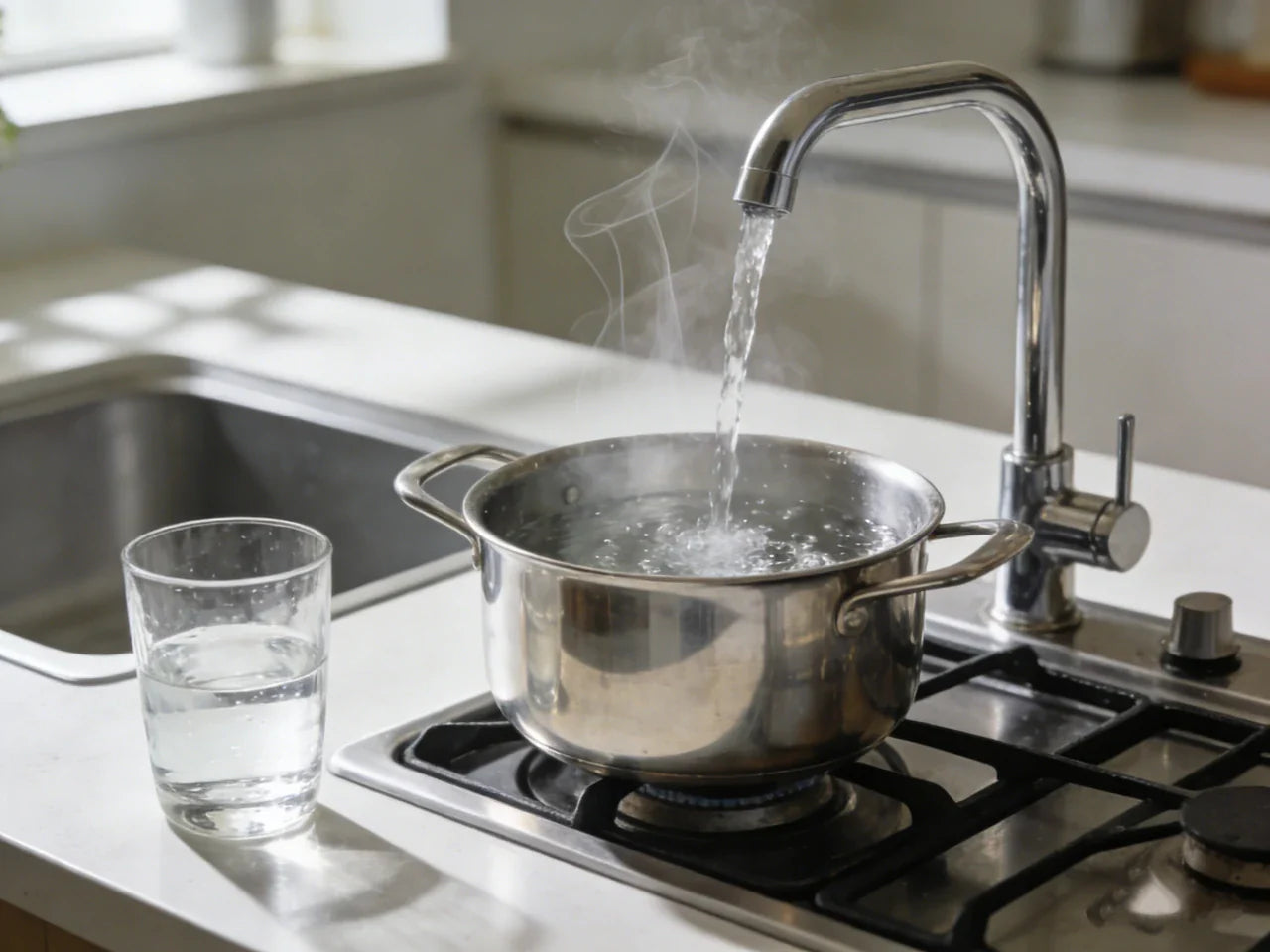
Do it right: bring the water to a rolling boil for at least one minute (three minutes if you’re above 6,500 feet, because lower pressure means lower boiling temp). Let it cool, and you’ve got safe-to-drink water.
Just don’t expect that boiled water to taste like a spring. It might have a flat, “cooked” flavor because boiling drives off dissolved oxygen. Pour it between two cups a few times to re-oxygenate it—fancy, right?
 Does Boiling Tap Water Purify It? What Boiling Really Removes—and What
So… should you boil your tap water at home?
Unless your local water authority issues a “boil water advisory,” probably not necessary. Modern treatment plants already handle the germ part. Boiling at home for daily drinking is like using a sledgehammer to crack a nut.
But if you’re worried about recent floods, a broken pipe, or a stomach bug going around, boil away! It’s cheap, easy, and effective—just not a miracle for chemicals.
For the best clean water? Try a combo: filter first (remove dirt and chemicals), then boil (kill germs). That’s the gold standard. Or, you know, just buy a Brita pitcher and listen to your friends brag about their water filter game.
The final bubble of truth
Boiling water makes it safer, not necessarily “clean” in a sparkling, purified way. It’s a tool, not a magic spell. Think of it like washing your hands with hot water—it kills germs, but doesn’t remove glitter. (Unless you scrub hard. You get the point.)
So next time you see that pot bubbling away, give it a little respect. It’s doing its job. Just know what that job actually is—and maybe don’t boil your swimming pool.
Stay hydrated, stay curious, and for the love of all things good, never boil chlorine water indoors. Your lungs will thank you.
