Does Reverse Osmosis Remove Lead

So, you’re worried about lead in your water. Maybe you’ve seen those headlines about old pipes, or you’ve developed a sudden, intense hatred for anything that rhymes with “Fli...
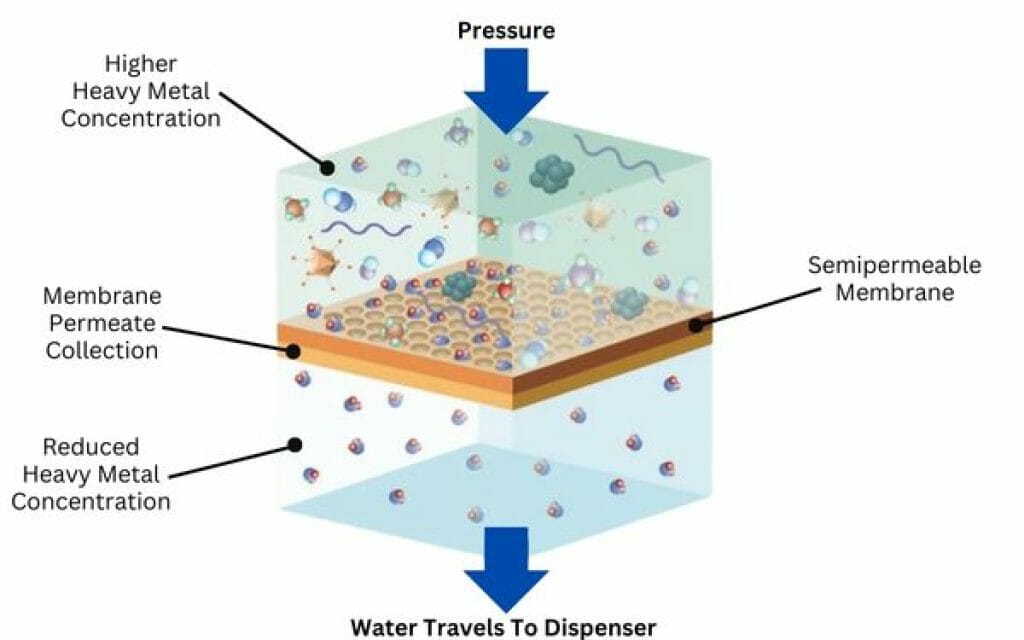
So, you’re worried about lead in your water. Maybe you’ve seen those headlines about old pipes, or you’ve developed a sudden, intense hatred for anything that rhymes with “Flint.” I get it. You want water so pure it makes a glacier jealous. Enter Reverse Osmosis, or as I like to call it, the water filter that works harder than a cat avoiding a bath.
The Great Lead Mystery
Let’s get straight to the point. Does Reverse Osmosis (RO) remove lead? Yes. Like, a very loud, emphatic, “heck yes.” We’re talking a removal rate of 94% to 99% of that nasty metal. It’s so effective that lead basically throws up its little atomic arms and surrenders.
Think of lead as that uninvited party guest who drinks all your fancy soda. Reverse Osmosis is the bouncer who not only kicks them out, but also waterboard-confiscates their fake ID. The process is brutally efficient.
Must Read
How Does This Magic Happen? (The Squeeze)
Reverse Osmosis works by shoving water through a membrane so fine that you can’t even see the holes without a super-powered microscope. We’re talking pores so tiny that only water molecules and a few tiny gases get through. Everything else—lead, arsenic, that weird taste from your garden hose—gets left behind, crying on the wrong side of the filter.
It’s like trying to push a hippo through a keyhole. The lead (the hippo) doesn’t fit. It just gets stuck, along with its buddies like chromium and fluoride, and then it gets flushed down the drain. This is called the “reject stream.” It’s a little dramatic, but it works.
But Wait, There’s a Catch (Isn’t There Always?)
Here’s the shocker: RO systems are terrible at keeping things. They’re so good at removing the bad stuff that they also remove the good stuff. We’re talking calcium and magnesium—the minerals that make water taste like, well, water, and not like distilled sadness. You’ll end up with water that’s almost as pure as the stuff they use in car batteries. It’s that clean.
 Does Reverse Osmosis System Remove Lead From Your Water?
But wait, there’s more! For every gallon of clean water you get, an RO system typically wastes three to four gallons. Yes, you read that right. It’s the water-filter equivalent of buying a sports car that gets 8 miles per gallon. You feel cool, but your wallet weeps.
The pH Problem (Get Ready for Acid Jokes)
Because RO strips out everything, the water becomes slightly acidic. It’s not dangerous, but it can leach minerals from your pipes if you’re not careful. Imagine your water acting like a grumpy teenager, dissolving the very pipes it lives in. Most modern systems include a “remineralization” filter to add back a sprinkle of good stuff, because even water deserves a balanced diet.
Also, don’t expect an RO system to be plug-and-play. It’s a slow process. It takes about 2-4 hours to fill that one-gallon jug for your fridge. Don’t invite friends over for “instant RO water parties”—they’ll be waiting until next Tuesday.
The Lead Verdict (No Jury Needed)
So, should you buy an RO system to kick lead out of your life? Absolutely, if you have lead pipes. It’s the gold standard. But if your water is just a little hard or tastes funny, you might be better off with a cheaper carbon filter. That’s like using a flyswatter instead of a nuclear missile.
 Does Reverse Osmosis Remove Lead From Water? Truth Revealed (2024)
One surprising fact: Boiling water does NOT remove lead. In fact, it concentrates it. So if you think you’re being safe by boiling lead-tainted water, you’re basically making a batch of toxic soup. Congratulations, you’ve just invented a new kind of terror.
The Bottom Line (And Your Wallet)
An under-sink RO system will run you between $150 and $500, plus the annoyance of changing filters every six months. But if you live in a house built before 1986 (when lead pipes were banned in the U.S.), this is a worthy investment. Lead poisoning is no joke—it messes with your brain and makes you grumpy. And you don’t need help being grumpy; you have the internet for that.
In short: Yes, Reverse Osmosis removes lead. It removes it so well that your water becomes a blank canvas. Just be prepared for the waste, the slowness, and the slightly aggressive pH. But hey, if you want to outsmart an ancient metal that’s been poisoning humans since the Romans, you have to play hardball. And RO hits that ball out of the park, then waterboards the umpire for good measure.
Now go hydrate. Lead-free. You’re welcome.
