How Much Does A Well Cost To Dig

So, my buddy Dave decided he was done with the city water bill. He bought a rustic piece of land, visions of a self-sufficient homestead dancing in his head. He grabbed a shov...
So, my buddy Dave decided he was done with the city water bill. He bought a rustic piece of land, visions of a self-sufficient homestead dancing in his head. He grabbed a shovel, a six-pack of cheap beer, and declared he’d have water by sunset. Three days later, covered in mud and existential despair, he called me to ask, “How much does a well actually cost to dig?” The answer, my friend, is not a crisp number—it’s a financial adventure.
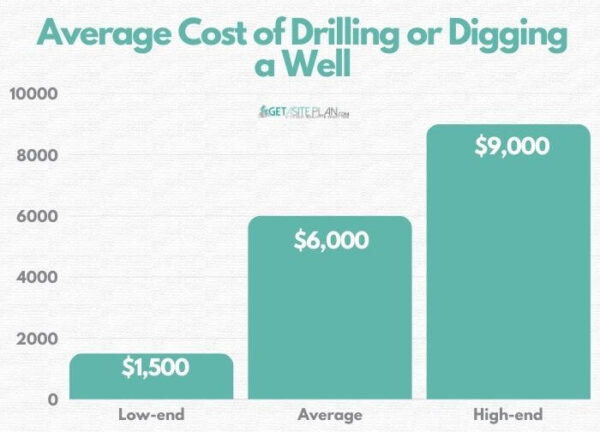
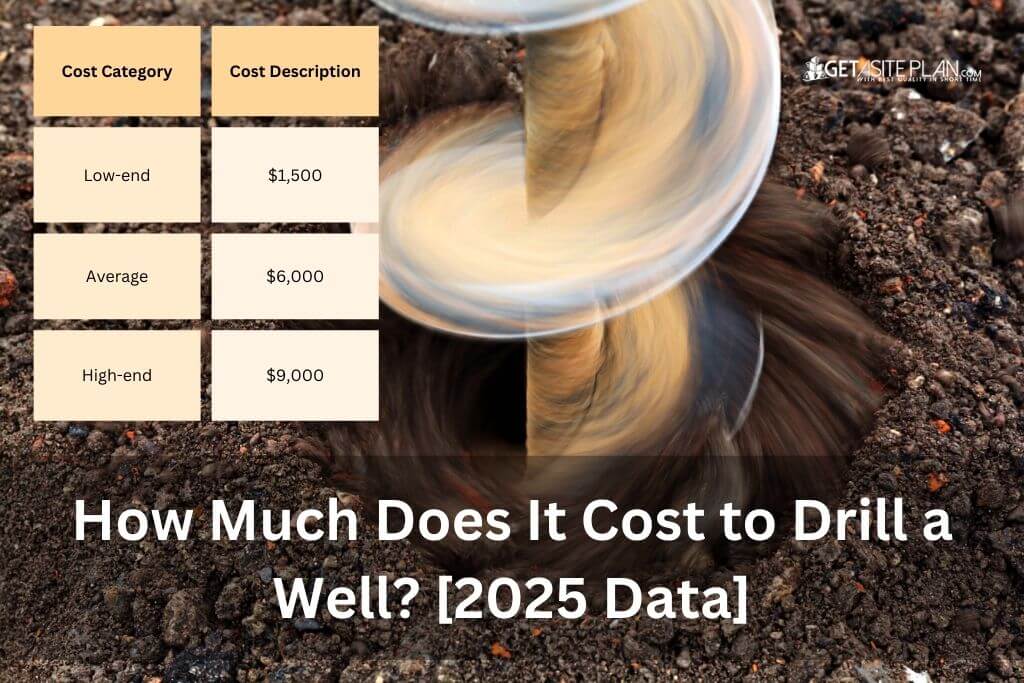
First, let’s kill the myth you see in old movies. You are not going to dig this thing by hand unless you’re training for a survival show. Modern wells require a drilling rig that looks like it escaped from a Transformers movie. The basic cost for a drilled well starts at a breath-stealing $5,500 and can casually climb to $15,000 or more. That’s just for the hole, folks—no pump, no fancy water filter, just a hole in the ground with a pipe.
Why such a crazy range? because geography is a cruel mistress. If you live in an area with shallow groundwater (lucky you), you might hit water at 50 feet. But if you’re on a rocky hillside or in a drought-prone zone, you could be drilling 400 feet deep. That rig charges by the foot—typically $30 to $60 per foot. So a 100-foot well might run you $3,000 to $6,000 just for the drilling. Check your local soil report before you faint.
Must Read
Now, let’s talk about the hidden surprises—because there are always surprises. The driller might hit a boulder the size of a Volkswagen, requiring a special drill bit that costs extra. Or they might find sand instead of solid rock, which means you need a steel casing to prevent collapse. That casing alone can add $1,000 to $3,000 to your bill. It’s like ordering a pizza and finding out the crust is extra, but the crust is literally holding your water supply together.
The Pump and The Plumbing
So you’ve got a hole with water. Now you need to actually get that water to your faucet. This is where the real sticker shock hits. A decent submersible pump (the kind that lives underwater in your well) will cost between $1,000 and $2,500. Don’t cheap out here—a crappy pump dies in three years and you get to pay for a crane to pull it out. That’s a “fun” $500 to $1,000 service call nobody wants.
Then you need a pressure tank ($400 to $800), wiring and conduit ($300 to $600), and a pitless adapter (a fancy fitting that costs about $200). If you’re connecting it to your house, add $1,000 to $3,000 for trenching and pipe from the well to your foundation. Suddenly your “just a hole” budget looks like a small car payment. Total installed system: expect $8,000 to $20,000 for a fully functional well.
![How Much Does It Cost to Drill a Well? [2025 Data] - Get A Site Plan](https://getasiteplan.com/wp-content/uploads/2024/12/well-drilling-price-range-per-foot.jpg) How Much Does It Cost to Drill a Well? [2025 Data] - Get A Site Plan
How Much Does It Cost to Drill a Well? [2025 Data] - Get A Site Plan
Do You Really Need a Permit? (Yes, You Do)
I know, paperwork is tedious. But skipping the permit is like playing Russian roulette with your health. A permit costs anywhere from $50 to $500, depending on your county. It ensures your well isn’t too close to a septic tank or a chemical spill site. Don’t be that person who drinks poison water because you wanted to save fifty bucks. Also, permits protect your property value—no one buys a house with an unpermitted well.
Now, if you’re thinking, “I’ll just use a hand-dug well like my grandpa did,” hold your horses. Hand-dug wells are shallow (20 to 30 feet) and prone to contamination. They cost about $2,000 to $5,000 if you hire someone, but they’re only viable in certain soil types. And you’ll spend weekends cleaning out leaves and drowned frogs. Not romantic. Most modern homeowners go for the drilled version.
The “Wild Card” Costs
Let’s talk about water testing. You must test for bacteria, nitrates, and heavy metals. A basic test is $30 to $100. But if you’re near farmland or old mines, you might need a full panel for $300 to $600. Please do this. I have a friend who ignored it and his well water turned out to have arsenic. He now drinks bottled water and regrets his entire life. Also, consider a water softener if your area has hard water—add another $1,000 to $2,500.
 Digging a Well - How To, Regulations and Permits - GetASitePlan
What about a solar pump? If you’re off-grid and fancy, a solar setup runs $2,000 to $5,000 extra. It’s cool, but it only works if the sun is out. For rainy days, you need a backup generator. That’s another $500 to $2,000. Suddenly you’re running a small utility company in your backyard.
So, how much does a well cost in total? For a standard, average scenario (200-foot depth, basic pump, no weird rock drama), budget $10,000 to $15,000. For a luxury system with solar, softener, and big tank? Prepare for $20,000 to $30,000. It’s not cheap, but remember: no monthly water bills ever again. After about 10 years, the well pays for itself—assuming you don’t move.
The Final Reality Check
Dave, my shovel-wielding friend, eventually hired a pro. He spent $12,500 on a 180-foot well, pump, and basic plumbing. He now has unlimited, delicious groundwater, and his only regret is the three days he spent digging a hole that filled with nothing but rain and embarrassment. So, before you grab a shovel, grab your checkbook. A well is an investment in freedom—but it’s one you’ll want to make with a professional and a clear budget. Now, go get that water. Just leave the shovel for the garden.
