How To Know If You Have Dry Hair

So, you’re standing in front of the bathroom mirror, wondering if your hair has joined the witness protection program. It looks fine—until you touch it. Then it feels like you...
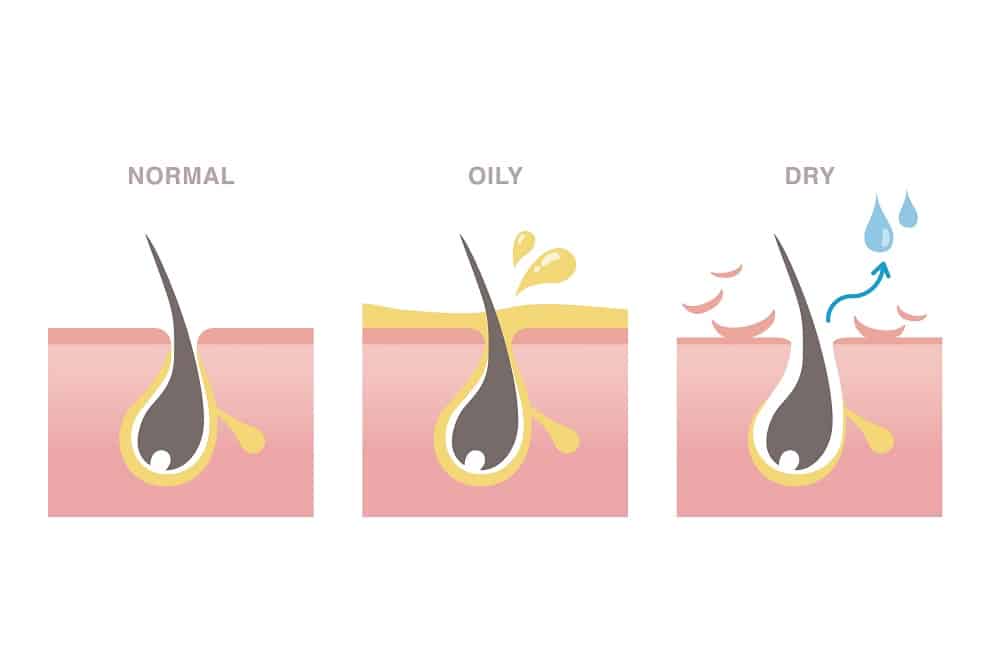
So, you’re standing in front of the bathroom mirror, wondering if your hair has joined the witness protection program. It looks fine—until you touch it. Then it feels like you’re petting a tumbleweed that just lost a fight with a vacuum cleaner. Welcome to the world of dry hair, where every strand screams, “Surrender the moisture!”
The Snap, Crackle, Pop Test (No Cereal Required)
Let’s start with the most obvious clue: sound effects. If your hair makes a noise when you run a comb through it—like tiny twigs breaking in a horror movie—that’s not a good sign. Normal hair whispers; dry hair screams like a haunted forest. The scientific term is “trabecular fracture,” but I call it “the audacity of dryness.”
Here’s a fun experiment: take one strand and stretch it gently. If it snaps like a bad relationship, you’re dry. If it stretches like a rubber band and then breaks, you’re very dry. Surprising fact: healthy hair can stretch up to 30% of its length before snapping. Yours might tap out at 5% and accuse you of being abusive.
Must Read
Static Electricity: Your Hair’s Attempt at Alien Contact
Dry hair is a static magnet. I’m talking Frankenstein’s monster levels of electricity here. You’ll brush it and suddenly your strands are pointing north, defying gravity like they’re trying to send a distress signal to Mars. If you wear a hat and remove it only to create a personal lightning storm, congratulations: you’ve got dry hair.
Why does this happen? Because dry hair lacks moisture, which means the outer cuticle (the protective scales) stand up like angry little porcupines. When they rub together, they generate static charge. Pro tip: If your hair can pick up a small piece of paper, you’ve officially entered the “boneless tumbleweed” zone.
The Frizz Factor: The Uninvited Guest at Every Party
Frizz is dry hair’s calling card. It’s that halo of chaos that makes you look like you’ve been electrocuted by a low-voltage outlet. Humidity makes it worse—not because it adds moisture, but because the hazy air reacts with your raised cuticles, giving you instant “chewbacca chic.” You thought you were headed out for coffee; instead, you’re a walking Dr. Seuss illustration.
Here’s a test: After showering, let your hair air-dry without any products. If it forms clumps, flips, or looks like a roux that’s been stirred too long, that’s dryness. Normal hair dries in silky sheets; dry hair dries like a crumpled paper bag. Surprising truth: Over-washing is often the culprit. You’re stripping those natural oils like a tax auditor on a budget.
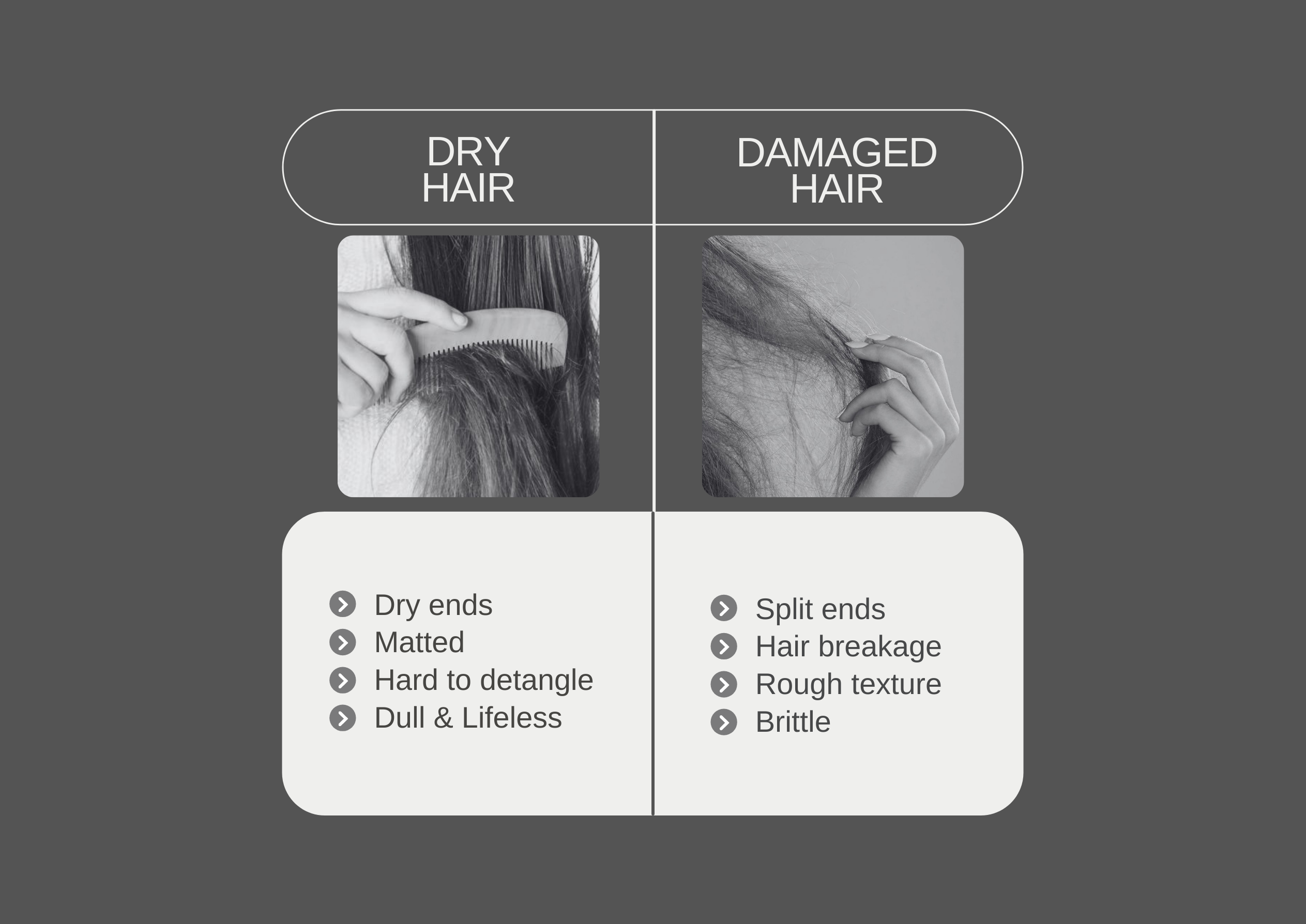 How to tell the difference between Dry & Damaged Hair?
Brushing Makes You Feel Like a Medieval Torturer
Ever tried brushing dry hair and felt like you’re untangling a rat’s nest with your bare hands? That’s not your fault—it’s the dryness. Healthy hair has a smooth cuticle that lets a brush glide through like butter on a warm skillet. Dry hair, however, has those standing cuticles that hook onto brush bristles like angry Velcro. You pull, and little strands break off like tears of a forgotten deity.
Fun fact: The average person loses 50–100 hairs a day. With dry hair, that number can double—not because you’re shedding, but because your hair snaps off from the sheer embarrassment of being so dry. If your brush looks like you’ve been grooming a small mammal, step away from the bristles and grab some deep conditioner.
Your Scalp Is Publishing a Dusty Novel
Let’s talk about the scalp—the ground zero of dryness. If your scalp flakes like a bad historical manuscript, that’s dandruff, but dry scalp is different. It’s tight, itchy, and sometimes red. It feels like you’ve been wearing a wool hat made of sandpaper. You might scratch it and notice white flakes that aren’t greasy—just powdery. That’s your skin crying, “More oil, you monster!”
One surprising cause: hard water. Believe it or not, minerals like calcium and magnesium can build up on your hair, blocking moisture from getting in. You could be using the world’s fanciest conditioner, but if your water is hard, your hair is basically locked in a desert motel. The fix? A shower filter or a vinegar rinse—yes, you read that right. Apple cider vinegar can reset your hair’s pH and banish mineral residue. Just don’t drink it afterwards.
 Healthy Vs Unhealthy Hair
Color-Treated Hair: The Betrayal You Didn’t See Coming
If you dye your hair, you’re basically signing a contract with dryness. Bleach is the ultimate traitor—it lifts color by opening the cuticle and stripping moisture. Even gentle dyes do damage. You might love that vibrant balayage, but your hair is screaming for an evangelist with a bottle of argan oil. If your color fades faster than a celebrity wedding, it’s because dry hair can’t hold pigment. The color slides off like lies off a politician.
Here’s something to make you groan: Research published in the International Journal of Trichology found that up to 80% of women with chemically treated hair identify as having “dry” or “very dry” hair. That’s a statistic that should win an award for “Most Predictable, Yet Depressing.”
So, What Do You Do? (Besides Cry into Your Shampoo)
First, stop washing your hair every day. You’re not cleaning a spill at the cafeteria; you’re ruining your scalp’s natural oils. Try every other day—or, if you’re brave, a “dry shampoo detox.” Second, look for products with humectants like glycerin, honey, or aloe vera. These are moisture magnets. Avoid sulfates—they’re the bully that beats up your cuticles in the shower.
And finally, deep condition like it’s your second job. Apply a mask, put on a shower cap, and sit with it for 20 minutes. Pretend you’re in a spa, even if you’re just binge-watching true crime. Your hair will thank you by not trying to electrocute you every time you use a comb. You’ve got this—just keep the static in check.
