How To Maintain A Water Softener

So, you’ve got a water softener. Congratulations, you’ve officially joined the ranks of people who enjoy bathwater that doesn’t feel like you’re washing your hair with chalk d...

So, you’ve got a water softener. Congratulations, you’ve officially joined the ranks of people who enjoy bathwater that doesn’t feel like you’re washing your hair with chalk dust. That glorious, slippery-soft water doesn’t just happen by magic—it requires a little TLC. And by “TLC,” I mean a few minutes of your time once a month, and a shocking amount of salt.
Think of your water softener as a lazy, hungry gremlin that lives in your basement or garage. It craves salt, it hates being ignored, and if you forget to feed it, it will quietly stop working while you’re left scrubbing mineral stains off your shower door. But fear not—maintaining this beast is easier than assembling IKEA furniture, and way less likely to make you swear at a hex key.
The Salt Situation: More Than Just a Shaker
First up: salt. Your softener uses salt to regenerate its resin beads—the tiny magnets that grab all the calcium and magnesium that turn your tap water into a calcified nightmare. You need to check the salt level at least once a month. I recommend doing it when you’re already staring blankly at the laundry room floor, wondering why you’re even in the basement.
Must Read
Open the brine tank—the big plastic barrel that looks like a miniature hot tub for ghosts—and peek inside. The salt should be above the water line, ideally about half-full. If you see a slimy, muddy sludge at the bottom, that’s “salt mush,” and it means you’ve been using the wrong kind of salt. Use clean, pellet-style salt. Avoid the cheap block salt that looks like a broken hockey puck; it clogs everything faster than a hairball in a vacuum cleaner.
The “Brine Tank Bath” (Yes, You Have to Clean It)
Here’s the part nobody tells you: softeners need a bath every year or two. That white crusty ring inside the tank? That’s not snow. That’s mineral residue trying to start its own ugly art project. Once a year, scoop out the old salt, rinse the tank with a hose, and scrub it with a little dish soap. It’s gross, but so is finding out your “soft” water is harder than a physics exam because of a salt bridge.
And speaking of bridges—if you see a crusty, hollow arch of salt inside the tank (like a salt igloo for mice), that’s a salt bridge. It forms when humidity makes salt clump together. If you don’t break it up with a broom handle, your softener will starve. I’m serious: poke it, crack it, and give it a good whack. The softener won’t feel a thing, I promise.
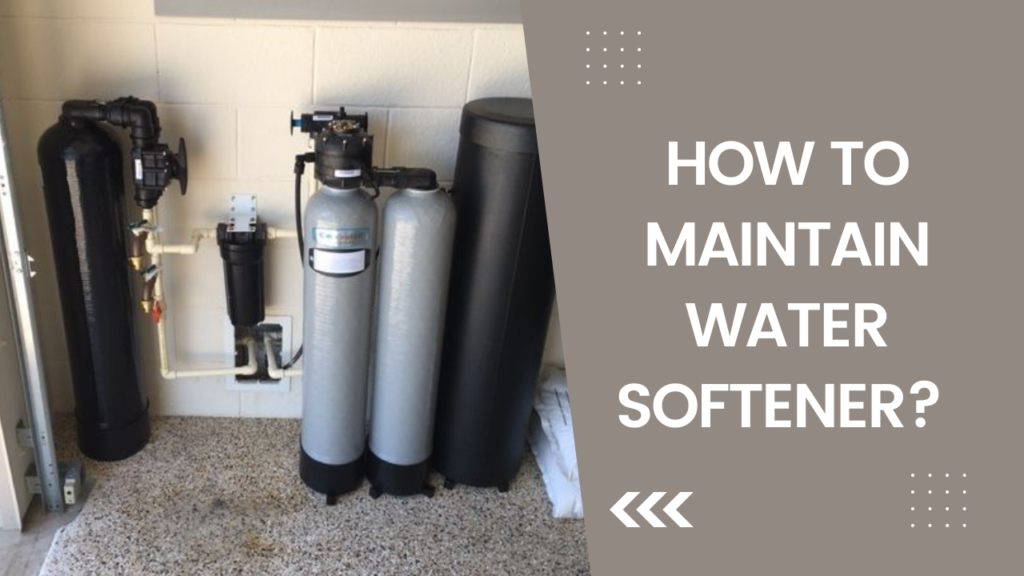 How to Maintain Water Softener System? (Important Tips) - CharlieTrotters
The Resin: The Real MVP (Most Valuable Pebble)
Inside your softener is a tank of tiny resin beads. They look like fish tank gravel that took a bad selfie. These beads do all the heavy lifting—they swap out hard minerals for sodium. But over time, they get coated in slime, iron, or even manganese (a fancy word for “gunk that turns your water purple”). That’s why you need resin cleaner, a magical liquid you pour in once a year.
You can buy resin cleaner at any hardware store. It smells like industrial-strength cough syrup, but it strips away buildup like a spa treatment for pebbles. Follow the directions on the bottle, and you’ll extend your softener’s life by years. Skip it, and your softener will turn into an expensive paperweight. Your choice.
The Maintenance Schedule That’s Embarrassingly Simple
Here’s your cheat sheet, written for the person who forgets to water their houseplants:
- Monthly: Check salt level. Refill if it’s below half. Poke around for salt bridges. This takes 30 seconds.
- Every 3-6 months: Clean the brine tank if you see sludge. Seriously, don’t let it turn into a science experiment.
- Once a year: Run a cycle with resin cleaner. Yes, it’s a chore. So is scooping the litter box, and you do that, right?
Pro tip: Set a calendar alert on your phone called “Feed the Gremlin.” No one will know what it means, and you’ll feel like a secret agent maintaining a top-secret water operation.
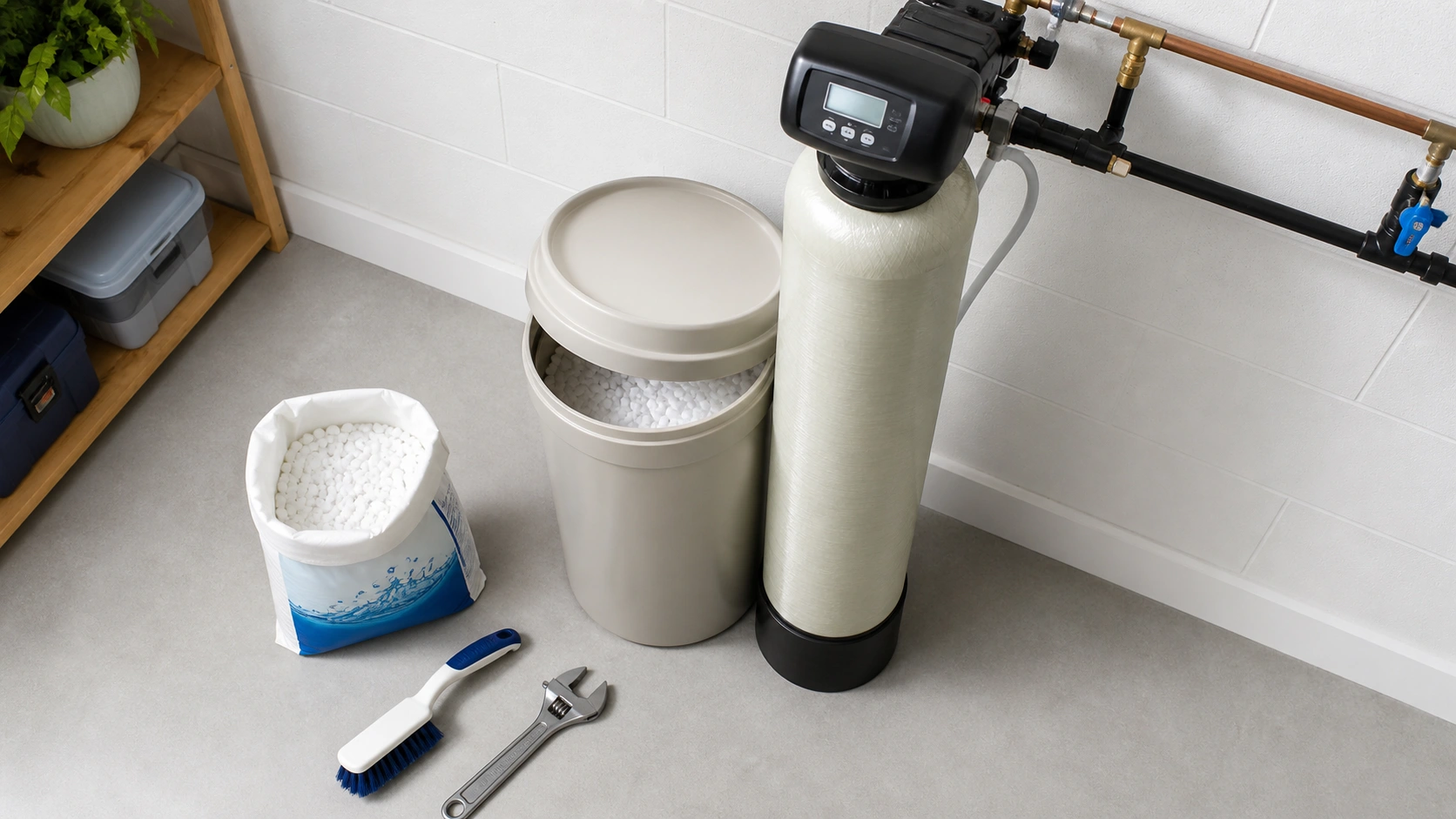 Water Softener Maintenance: Complete Guide
Surprising Facts That Will Make You Sound Smart at Parties
Here’s something wild: your water softener is more likely to die from neglect than from old age. I read a study (okay, I skimmed a blog post from a plumber) that said 70% of softener repairs come from ignoring the salt. You are now in the elite 30%.
Also, did you know softeners use electricity? Most have a timer or valve motor that plugs in. If you’re on a power outage, don’t panic—it just won’t regenerate until the lights come back. But if you have a demand-initiated model (the fancy kind), it’s like a snobby robot that only regenerates when it feels thirsty. Don’t leave it unplugged for weeks, or your resin beads will form a union.
The Final, Painless Word
Maintaining a water softener isn’t rocket science. It’s more like taking care of a very boring pet that requires only salt and occasional poking. You’ll save hundreds of dollars on plumbing repairs, and your hair will stop feeling like straw. Plus, you’ll have ice cubes that don’t look like they’ve been coated in flour.
So go ahead—give your softener a quick glance. If the salt is low, fill it up. If the tank looks dirty, grab a scrub brush. And if anyone asks why you’re in the basement poking a barrel with a broom, just say, “I’m rebalancing the aqueous homeostasis system.” They’ll nod and back away slowly. You’re welcome.
