How To Prevent Hard Water Stains

Ever notice those weird, cloudy spots on your freshly washed glasses? Or that stubborn white crust around your faucet that just refuses to budge? That’s hard water, my friend—...
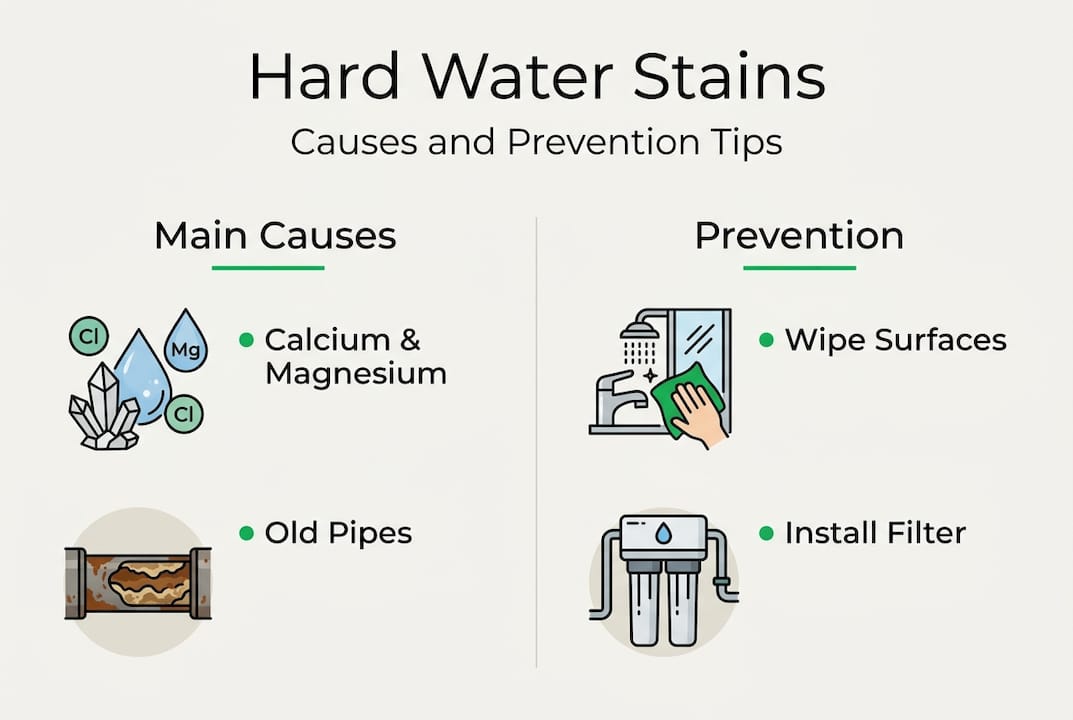
Ever notice those weird, cloudy spots on your freshly washed glasses? Or that stubborn white crust around your faucet that just refuses to budge? That’s hard water, my friend—nature’s unsolicited autograph on your fixtures. It’s basically just water that picked up extra minerals like calcium and magnesium on its journey to your home.
Why Does It Even Matter?
Sure, it’s not poison, but hard water stains are a total vibe killer for a clean home. They make sparkling glassware look dusty and your shower tiles feel gritty. Plus, over time, that mineral buildup can clog your showerhead and shorten the life of your appliances—which nobody wants to deal with.
So, how do you fight back without turning your bathroom into a chemistry lab? Let’s break it down, simply and casually.
Must Read
The Everyday Heroes: Prevention Tricks
1. The Squeegee is Your Best Friend
After every shower, spend ten seconds swiping a squeegee across your glass doors and tiles. Sounds boring, right? But think of it as giving your surfaces a mini raincoat—you’re physically pushing away the water before the minerals have a chance to dry and stick.
Seriously, this one habit cuts down on scrubbing by like, 80%. It’s the easiest win you’ll ever get.
2. Vinegar: The Kitchen Magician
White vinegar is basically the Secret Service of the cleaning world—quiet, cheap, and incredibly effective. Fill a spray bottle with undiluted vinegar and mist your faucets and showerheads once a week. Let it sit for five minutes, then rinse.
The acid in vinegar reacts with the calcium and dissolves it like candy in hot water. It smells a little funky for a minute, but the sparkle afterwards is totally worth it.
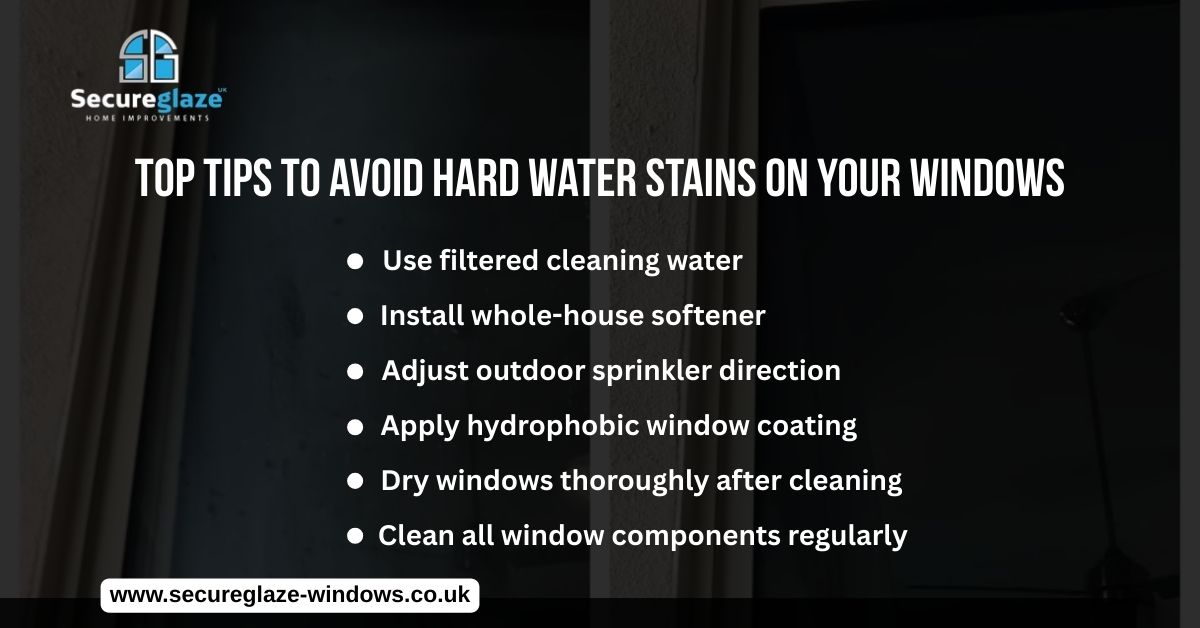 How to remove Hard Water Stains from uPVC windows and doors?
3. Dry Surfaces Like You Mean It
Here’s a lazy person’s pro tip: just dry things. After you use the sink, give the faucet a quick wipe with a microfiber cloth. Same for your shower caddy, soap dish, or even the edge of your tub.
Water spots only form when water evaporates. If you wipe it off while it’s still wet, the minerals go with it. It’s like catching a marble before it rolls off the table—simple and satisfying.
When Life Gives You Stains, Use Science
Already have a crusty layer of buildup? No panic. Sprinkle a little baking soda on a damp sponge, add a splash of vinegar (watch it fizz—it’s like a mini science fair), and scrub gently. The bubbles help lift the gunk without harsh chemicals.
For seriously stubborn stains on showerheads, tie a plastic bag filled with vinegar around it with a rubber band. Leave it overnight. In the morning, run the water for a minute, and voilà—your showerhead is young again.
 How to Prevent and Clean Hard Water Stains on Glass Surfaces
The Groovy Thing About Hard Water
You know what’s actually kind of cool? Hard water stains are a symptom of healthy water. Those minerals are the same ones that make bones strong and vegetables crisp. So while they’re annoying on your counter, they’re not bad for you. That’s a nice silver lining, isn’t it?
And hey, this routine isn’t about perfection—it’s about making your life a little easier. A little prevention goes a long way, and you don’t need fancy products or endless scrubbing. Just a squeegee, some vinegar, and a few mindful wipes.
Final Chill Thoughts
Think of hard water stains as an uninvited guest at your clean-home party. You don’t have to kick them out violently—just learn their moves and show them the door gently. Consistency beats intensity every time.
So next time you see a spot, don’t sigh. Grab your trusty cloth, give it a playful wipe, and remember: it’s just nature’s way of saying hello. And now, you know exactly how to say goodbye.
Happy sparkling, friend.
