How Long Does Water Filter Last

Last Tuesday, I poured myself a tall glass of water from the fridge. It tasted... fine. But then I noticed a faint, metallic twang at the back of my throat. I sighed, looked a...
Last Tuesday, I poured myself a tall glass of water from the fridge. It tasted... fine. But then I noticed a faint, metallic twang at the back of my throat. I sighed, looked at the little blue light on my filter pitcher, and realized it had been blinking for three weeks. I had been ignoring it (classic me). That’s when I finally Googled the question you’re here for: how long does a water filter last?
Let’s cut the suspense. The honest answer? It depends. It depends on the type of filter, how much water you use, and your water quality. But there are some solid, friendly guidelines to keep you from drinking your own forgotten science experiment. Stick with me—I’ll make it simple.
Pitcher Filters: The Usual Suspect
If you’re using a standard Brita or PUR pitcher (like me), manufacturers usually say 40 gallons or roughly two months. That’s the sweet spot. But here’s the ironic part: most of us forget to swap that cartridge until the water starts tasting like a swimming pool. I’ve definitely pushed it to three months (don’t judge).
Must Read
Here’s the deal—after two months, the carbon in the filter gets “full.” It stops trapping contaminants like chlorine, lead, and weird odors. Your water might look clear, but it’s basically going through a used sponge. Not dangerous, but slightly gross. Change it when the light tells you, or at least mark your calendar.
Refrigerator Filters: The Overachiever
Inside your French-door fridge, there’s a filter that’s working harder than a barista on Monday morning. Most fridge manufacturers (Samsung, LG, Whirlpool) recommend replacing them every six months. That’s 180 days of ice and chilled water. Do you actually do it? Me neither. I’m a six-month-or-when-it-starts-dribbling kind of person.
The problem? After six months, those filters can become a breeding ground for bacteria if your water has any sediment. That’s the scary part. So set a reminder on your phone. Name it “Water Filter Love.” Your kidneys will thank you.
Countertop & Faucet-Mounted Filters
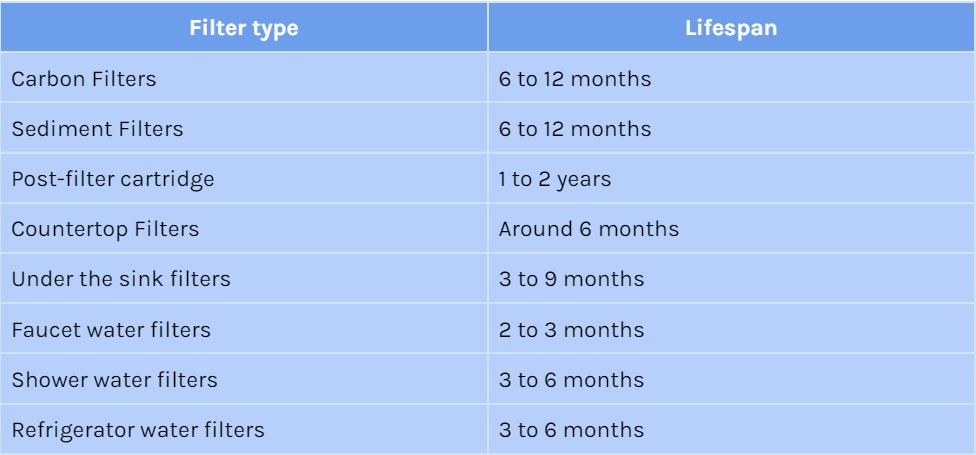
These little guys (like the classic ZeroWater or Culligan models) are workhorses. They usually last between two and four months, but they have a built-in meter or a “change filter” light. Pay attention to it! Seriously. I once let a faucet filter run for five months, and the water pressure dropped to a sad, pathetic drizzle. It’s not just about taste—it’s about flow.
 How Long Does A Carbon Water Filter Last? - AquaHow
Pro tip: If your water starts tasting like tap water again, your filter is exhausted. It’s like a bouncer who fell asleep at the door. Replace it.
Whole-House Filters (The Big Guns)
Got a sediment filter or a carbon block on your main water line? These bad boys handle everything from your shower to your toilet. They typically last three to six months, depending on your water’s dirtiness. If you have well water? Godspeed. You might need to change it every month during spring runoff.
Check the pressure gauge on your system. When it drops by 10 psi, it’s time. Ignoring this can damage your pipes or your water heater. I learned that when my shower suddenly felt like a sad, weak drizzle. Not fun.
Reverse Osmosis Systems (The Nerdy Beast)
RO systems have multiple stages, each with a different lifespan. That seductive blue carbon pre-filter? Varies wildly. Pre-filters last 6–12 months, membranes last 2–3 years, and post-filters need swapping every year. I know, it’s math. You can buy test kits or just follow the manufacturer’s sticker. Most people forget, and their water gets that weird “bottled water that sat in the sun” flavor. Don’t be that person.
The rule of thumb: Replace any filter that’s been sitting for more than six months, even if you didn’t use it much. Stagnant water grows things. Gross things.
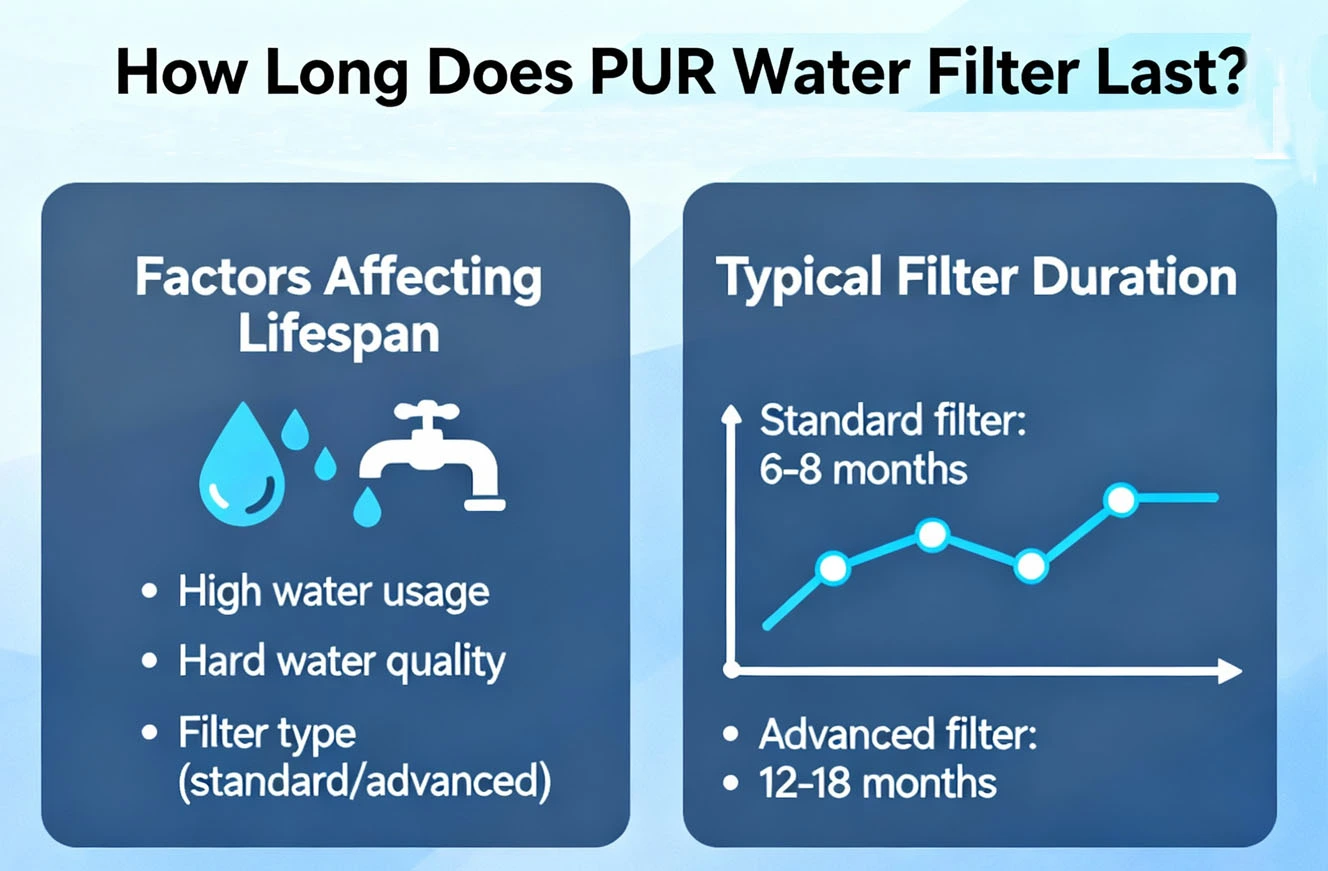 How Long Does Pur Water Filter Last? - Basidewt-Best Whole Home Water
How Do You Really Know It’s Dead?
Forget the manual for a second. Your senses are a decent backup. If the water tastes flat, metallic, or smells like a damp basement, the filter is done. If the flow slows down to a trickle, it’s clogged. Don’t be a hero—just replace it.
Also, check your local water report. Hard water? High chlorine? Your filters will die faster. I live in a city that loves chloramine, and my Brita cartridge is toast after 5 weeks. Your mileage will vary, and that’s okay.
Final (Slightly Sarcastic) Advice
Look, nobody wants to spend money on water filter cartridges. They’re like printer ink—overpriced and annoying. But think of it this way: you are paying for peace of mind. A $20 cartridge twice a year is cheaper than a case of bottled water or a plumber’s visit for a clogged fridge.
So, next time you pour that glass of water, ask yourself: How long has this filter been alive? If you’re guessing, it’s probably time. Change it today. Your future self—and your taste buds—will high-five you. I’ve already replaced mine. The water tastes like victory. Or at least like not-metallic.
Now go check your filter. I’ll wait. 😉
