Does Hard Water Cause Hair Loss

You know that feeling. You step out of the shower, skin feeling a little tight, hair feeling... weird. It’s not soft, it’s not silky—it’s almost like straw. And as you brush,...
You know that feeling. You step out of the shower, skin feeling a little tight, hair feeling... weird. It’s not soft, it’s not silky—it’s almost like straw. And as you brush, you notice a few more strands in the drain than usual. Your mind jumps to the worst-case scenario: Is my shower water trying to scalp me? Welcome to the great hard water debate, a topic that has launched a thousand forum threads and a million bottles of clarifying shampoo.
The Mineral Mystery: What Exactly Is Hard Water?
Hard water is simply water that contains a high concentration of minerals, specifically calcium and magnesium. It’s not poison; it’s just water that picked up some extra baggage while traveling through limestone and chalk deposits underground. Think of it as mineral water, but for your pipes and your hair—and not the fancy, bougie kind you buy at the grocery store.
About 85% of American homes have hard water, according to the U.S. Geological Survey. That means the odds are good that you’re washing your hair in a liquid that’s basically a weak, natural rock tea. It’s not dangerous to drink, but for your hair, it can be a bit of a drama queen.
Must Read
So, Does It Actually Cause Hair Loss?
Let’s get the big question out of the way, and I’ll give it to you straight: No, hard water does not directly cause permanent hair loss. You aren’t going to go bald because you moved to a city with a high calcium count. That’s not how biology works. Hair loss is typically driven by genetics, hormones, stress, or medical conditions—not your shower head.
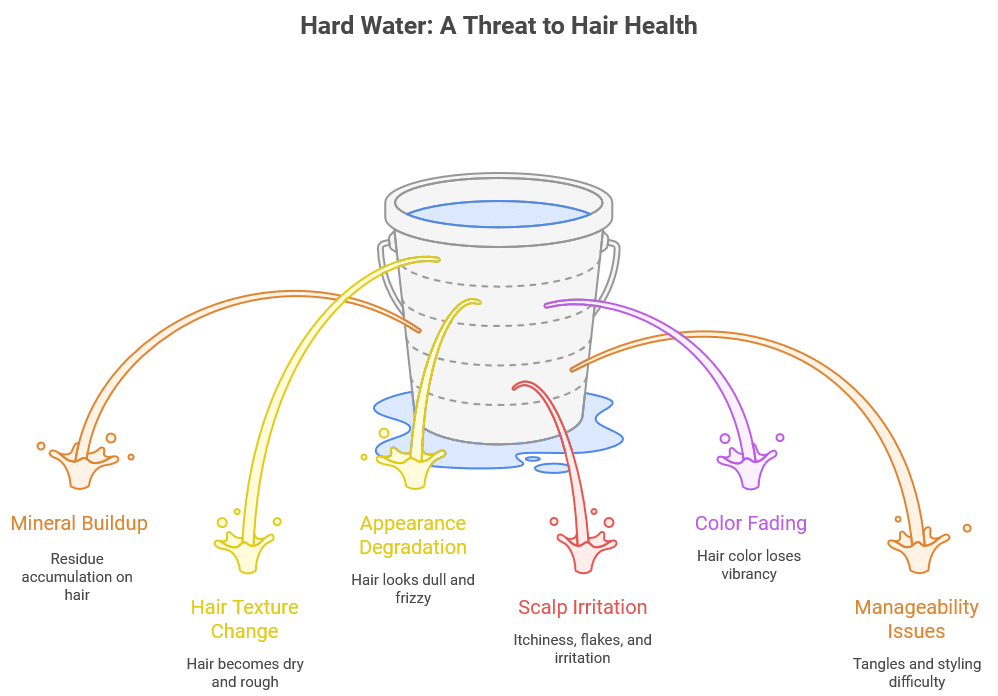
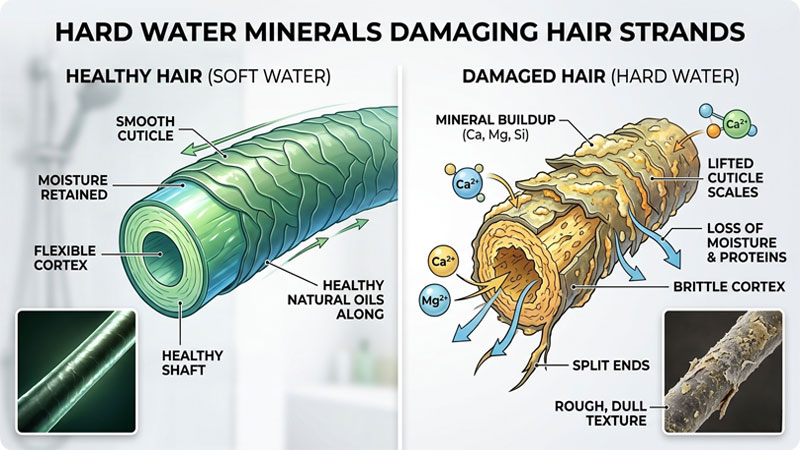
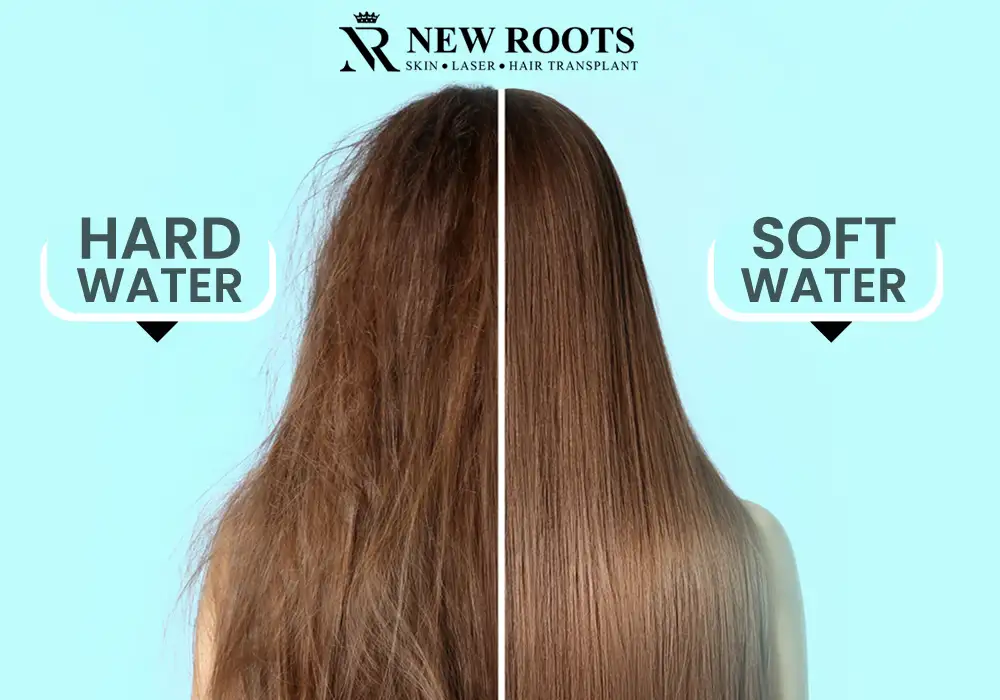
However. Here’s the nuance that drives the rumors. Hard water can absolutely create the appearance of hair loss. The minerals build up on your scalp and strands, forming a film that blocks moisture. This makes your hair brittle, dry, and prone to breakage. You aren’t losing hair from the root—your strands are snapping off because they’re weak from mineral overload.
It’s like the difference between a tree being chopped down and a tree losing all its leaves in a storm. The roots are fine, but the surface looks messy. So, while hard water isn’t pulling your hair out by the roots, it’s making the hair you have fragile and miserable.
The Science of the Scalp Gunk
Imagine mixing your favorite shampoo with a teaspoon of chalk dust. That’s basically what happens in the shower. The minerals in hard water react with the fatty acids in soap to create a waxy residue called soap scum. This scum doesn’t rinse off easily, leaving a sticky layer on your scalp.
 Does Hard Water Cause Hair Fall? Chlorine, Iron & Bath Water Explained
This buildup can clog your hair follicles, leading to inflammation and a condition called folliculitis. While temporary, this inflammation can disrupt the normal hair growth cycle, causing a type of shedding known as telogen effluvium. Again, it’s not permanent, but it’s enough to freak anyone out when they see extra hair in their hands.
Think of it like this: you wouldn’t try to grow a garden in concrete. Hard water creates a concrete-like barrier on your scalp, making it harder for healthy new hair to thrive. The solution isn’t to panic; it’s to break up the concrete.
Practical Tips for a Hard Water Hair Life
Before you move to a remote cabin with a rainwater collection system, take a breath. You can win this fight with a few simple tools. First, invest in a chelating shampoo. These are different from your regular clarifying shampoos; they are specifically designed to bind to and remove metal and mineral deposits. Use it once a week, and your hair will feel lighter immediately.
Second, consider a shower head filter. You can pick one up for under fifty bucks, and it takes ten minutes to install. It won’t remove all the minerals, but it will significantly reduce them. Your hair (and your skin, which also gets dry from hard water) will thank you.
Third, finish your shower with a diluted apple cider vinegar rinse. It sounds like a hippie trick from the 70s, but the mild acidity cuts through mineral buildup like a knife through butter. One part vinegar to four parts water, let it sit for a minute, then rinse. Your hair will feel squeaky clean—in a good way.
 Can Too Much Iron In Water Cause Hair Loss – SEWPFE
A Little Pop Culture Perspective
Remember that episode of Friends where Monica obsesses over the water pressure? Or that scene in Legally Blonde where Elle Woods lectures about the importance of a good conditioner? Elle was onto something. Hard water is basically the nemesis of a good conditioner. It repels the moisturizing ingredients, making your expensive products less effective.
Fun fact: In London, where the water is famously hard, many locals swear by a "visiting shampoo"—a cheap, sulfate-filled one they use once to strip the city grime before using their good stuff. It’s a cultural workaround born from necessity. And if you’ve ever seen a British period drama with impossibly shiny hair? They likely had soft water or a very good wig.
The Bottom Line on Strands and Suds
Here’s the takeaway: Hard water is a hair nuisance, not a hair killer. It’s the annoying friend who eats all your snacks and leaves the empty box in the cupboard. It doesn’t ruin your life, but it does make things harder. Focus on removing the buildup, and your natural hair growth cycle will do the rest.
Your hair is resilient. It survives heat styling, bad dye jobs, and morning rush tangles. A little extra calcium isn’t going to take it down. So take a deep breath, grab a filter, and give your hair a break from the rock tea. You’ve got bigger things to worry about—like finding a matching sock or remembering to take the chicken out of the freezer.
And next time you see a few strands in the drain, don’t blame the water. Blame the fact that you forgot to deep condition last week. Wash, rinse, repeat—and live your life. Your hair will be fine.
